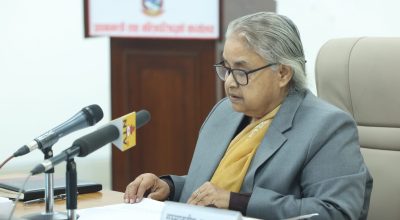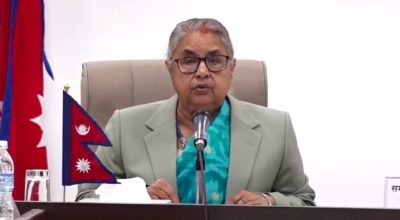



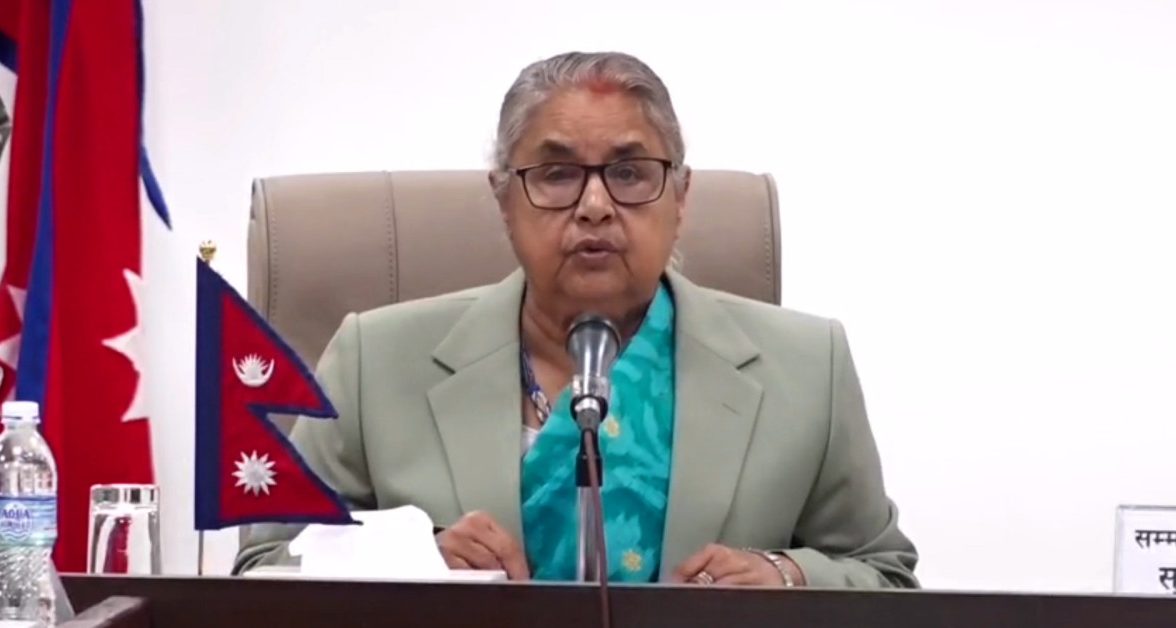
Kathmandu, Dec 9: Prime Minister Sushila Karki has said that violations of law, an expensive electoral system, lack of transparency and accountability, and a pervasive culture of secrecy are among the key factors fueling corruption in Nepal.
She further noted that conflict of interest, social protection and promotion of corrupt individuals, and weak monitoring and evaluation mechanisms have also contributed to entrenched corrupt practices, citing reports from the Commission for the Investigation of Abuse of Authority (CIAA) and various non-governmental organizations.
Addressing a programme organized at Singha Durbar today to mark International Anti-Corruption Day, PM Karki emphasized that powerful individuals often engage in corruption, thereby obstructing investigations and punitive actions. “With the expansion of modern technology, the form and trends of corruption have also evolved,” she said, stressing the need for collective efforts among all stakeholders to eradicate financial malpractices.
The Prime Minister reaffirmed her government’s commitment to cooperate with the CIAA and other anti-corruption bodies in advancing the good governance campaign. She added that the government will take stringent measures against fraudulent activities that cause financial losses to the nation.
Urging government employees to ensure efficient service delivery—an essential condition for controlling corruption—PM Karki warned that negligence of duty would not be tolerated. “Office chiefs must be particularly responsible for maintaining integrity and fair practices,” she said.
Stating that social justice and prosperity can only be achieved through good governance, PM Karki informed the gathering that the government will soon unveil the Second National Strategy and Work Plan Against Corruption, 2025. The strategy is being introduced as part of Nepal’s commitment following its accession to the UN Convention against Corruption in 2011. #nepal #corruption