


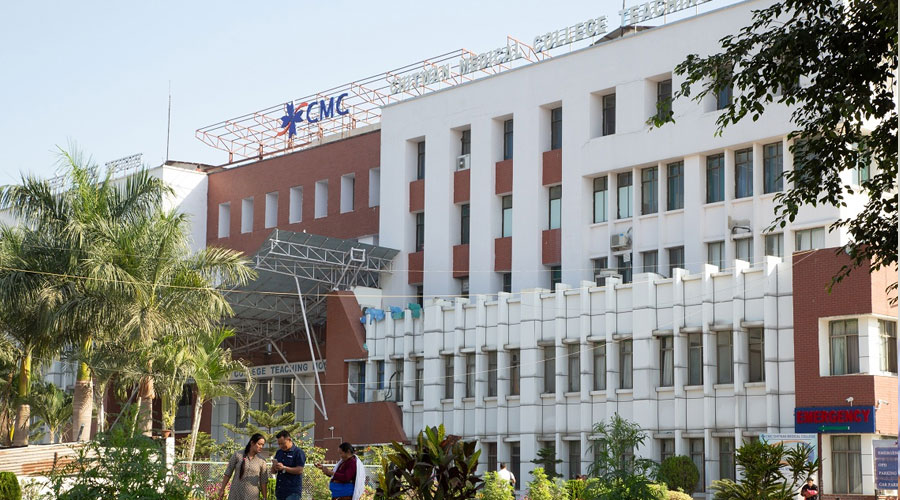
Chitwan, June 9: A 21-year-old woman from Icchakamana Rural Municipality has made a remarkable recovery after undergoing a highly complex, minimally invasive brain procedure at Chitwan Medical College, marking a significant milestone in Nepal’s advancing healthcare capabilities.
The young patient was diagnosed with a ruptured brain aneurysm, a rare and potentially fatal condition that occurs when a weakened blood vessel in the brain bulges and bursts, causing internal bleeding.
A specialist team led by interventional radiologist Vivek Kumar Sah and cardiovascular surgeon Anil Acharya successfully treated the patient on Sunday using an advanced neurointervention technique, avoiding the need for conventional open-brain surgery.
Instead of opening the skull, surgeons navigated through the patient’s blood vessels and implanted a tiny mesh device known as a flow diverter at the site of the damaged artery. The device redirects blood flow away from the weakened section of the vessel, allowing it to heal while significantly reducing the risk of further rupture.
“This was an extremely complex case because the ruptured vessel was located in a highly sensitive area. Reaching it through conventional surgery would have been very difficult,” Dr. Sah said.
The procedure was carried out using the hospital’s advanced Bi-Plane Cath Lab, which enables specialists to perform sophisticated image-guided interventions with exceptional precision. According to hospital officials, such treatments often required patients to seek care abroad until recently.
Bi-Plane Cath Lab In-Charge Amrit Kafle said the facility’s advanced technology, combined with the expertise of the surgical team, played a crucial role in the successful outcome.
Although the hospital has previously conducted numerous minimally invasive vascular procedures, Dr. Sah described this operation as CMC’s first highly complex brain artery repair of its kind performed without open surgery.
The patient had initially been brought to the hospital after experiencing difficulty eating and a gradual deterioration in her health. MRI and CT scans revealed the ruptured artery, prompting immediate intervention.
Following the successful procedure, the patient was moved from the intensive care unit to a general ward on Monday. Hospital officials said she is recovering well and is expected to be discharged after a final medical evaluation.
The successful treatment underscores the growing capacity of Nepal’s healthcare system and demonstrates that advanced neurovascular procedures, once available only at major international medical centres, can now be performed within the country. #nepal