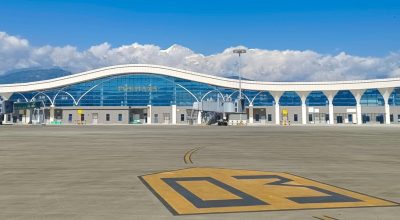



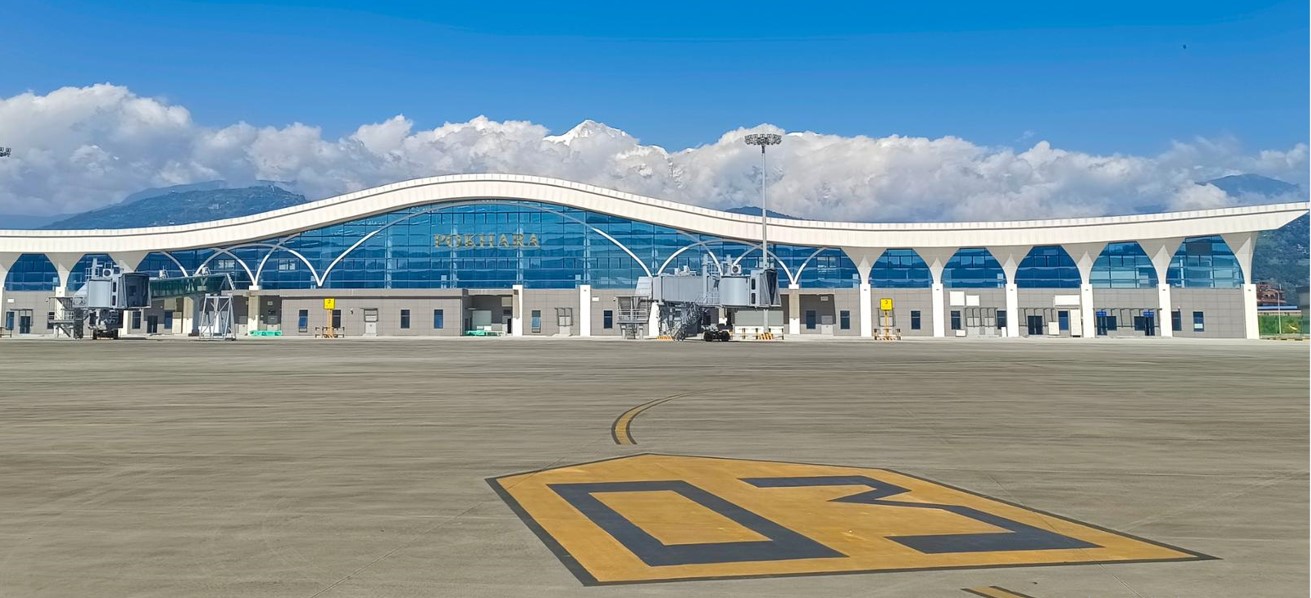
Kathmandu, Dec 7: A parliamentary subcommittee led by former MP and RPP Chairman Rajendra Lingden had concluded that nearly Rs 10 billion worth of irregularities and corruption occurred during the construction of Pokhara International Airport. The subcommittee of the Public Accounts Committee (PAC) identified irregularities under 11 different headings.
1. Rs 320 million paid for cutting Chinedanda
According to the agreement between the Civil Aviation Authority of Nepal (CAAN) and the Chinese contractor, the contractor was responsible for developing all infrastructure and facilities required to bring the international airport into full operation.
However, despite this provision, CAAN paid Rs 320.2 million separately to another contractor for cutting Chinedanda, located in front of the airport. The subcommittee termed this payment “direct irregularity and corruption.”
2. Irregularities in AC installation
The contract stipulated that all facilities inside the airport were to be installed using the project budget and by the Chinese contractor itself.
“Almost every component shows irregularities, quality issues, and revenue leakage due to tax exemptions given against the contract provisions,” the report noted.
However, CAAN made a payment of USD 742,659 for the installation of the HVAC system, which the subcommittee flagged as an irregular payment.
3. Over Rs 1 billion irregularity in drainage works
Under the agreement, the contractor was responsible for constructing the runway, taxiways, apron embankment, and drainage systems. A payment of USD 1.0648 million had been made for excavation work.
The subcommittee questioned why such payment was made despite the work not being completed. At the exchange rate of USD 1 = Rs 120, the amount exceeds Rs 1.27 billion.
4. Compaction of soil also problematic
The contract required filling designated areas with soil and compacting them. CAAN paid USD 4.435 million for placing soil on the runway, taxiway, drainage areas, etc.
The Lingden-led subcommittee questioned the payment, stating that “the payment was made in dollars, but the corresponding work was not completed.”
5. Soil was never imported
According to the agreement, local soil was insufficient for airport construction, and additional gravel and soil were to be imported. Around USD 5.5 million was paid for this purpose.
However, no soil was imported, and the runway was built using only locally available soil. The subcommittee stated, “No soil was imported from outside; there is no documentation at all.”
6. Required thickness and elevation not achieved
The contract required layering imported soil to reach the specified elevation with compacted layers of at least 150 mm thickness. The subcommittee raised concerns over the USD 1.621 million paid for soil layering, stating it was irregular.
During project approval, the runway elevation was set at 2,677 ft above sea level on one end and 2,674 ft on the other. Soil layering was required to achieve this. However, the current elevation is only 2,636 ft. The report raised concerns that the runway was constructed “about 20 ft below the natural ground level.”
7. Soil-related irregularities highest
Apart from the four soil-related headings, the subcommittee found that overall irregularities in soil works alone amounted to Rs 2.5 billion. It concluded that the expenditure incurred under soil works was irregular.
8. Irregularities in additional works
The agreement had allocated USD 1.5 million for unforeseen additional works. But the expenses under “additional works” reached USD 2.04 million — about USD 520,000 more than agreed. The subcommittee questioned this excess payment.
Furthermore, any additional equipment or work necessary for airport operation was to be procured under the main contract budget. Expenditures made outside this framework were deemed corruption.
9. Fuel storage tank not constructed
The agreement required the construction of a high-standard aviation fuel storage tank costing USD 220,000. The subcommittee found that this facility had not been built.
10. Loss through tax exemption
The subcommittee found that tax exemptions alone resulted in revenue losses amounting to Rs 2.2 billion. The report concluded that various governments, ministers, and secretaries were involved in granting tax exemptions to the Chinese contractor, despite the contract clearly stating that all tax liabilities would be borne by the contractor itself.
11. Questionable consultancy expenses
The contract stated that the contractor was to appoint the consultancy firm for the project. However, CAAN appointed the consultant using its own funds.
The subcommittee questioned the payment of USD 2.8 million for consultancy services, calling it “irregular and corrupt.”
For the construction of Pokhara International Airport, Nepal and China signed a loan agreement on March 21, 2016. Of the total loan amount of 1.37 billion yuan, 359 million yuan was interest-free. The remaining loan must be repaid by 2035, including principal and interest.
As per the exchange rate at the time of agreement, Nepal took a loan equivalent to Rs 22.61 billion, of which Rs 5.83 billion is interest-free. Nepal must pay about Rs 840 million annually to the Exim Bank of China as interest alone. Despite this massive investment, the airport has not yet seen any commercial flights. #pokhara #airport #CIAA #corruption
CIAA Charge Sheet (Press Release)