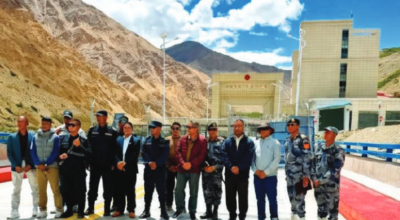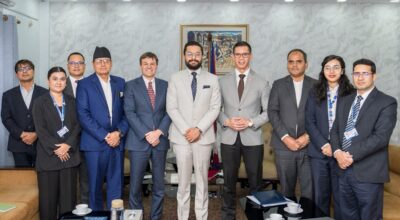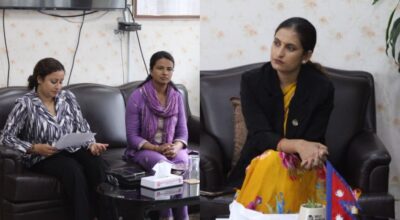



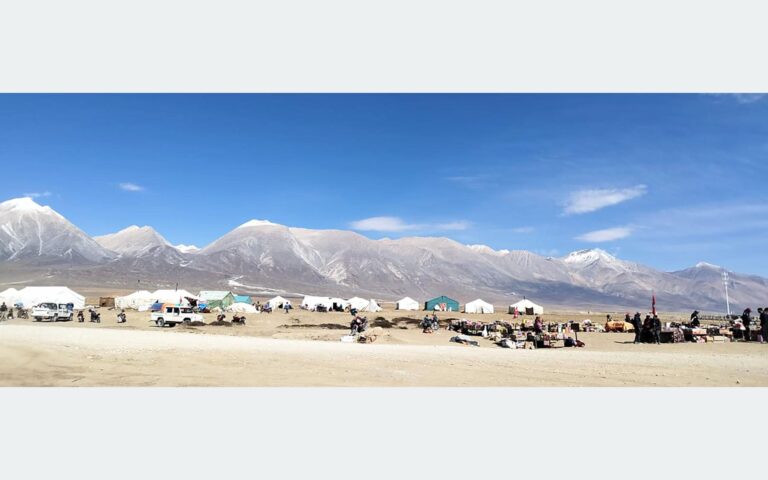
Mustang, April 27: Local traders operating in the no-man’s land (Dasgaja area) at the Korala Border Point have complained to Namdu Gurung, Gandaki Province’s Minister for Forests and Environment, about being forced to rely on water from across the border due to the lack of drinking water on the Nepali side.
The traders, who had invited the minister for a welcome and felicitation, expressed happiness over Upper Mustang’s representation in the provincial government for the first time. However, they also raised serious concerns about the shortage of drinking water, which has led to sanitation and waste management problems, and urged immediate solutions.
According to local entrepreneur Pema Chhiring Gurung, traders currently transport water by vehicle from the Mustang Customs Office, located about 14 kilometres below the border point, at a cost of Rs. 200 to Rs. 300 for 20 to 40 litres. He also highlighted energy shortages during winter.
“For drinking water, we have to depend on the Chinese side. If we bring it from below, it costs money. Even basic access to drinking water is not available for those living at the border,” he said.
Another trader, Kunsang Gurung, said locals informed the minister about multiple issues, including the lack of permanent shelters, drinking water, and toilets. They urged the government to replace temporary tents with permanent structures and noted that, unlike the Chinese side, there is a lack of proper infrastructure at Korala. The community feels the area has not been prioritised and called for immediate government action.
Around 150 locals operating about 50 tents, along with transport workers, labourers, and tourists, depend on limited facilities. During peak season, more than 1,000 people visit the area daily, yet there is a severe shortage of drinking water and toilets.
Local trader Karma Gurung said, “There isn’t even a single proper toilet. It’s difficult just to protect temporary toilets from strong winds.” Tourists are often forced to use open spaces due to the lack of facilities.
Responding to the concerns, Minister Gurung said basic issues would be addressed by local and provincial governments, but permanent infrastructure would require federal government intervention.
“There are many problems at Korala. It is impossible for local and provincial governments alone to solve them. The federal government must take notice,” he said, adding that efforts so far have been insufficient.
He also stressed the urgent need for both temporary and permanent toilets and proper water supply systems, especially during peak tourist seasons when sanitation risks increase.
Currently, apart from a 10-room prefabricated building used by security forces and for emergency shelter, there are no other government structures at the border. Situated at an altitude of 4,650 metres above sea level, the Korala area covers about 600 ropanis of land.
Historically, the border point remained closed after Tibetan Khampa rebels used Nepali territory during their resistance following Tibet’s incorporation into China in the 1960s. The Korala border was formally inaugurated on November 13, 2023, and has been in commercial operation since mid-September 2025. #Nepal #mustang #korola