


Morang, June 2: The government’s decision to discontinue health insurance services at private hospitals has begun to strain public health facilities, exposing longstanding challenges related to infrastructure and manpower shortages.
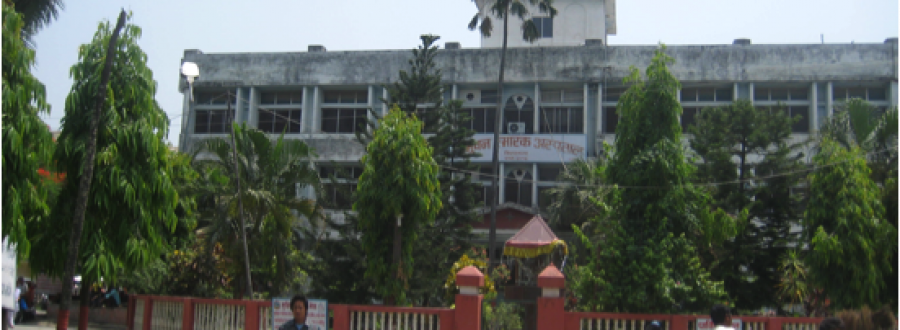
The impact was particularly evident at Koshi Hospital, the largest government hospital in Koshi Province, where a sharp surge in patient numbers on Monday disrupted regular service delivery. With private hospitals and medical colleges no longer providing treatment under the health insurance programme, thousands of insured patients have been redirected to government-run facilities.
As a result, Koshi Hospital registered more than 2,000 patients on Monday, nearly double its usual daily average of 1,000 to 1,200 patients. By 1 p.m., around 1,800 patients had already collected registration slips, while the number crossed 2,000 by mid-afternoon, overwhelming hospital staff and facilities.
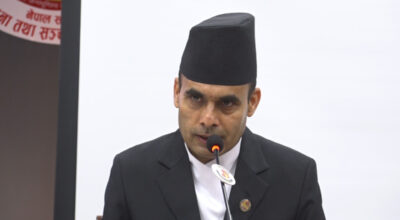
Medical Superintendent Dr. Ram Narayan Chaudhary said the suspension of insurance services at private institutions has significantly increased pressure on the public healthcare system.“The infrastructure and workforce remain unchanged, but the patient volume has doubled. Under such circumstances, providing timely and effective healthcare has become extremely difficult,” he said.
According to Dr. Chaudhary, the increased workload has affected services across the hospital, from outpatient departments to laboratory facilities. The Health Insurance Board halted insurance-covered services at private hospitals and medical colleges from May 30, forcing patients who previously sought treatment at 21 major private health institutions across Koshi Province to rely solely on government hospitals.
For many patients, the shift has resulted in long waiting times and overcrowding. Apan Mia, a resident of Biratnagar, arrived at Koshi Hospital at 8 a.m. on Monday but was only able to consult a doctor after waiting for five hours. “It took five hours just to see a doctor, and now I am waiting in line again for billing,” he said. “After insurance services stopped at private hospitals, the long queues at government hospitals are making ordinary people suffer even more.”
According to official data, more than 2.5 million people, or approximately 52 percent of Koshi Province’s population, are enrolled in the national health insurance programme. Many beneficiaries, including senior citizens, persons with disabilities and low-income households, are now facing significant inconvenience due to overcrowded facilities and extended waiting times.
Arjun Pandit, Chief of the Health Insurance Board’s Koshi office, said the suspension of services at private institutions has also limited citizens’ access to healthcare. Meanwhile, Dr. Gyanendra Man Singh Karki, president of the association representing private medical colleges, criticised the government’s decision as short-sighted.
“By withholding billions of rupees in payments and excluding private institutions from the programme, the government has not only increased pressure on public hospitals but also compromised citizens’ access to quality healthcare,” he said.
Dr. Karki argued that most government hospitals lack adequate facilities for advanced diagnostics and specialised treatments, including MRI and CT scan services. Restricting insured patients from accessing private hospitals, he said, has further deepened the burden on the public health system.
Health experts and hospital administrators warn that abrupt policy changes without adequate preparation or expansion of public health infrastructure could continue to create management challenges for hospitals already operating under resource constraints.
On Monday, the scene at Koshi Hospital reflected the growing strain on the system, with crowded corridors, long queues and frustrated patients highlighting the challenges facing Nepal’s health insurance programme following the policy shift. #nepal #health