


Buffer zones are transitional areas established around protected areas, such as national parks and wildlife reserves, to reduce external pressures on core conservation regions. These areas are carefully designed to limit the impact of human activities while encouraging a balanced relationship between nature and nearby communities. By acknowledging the close interdependence between environmental preservation and local livelihoods, buffer zones support sustainable land use, protect biodiversity, and actively engage communities in conservation efforts. They serve as vital areas where the goals of ecological protection and human development can work hand in hand.
According to the International Union for Conservation of Nature (IUCN), buffer zones serve a dual purpose: they help regulate how land and resources are utilized around protected areas, and they play a crucial role in ensuring both the survival of wildlife and the well-being of local populations. By integrating community participation into conservation strategies, buffer zones not only safeguard critical ecosystems but also support the socio-economic needs of those living nearby.
These areas help maintain essential ecological corridors between habitats, contributing to the resilience and health of broader ecosystems. In Nepal, buffer zones have become a cornerstone of conservation policy. The country currently hosts Thirteen officially designated buffer zones surrounding protected areas, in addition to one hunting reserve and six conservation areas. Their establishment reflects Nepal’s forward-thinking approach to linking biodiversity conservation with sustainable development, offering a model for other regions facing similar challenges.
The concept of a buffer zone as an interface between protected forests and human settlements was formally introduced in Nepal in 1996 following the fourth amendment to the National Parks and Wildlife Conservation Act of 1973. This legislative change laid the foundation for communities to coexist with protected areas, utilize natural resources responsibly, and share in conservation benefits.
When it comes to Nepal’s conservation success stories, Chitwan National Park stands out prominently. Its buffer zone system has become a model of community-centered conservation, empowering local populations to take an active role in environmental stewardship.
Chitwan was the first to implement this approach, designating over 750 square kilometers of surrounding land as buffer zones. These areas directly affect the lives of more than 300,000 people across Chitwan, Nawalpur, Makwanpur, and Parsa districts.
The region hosts a network of 25 Buffer Zone User Committees, each representing several Buffer Zone User Groups. Together, they manage conservation programs, facilitate community development, and address human-wildlife conflicts within their jurisdictions. However, despite its successes, the buffer zone initiative faces significant challenges. Human-wildlife conflict remains one of the most pressing issues. Wild elephants frequently destroy crops and homes, while rhinos and wild boars venture into farmlands. Tigers occasionally prey on livestock and, in rare cases, even attack humans.
Although compensation mechanisms are in place, many local residents report that financial aid is often delayed and insufficient. Moreover, the distribution of benefits is unequal, with marginalized or remote communities receiving fewer resources compared to those living closer to park entrances.
Additional concerns include illegal encroachment, habitat degradation, and climate-related threats such as increased flooding. Insights from specific buffer zones like Jankauli shed light on the ground realities of local resource access, participation, and conflict. According to a recent survey conducted on 2081-10-24 B.S., many local residents reported that their hardships intensified following the buffer zone declaration .Currently, forest access is limited to just 15 days per year, a duration many consider insufficient to meet their basic needs.
Residents have expressed frustration over restrictions that prevent them from collecting even small bundles of grass and firewood, which are essential for daily living.While the use of illegal fishing methods or unauthorized forest entry is clearly against conservation laws, many impoverished locals, especially fisherfolk, are driven by urgent needs related to food and income.
Instead of being provided with support or alternative livelihood options, they are often subjected to fines ranging from NPR 15,000 to NPR 35,000, which further strain their financial situation, as noted in a 2025 Key Informant Interview.
Residents have also alleged mismanagement and misconduct by park authorities. For example, some locals report that sissoo trees, which naturally dry out in winter and regrow in summer, are being exploited by park officials for illegal logging and timber sales. These claims are serious, with some even referring to park staff as “legal goons” and stating that they were unfairly driven away from forest areas.
While these allegations are troubling, they remain unverified and require thorough investigation. A local guide in Sauraha pointed to poor coordination between user groups and the conservation area, which has resulted in minimal income generation compared to more organized buffer zones like Kumroj and Bagmara.
He expressed concern over disorderly conduct by some user group members, which complicates the efforts of buffer zone staff. From a tourism point of view, economic activity in the area remains quite limited, with canoeing as the main attraction. However, this service is mostly available only when Bagmara is not packed or closed. When Bagmara is open and operating, most visitors prefer going there instead of Jankauli, making canoeing services here less active.
The guide also mentioned rumours of questionable activities among buffer zone staff, although no official confirmation exists. In contrast, Bagmara serves as a more proactive example. Authorities there have implemented a ticketing system for grass and firewood collection, not only to regulate forest entry but also to maintain proper records of access.
This system helps ensure transparency and accountability while discouraging illegal resource extraction. To support this process, security personnel are deployed at designated entry points, where they monitor and document the movement of individuals entering and exiting the buffer zone. This organized approach enhances both safety and resource management. In addition to these efforts, both Bagmara and Kumroj have launched initiatives such as Jal Yatra programs, skill development training, and employment generation projects.
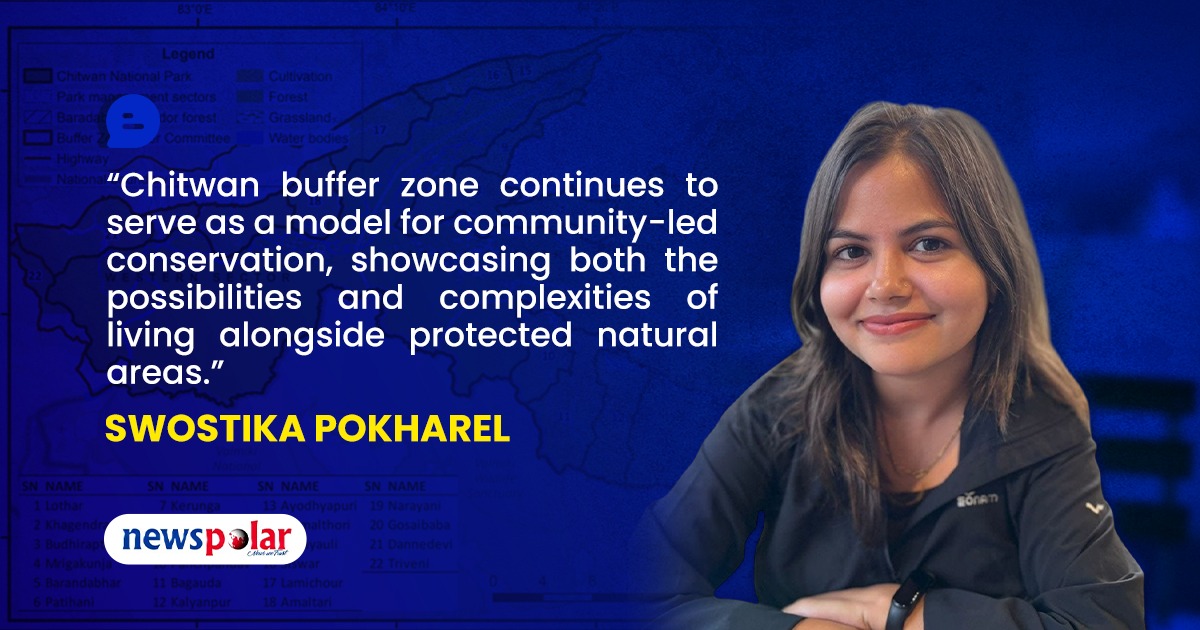
These community-led activities have enabled the regions to maximize conservation outcomes while improving the livelihoods of local user groups. Despite ongoing challenges, the buffer zones in Chitwan continue to serve as a model for community-led conservation, showcasing both the possibilities and complexities of living alongside protected natural areas. The buffer zone around Chitwan National Park is often seen as a success story, but it remains a dynamic and evolving process.
Human-wildlife conflicts, unequal benefit sharing, and environmental risks continue to test its long-term viability. Addressing these challenges through inclusive governance, transparency, and adaptive strategies will be essential for sustaining this model. If carefully nurtured, this approach can inspire not only further improvements in Chitwan but also influence conservation practices across Nepal and beyond. #chitwan #bufferzone