



Narayan Prasad Ghimire
Kathmandu, Nov 20: The lungs of the planet or the rainforest of Amazon in Brazil welcomed thousands of climate enthusiasts from across the globe to dwell on the defining challenge of present time- climate change. As in the past, the 30th edition of COP under UN Framework Convention on Climate Change (UNFCCC) is observed keenly whether it negotiates well to cope with climate crisis.
COP30 has been mentioned also as a ‘rainforest COP’ and an ‘indigenous COP’. Amazon located is South America is also a homeland to sizable indigenous population. With promises galore in the past events, many have even pressing the present one to be an ‘implementation COP’.
It is the penultimate day of the two-week-long (Nov 10-21) climate summit today. It has seen the negotiation rounds and now due to culminate with the political dialogue to finalize the outcome document.
The first week of COP30 saw the inauguration and remarks by the UN Secretary General Antonio Guterres, Brazilian President Luiz Inácio Lula da Silva, Executive Chief of UNFCCC, Simon Steill, among several others. Brazilian President Lula termed this COP the ‘COP of truth’.
A decade since Paris Agreement
The annual UN climate gathering this time bears further significance also because a decade has passed since historic Paris Agreement, 2015. In the past one decade, there are matters both for celebration and disappointment.
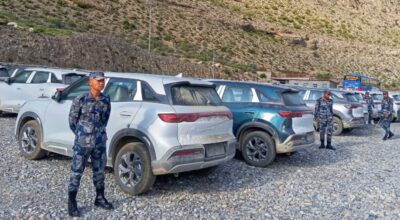
The investment and production of clean energy and green ventures the world has launched and augmented deserve accolade. Striking examples are the floods of electric vehicles across the world. Recently, Nepal itself became a global media headline for its electric vehicles dominating the traffic, thanks to the heavy investment in clean energy. And clean energy is an instrumental measure to lessen the earth heating emission.
On the other hand, the loss of biodiversity, air pollution and rise of temperature are crossing boundaries every year, exposing the world’s failure to launch practical actions to massively cut down burning of fossil fuels.
As per the Paris Agreement, the UNFCCC members are obliged to prepare the nationally determined contribution (NDC) every five year and show the commitment and actions both to cope with the climate crises that have plagued the world. Irrespective of the ambitions the countries have set to limit the temperature rise to 1.5 Degree Centigrade since pre-industrial era is still slow off the mark.
The climate scientists and researchers have been frequently raising alarms over the lackadaisical responses to the rapid growth of temperature, and the unchecked exploitation of the planet for the benefit of select few. The research reports have showed the highly likelihood of containment goal (1.5 Degree Centigrade) overshoot.
“Even if new national commitments are fully implemented, the world is still heading for clearly more than 2 degrees of warming. That means more floods, more heat, more suffering – everywhere. Scientists tell us that overshooting 1.5 degrees is now inevitable — starting, at the latest, in the early 2030s,” reminded UN Secretary General Antonio Guterres at the Belém Climate Summit’s energy transition roundtable on November 7 in Brazil.
Moreover, over this period the environmental degradation and climate change issues faced sheer denial. It is egregious assault to science and truth once the climate denial is stressed and burning of fossil fuel promoted. The climate denial helps untoward elements play Russian roulette with future of humanity, ignoring science. It is more devastating if even the industrial and developed countries, which are historically responsible for boiling earth, encourage the climate denial. Worryingly, those to bear the brunt from climate change are indeed the poor and developing countries that have negligible roles in GHG emission.
When it comes to Paris Agreement, one unforgettable issue obviously comes bearing biting reality: ‘Common but differentiated responsibilities’. Climate change is a globally common and pervasive phenomena but it has disproportionate impacts. Nepal and several others in the category of the least developed countries (LDC) and the small and island countries, which face much more impact of climate, while they have comparatively less options and strengths to cope with the tragedy. Various climate disasters occurred recently in Nepal, including the GLOFs, are enough to expose the vulnerabilities.
The ‘common but differentiated responsibilities’ counts much. The rich, industrial and emerging economies must provide funding for the adaptation to the countries like Nepal in an easy and accessible manner. It has been a pressing demand for long- whether it was while advocating for setting up a Loss and Damage Fund or determining new collective quantified goals (NCQG). However, every country is obliged to update the NDCs and put in place the climate actions to avert the crises.
Nepal’s participation
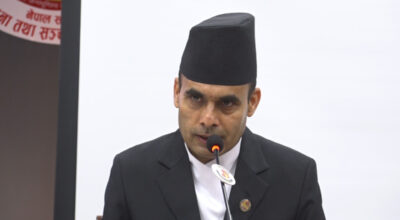
This time, a Nepali delegation led by Minister for Agriculture and Livestock Development, Dr Madan Prasad Pariyar, attended the COP30 in Belém, Brazil. In his address, as the leader of the Nepali delegation to COP30, Minister Dr Pariyar expressed Nepal’s firm commitment to climate justice.
He explained major climate challenges Nepal was facing like retreating glaciers, severe drought, and unseasonal floods and impacts on agriculture. Nepal’s NDC3.0 and zero emissions by 2045 were also shared by him. The Minister urged the developed countries to fulfill past commitments on climate finance.
Finally, as the climate event is due to conclude tomorrow (Friday), the thorniest issues this time too are the climate finance and curtailment of fossil fuel. It is therefore the testing times of the UNFCCC members, especially the rich and industrial ones, again whether they really will be able to accelerate implementation of climate action and cater justice, especially to the most vulnerable ones.
The vulnerable countries are awaiting how much the rich and industrial ones, largely responsible for heating the planet, cough up for climate adaptation. It is time to serve the truth, and make the planet livable. The world is watching whether COP30 from the lungs of the planet serves truth with accelerated climate actions. #nepal #cop30