


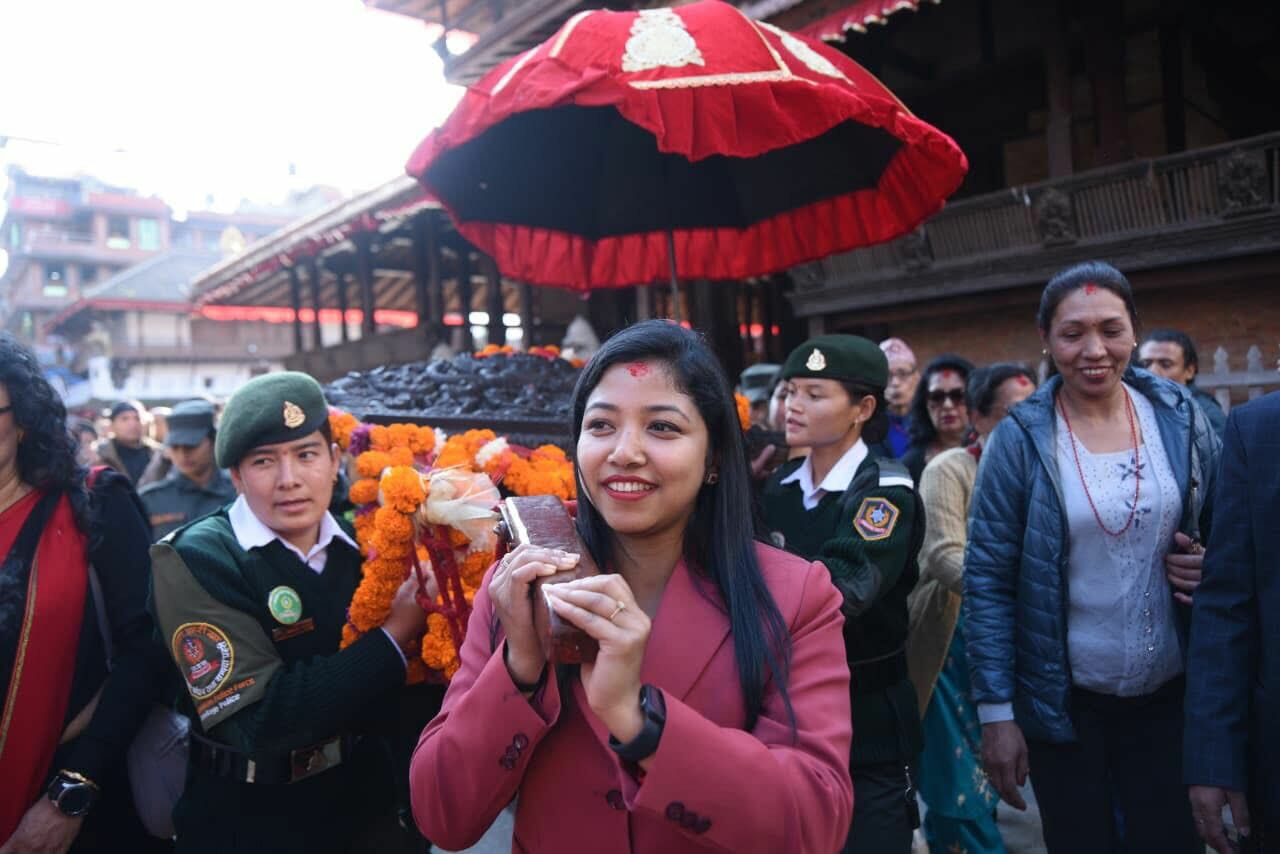
Kathmandu, Nov 23: The torana stolen from the residence of the Living Goddess Kumari in Basantapur has been reinstalled.
The decision to reinstall it was taken on November 17, 2025 during a meeting chaired by Kathmandu Metropolitan City Deputy Mayor Sunita Dangol. The torana, stolen around 1999 (2056 BS) and later found at the Barakat Gallery in the United Kingdom, had been returned to Nepal and preserved at the National Museum in Chhauni.
Before reinstatement, Deputy Mayor Dangol, Heritage and Tourism Committee Chair Ashaman Sangat, Ward 23 Chair and Legislative Committee Coordinator Macharaja Maharjan, and Kumari House custodian Gautam Shakya, along with other officials, visited the museum to receive the artifact and complete the handover process. Heritage conservationists and local residents participated actively in the ceremony.
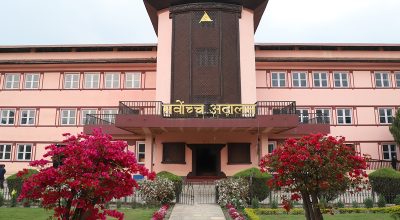
In accordance with Section 20(a) of the Ancient Monument Preservation Act, 1956, the torana was returned to its original location on the recommendation of the local government and District Administration Office, and handed over to the responsible Guthi caretakers. The semi-circular wooden torana, carved in a khepu motif and measuring 104.55 centimeters, dates to the 17th–18th century. It has been installed above the fifth window from the left on the ground-floor façade of the Kumari House.
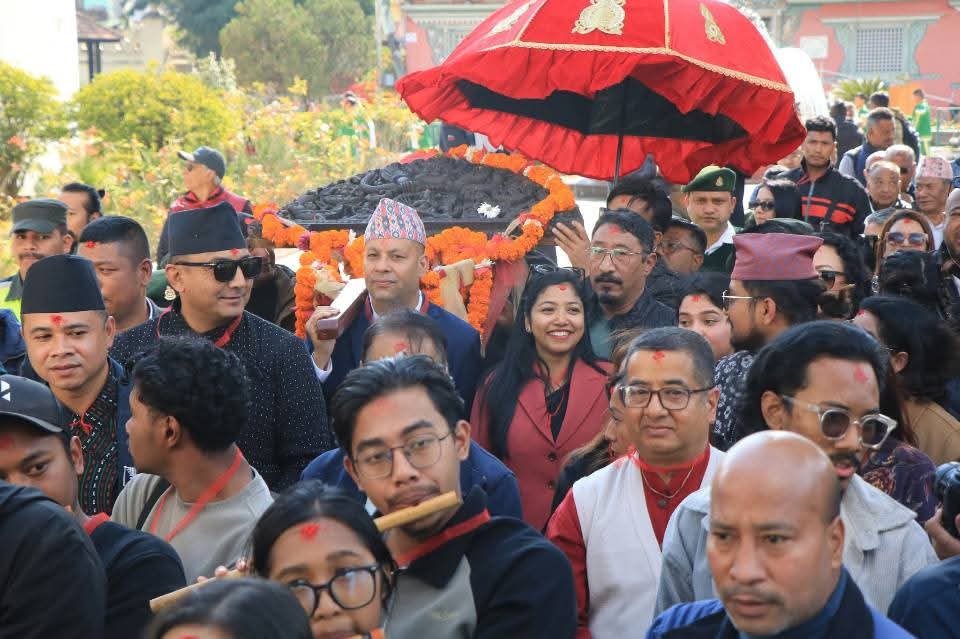
Deputy Mayor Dangol stated that the reinstatement marks an encouraging step toward restoring stolen heritage artifacts. Committee Chair Sangat described the occasion as a moment of pride, while Ward Chair Maharjan noted that the ward’s historic character is gradually being revived.
What is Torana?
The word ‘torana’ is from the Sanskrit language and is used commonly as the term to describe the stylized decorative framework surrounding sculptural and painted figures in Indian art specifically and Asian art in general. A torana can be described as a gate, gateway, arch, throne-back, backrest, or decorative niche surrounding a deity, god, buddha, bodhisattva or religious hierarch, teacher or saint. A decorative torana can also be employed above a temple doorway or decorating temple windows as found in the Kathmandu Valley of Nepal. (Source: Himalayanart.org)
According to custodian Shakya, three toranas were stolen between 2056 and 2057 BS, allegedly transported by taxi in the evening. The thieves reportedly claimed the artifacts were being taken for repair when questioned. After the thefts were reported to the Department of Archaeology and Nepal Police, replica toranas—each costing about Rs 80,000—were installed roughly three years later.
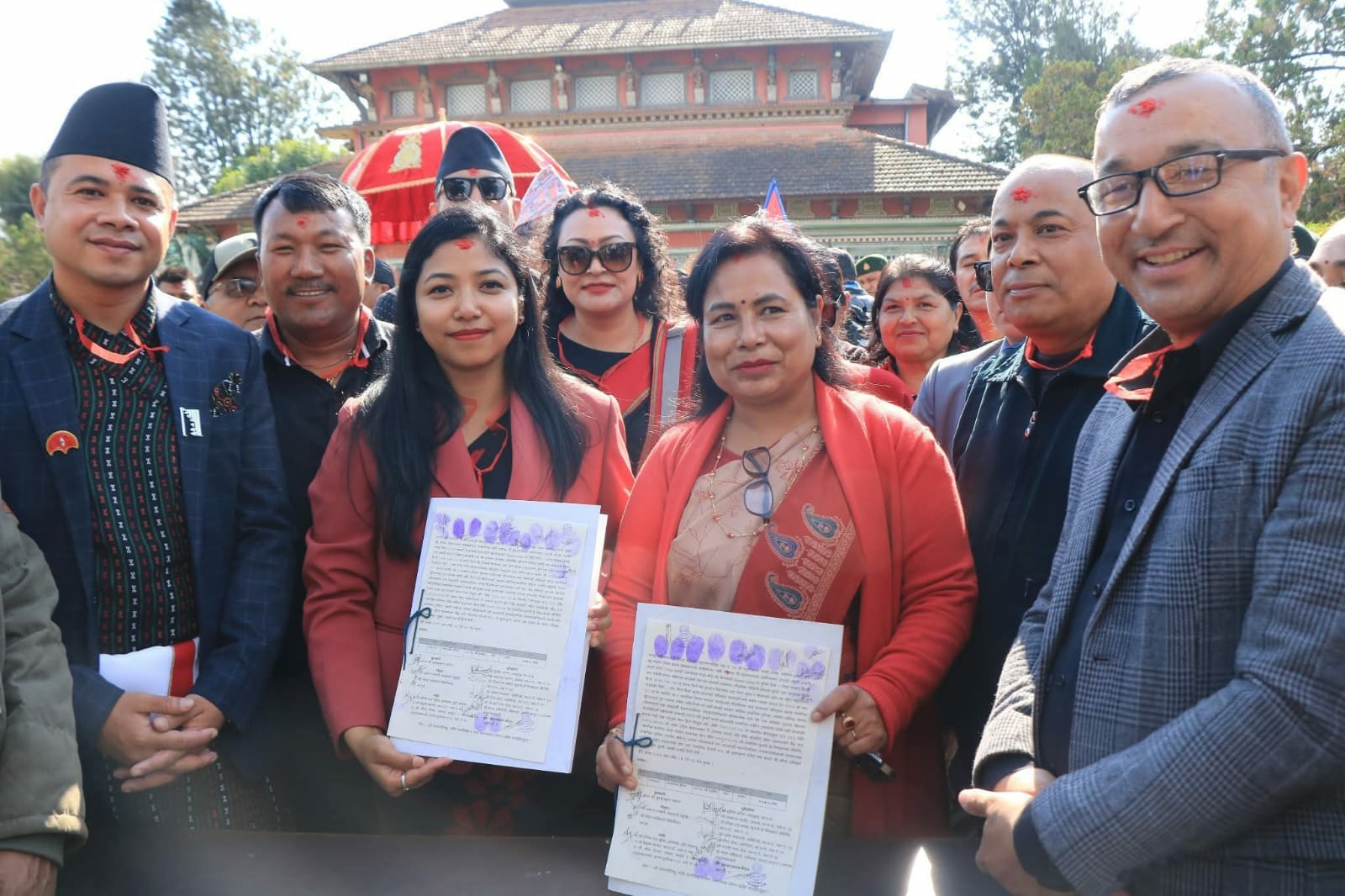
The Kumari House torana and a donor statue from Manjushree Naka Mahavihar were formally handed over to the Embassy of Nepal in the UK on March 18, 2022 (Chaitra 4, 2078 BS). They were later brought back to Nepal and deposited at the National Museum.
The repatriation of stolen artifacts is made possible through the 1970 UNESCO Convention, which prohibits the illicit import, export, and transfer of cultural property. The convention has been ratified by 145 countries.
Kumari Bahal was built during the reign of King Jaya Prakash Malla in 1814 BS. #kumari #nepal #torana