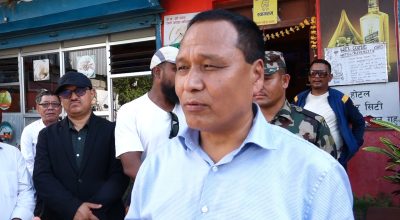
Turkmenistan, August 4: Lawmaker Surya Bahadur Thapa Chhetri has expressed his confidence that the Awaza programme of action will be useful towards attaining the Sustainable Development Goals (SDGs) within the stipulated time by addressing challenges facing the Landlocked Developing Countries.
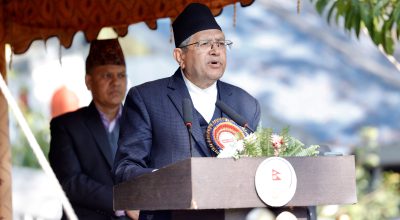
He said this while delivering his remarks on behalf of Nepal at a thematic session organized by the United Nations Office and Inter-Parliamentary Union (IPU) at Awaza City of Turkmenistan today amidst the presence of lawmakers of Turkmenistan and high-level representatives from Least Developed Countries, landlocked and island developing countries.
He noted it a crucial responsibility of the parliament to effectively implement the programme of action.
Lawmaker Chhetri suggested to develop a mechanism to monitor, evaluate and review the progress made in the enforcement of the action plan and encourage the government to take concrete initiative to that end.
Noting that peace, trust, and good governance are essential and mutually reinforcing pillars of sustainable development, particularly for LLDCs, he claimed that Nepal has entered into an era of political stability and socio-economic transformation after promulgating the Constitution.
“In many LLDCs, however, parliaments face systemic capacity constraints, and marginalized voices—especially those of women, youth, and vulnerable communities—are often underrepresented in decision-making processes’, it is shared.
‘Nepal is effortful to attain SDGs in the designated time through its mechanisms and total capability of the society’, he shared, calling for extra support from development partners to avert gaps and challenges in some sectors.
He stressed the need to raise the voice of LLDCs with solid evidence to attain SDGs through effective implementation of the programme of action.
Lawmaker Chhetri further noted the need to use regional and global forums, including IPU and high-level political mechanisms for enhancing mutual trust, peace and collaboration among the LLDCs and neighbouring countries. #LLDC3 #nepal #SDGs
Full text
I would like to take this opportunity to convey my special thanks to the organizers for convening this important event in this beautiful city.
I am fully convinced that the theme of this program is relevant and timely. I believe that all of us will be benefited from shared knowledge, wisdom and experience sharing.
As we all know, the year 2030 is not far from us, the progress in achieving Sustainable Development Goals (SDGs) is challenging, especially in landlocked, and developing countries (LLDCs). We need more data, voices and equity in resource allocation.
The available evidences suggest that LLDCs have been facing a number of unique challenges in their development efforts.
High transportation cost, inadequate infrastructure, and limited access to the global market are hindering economic and social development.
Despite their lower level of contribution to global climate change, LLDCs are struggling to cope with the disproportionate impacts of climate change, emergencies and disasters.
I want to remind the commitments to the Vienna Program of Action that aims to address the special development needs and challenges of LLDCs, we should translate our commitments into actions.
Against this backdrop, I am fully convinced that the Awaza Program of Action should be a catalyst in addressing the challenges faced by LLDCs and to help achieve SDGs within the stipulated time frame.
As parliamentarians, we have an important role to effectively implement Awaza Program of Action (APOA). We are the voice of the people and our talks should be evidence based.
We need to support the steps taken by our governments to implement it and raise the voices as when required.
Let’s develop a mechanism to monitor, evaluate and review the progress made on the APOA and encourage the governments to take concrete actions.
Similarly, our parliaments have a great role in building peace, trust and accountable governance. We are the bridge between the people, government, civil society and private sector.
We have the sovereign right to make legislation and through budget, allocate required funds to implement APOA.
In fact, peace in the country, trust upon the government and accountable institutions are crucial to achieve overall development of the countries including SDGs.
In Nepal, after the implementation of new constitution in 2015, we have entered the era of political stability and socio-economic transformation.
We are making our best effort to achieve SDGs on time. Nepal is mobilizing whole of the government and whole of societies to achieve SDGs.
While we are on track to realize some of them, gaps and challenges are still persistent.
For this, we need enhanced level of cooperation and support from our development partners. Similarly, effective implementation of APOA will also help achieving SDGs, particularly in LLDCs.
To strengthen the role of LLDC parliaments, our voices should be evidence based, we need to perform well to fulfil our mandates and to gain legitimacy.
For an inclusive, accountable and transparent governance, the LLDC parliaments should ensure social cohesion, participative decision making, equitable distribution of resources and rule of law through policy as well as legal intervention.
To strengthen peace, trust and cooperation among LLDCs and their neighbors, we should use the regional and global platforms like Inter-parliamentary Union and High-Level Political Forums.
Last but not least, I would like to assure that Nepal is committed to working with you all to advancing the Awaza Program of Action.
I believe, evidence-based voices, our strong commitment and coherent actions will be instrumental for this.
Together we can contribute in creating a fairer world for ourselves and future generations.