


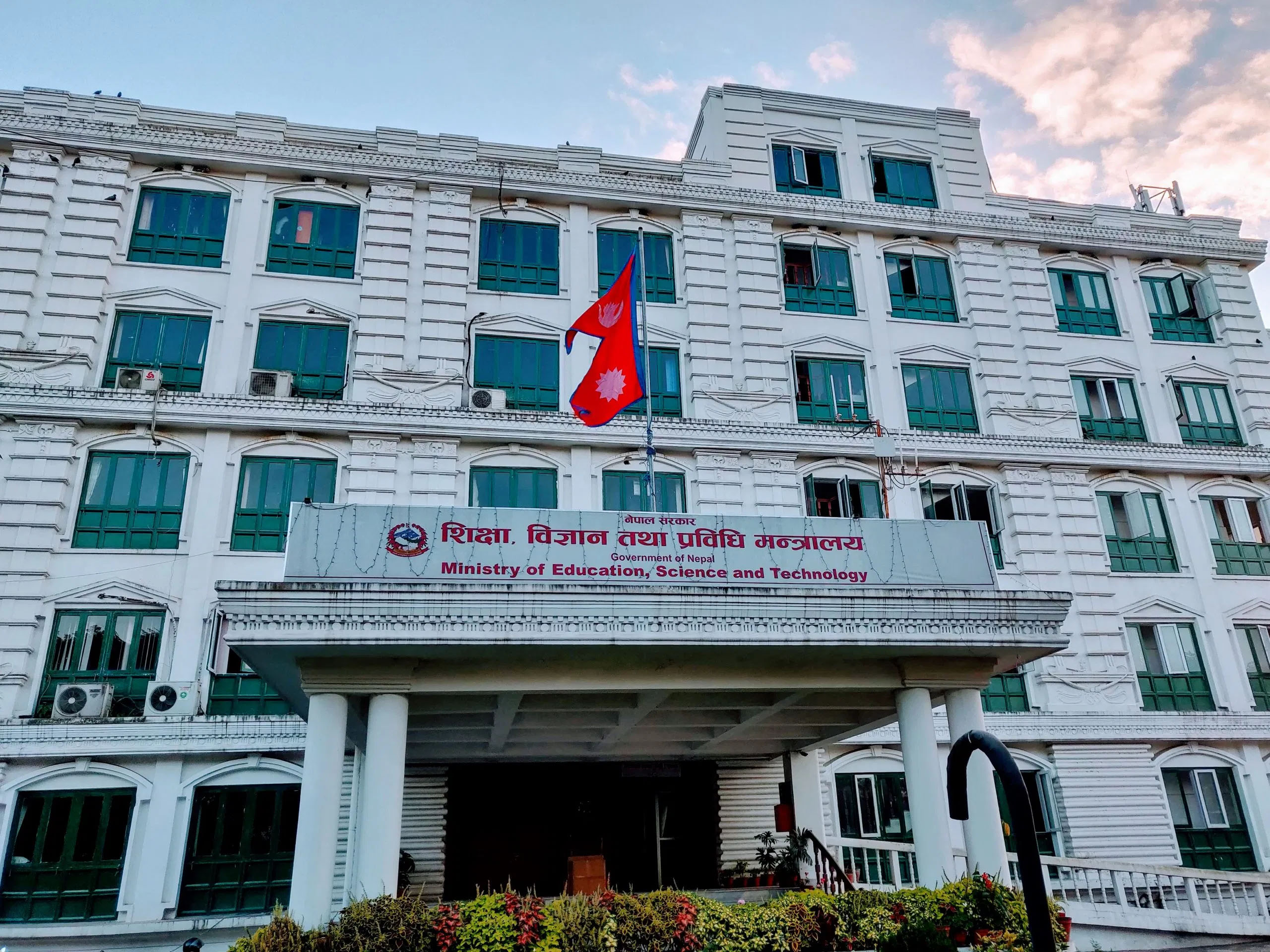
Kathmandu, May 7: Minister for Education, Science and Technology Sasmit Pokharel has intensified efforts to reform Nepal’s education sector as the new academic session begins, holding a series of meetings focused on policy coordination and management reforms.
Over the past two weeks, the minister has discussed issues including curriculum reform, regulation of school fees, scholarship transparency, and the possible introduction of a permanent two-day weekend in schools.
The discussions come amid growing tensions between federal and local governments after several municipalities opened student enrolment in early April, before the official academic session, contrary to the federal government’s decision.
A key meeting held on Monday brought together mayors from Kathmandu Valley metropolitan cities, senior government officials, and representatives of local government associations.
During the discussion, Minister Pokharel stressed that meaningful education reform requires coordination among federal, provincial, and local governments. He said the ministry would support local governments in leading reform efforts.
The minister also said complaints regarding fee hikes and scholarship distribution in institutional schools had reached the ministry. He clarified that a mechanism has been prepared to regulate school fees and ensure transparency in scholarships.
Following the meeting, Pokharel stated that the government is preparing to permanently implement a two-day weekend to improve productivity among teachers and students.
However, some local representatives opposed the idea, arguing that local governments should determine holidays based on local culture and disaster-related needs.
Sunita Dangol, Acting Mayor of Kathmandu Metropolitan City, emphasized the need to revise the curriculum if a two-day weekend is introduced.
Similarly, Chiribabu Maharjan, Mayor of Lalitpur Metropolitan City, called for transparency in private-school scholarship distribution and proper land management policies for schools.
President of the National Federation of Municipalities, Bhim Prasad Dhungana, stressed that local governments should have authority to determine and regulate school fees.
Likewise, Laxmi Devi Pandey, President of the National Federation of Rural Municipalities, said education reform can only succeed through coordination among all three tiers of government.
She added that many local representatives argued that education management primarily falls under local government jurisdiction as guaranteed by the Constitution.
According to the Ministry, the discussions focused on improving educational management, transparency, and policy coordination, with further consultations planned with provincial governments in the coming days. #Nepal