


Kathmandu: A new scientific analysis has ruled out the recent major volcanic eruption in Ethiopia as a cause of South Asia’s worsening air pollution, confirming that the toxic smog choking cities from Lahore to Dhaka is driven by local and regional sources.
Research conducted by the International Centre for Integrated Mountain Development (ICIMOD) found that emissions from Ethiopia’s Hayli Gubbi volcano did not contribute to dangerous pollution levels at ground level in South Asia. Although the eruption released sulphur dioxide (SO₂)—a gas known for its harmful impacts on health and the environment—satellite observations show the volcanic plume travelled at high altitude and did not mix down into the air people breathe.
“While we tracked the volcanic plume moving eastwards across parts of Asia, our data clearly shows it moved at high altitude,” said Ashish Tiwari, Air Lead at ICIMOD. “It had little to no impact on the severe pollution already present at ground level across South Asia.”
To verify this, scientists analysed satellite measurements of Aerosol Optical Depth (AOD), a key indicator of the total amount of particles in the atmosphere. The results showed no noticeable increase in pollution following the eruption.
“The pollution levels were already high before the eruption and remained constantly high after it,” explained Abhishek Kumar Upadhyay, Energy and Emission Specialist at ICIMOD. “The volcano did not add to the public health crisis happening on our streets.”
Instead, the study highlights a persistent and region-wide air quality emergency driven by human activity and unfavourable weather conditions. During the same period, major cities including Islamabad, Lahore, Delhi, Kathmandu, Thimphu, and Dhaka experienced dangerous spikes in PM2.5—fine particulate matter that poses the greatest risk to human health.
Experts point to calm winds, cooler winter temperatures, and emissions from transport, industry, agriculture, and household fuel use as the primary culprits.
“Calm weather creates a ‘lid’ over the region, trapping pollution from local sources close to the ground,” said Arshini Saikia, Air Quality Modelling Analyst at ICIMOD. “Our October data shows an increase in PM2.5, PM10, and carbon monoxide, all clearly linked to human activity.”
Recent monitoring data underscores the severity of the problem. In Dhaka, daily PM2.5 levels exceeded World Health Organization (WHO) guidelines on seven days between August and October, while PM10 levels crossed safe limits on 24 days. The WHO’s 24-hour guideline for PM2.5 is 15 micrograms per cubic metre (µg/m³).
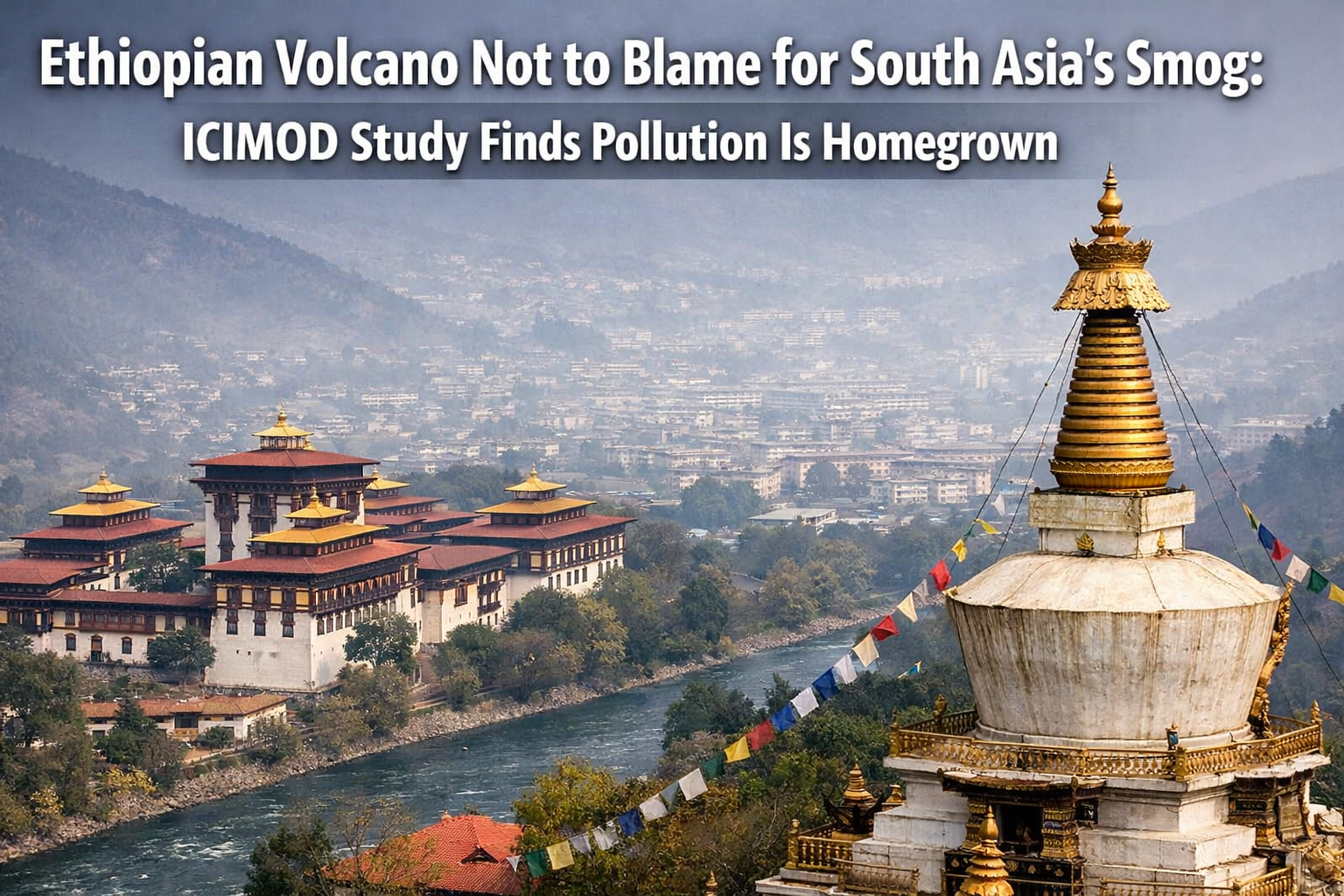
Even Bhutan, which has the cleanest air in the region, is not immune. Winter PM2.5 levels in the capital, Thimphu, frequently rise above 60 µg/m³. In Kathmandu, air quality briefly improved in October due to heavy rainfall from Cyclone Montha, but pollution levels quickly rebounded once the rains subsided.
The findings reinforce the urgent need for strong local and national action to combat air pollution. Countries such as Nepal and Bhutan have recently launched National Clean Air Action Plans aimed at cutting emissions and safeguarding public health—efforts ICIMOD says are critical to addressing a crisis largely of the region’s own making.
Technical analysis for this report was done with support from Manohar Dahal, Air Quality Application Development Associate at ICIMOD, Manjil Raut, Air Quality Instrumentation Consultant and Arshini Saikia, Air Quality Modelling Analyst