


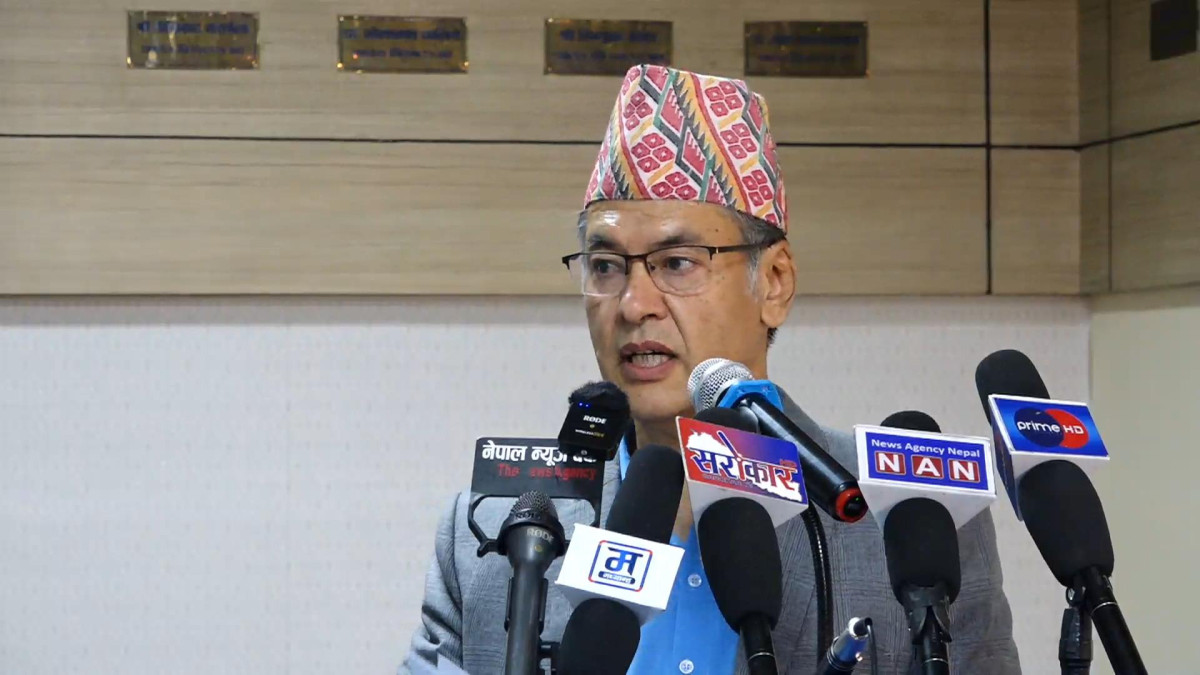
Kathmandu, May 2: Within a month of assuming office, Executive Director of the Nepal Electricity Authority (NEA), Hitendra Dev Shakya, released a white paper highlighting the current status of electricity access and future challenges in the energy sector.
According to Shakya, electricity access has reached 97.5% at the municipal level, 95% at the ward level, and 91.4% based on household structures. As of the end of the Nepali month of Falgun, the internal electricity demand stood at 2,337 megawatts, and the Authority projects this demand will reach 2,438 megawatts by the end of the current fiscal year.
Shakya pointed out the imbalance between supply and demand, stating that during the monsoon season, a surplus of electricity often goes to waste, while in the dry season, rising demand cannot be fully met.
He said, “Managing this situation will be even more challenging in the coming days.” According to NEA’s projections:
- In fiscal year 2082/83 (BS), there will be a monsoon surplus of 2,648 megawatts, and
- In 2083/84, a surplus of 3,316 megawatts is expected.
This surplus energy will need to be exported. However, in the same periods, the dry season is projected to face a shortfall of 791 megawatts in 2082/83 and 728 megawatts in 2083/84, which will need to be met through imports.
Shakya stated that electricity imports cannot be eliminated in the near future, and if the current trend continues, it will take several more years to phase out imports.
To ensure sustainable solutions and energy security, Shakya emphasized the need for the construction of semi-reservoir, reservoir-based, and pumped-storage hydropower projects, along with battery energy storage systems. Additionally, efforts must be made to increase the current annual electricity consumption growth rate from 12–14% to 20%. #NEA #nepal