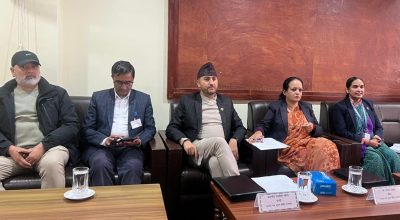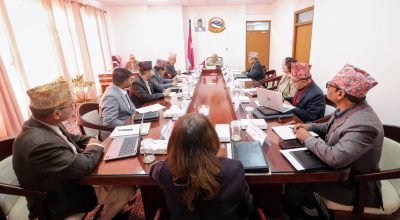



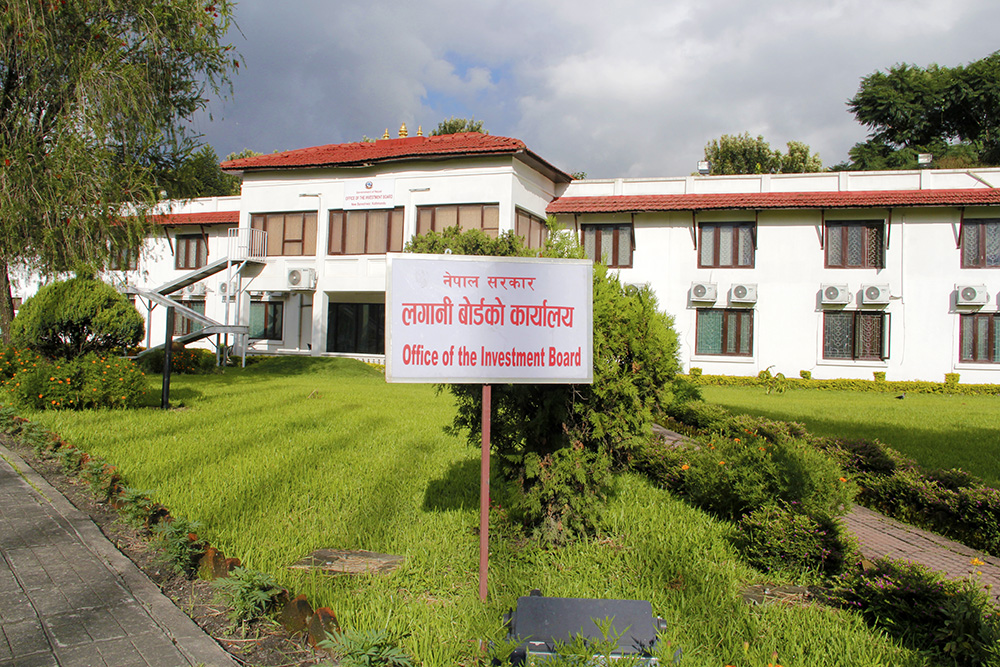
Kathmandu, May 2 : Investment Board Nepal (IBN) has approved its ‘Strategy and Business Plan 2081–86’ to pursue ambitious goals in infrastructure development under the Public-Private Partnership (PPP) model. The Board’s meeting, held last Sunday, endorsed the document.
According to IBN Spokesperson Pradyumna Prasad Upadhyay, the strategy outlines actions for the next four years across a range of infrastructure projects. “The plan is very ambitious. We’ve set minimum and maximum investment targets. We believe that, with a favorable investment environment, proper human resource management, and supportive legislation, these targets can be achieved,” Upadhyay stated.
He added that the strategy will also be instrumental in transforming the Board’s institutional structure, strengthening its organization, and managing human resources more effectively.
Key Targets of the Strategy and Business Plan
-
11 projects worth USD 8.95 billion are targeted for completion by FY 2085/86 BS. Even if not all are completed, the goal is to operationalize at least five projects totaling USD 4.7 billion.
-
Seven projects worth at least USD 2.83 billion are expected to reach the construction stage by the same fiscal year.
-
The construction of 14 projects worth up to USD 5.55 billion is targeted to reach final stages during this period.
-
A total of 57 projects worth USD 24.3 billion are proposed for pipeline entry and feasibility studies over the next four years.
-
52 projects worth USD 23.5 billion are expected to reach the procurement stage.
-
42 projects totaling USD 17.95 billion will enter the negotiation phase for Project Development Agreements (PDA) and Project Implementation Agreements (PIA).
-
32 projects worth USD 15.7 billion will progress to financial structuring and pre-development activities.
The Board anticipates approving investments of up to USD 7.45 billion for 67 private sector-led projects and USD 3.15 billion for 25 projects initiated by other entities within the next four years.
To support these goals, IBN has drafted a new organizational structure, like Directorate of Planning, Administration and Financial Management, Public-Private Partnership Directorate, Investment Promotion and Facilitation Directorate and Project Development and Management Directorate.
Each directorate will be headed by at least a Joint Secretary-level official. Additionally, the Board has decided to conduct an Organization and Management Survey to further optimize its internal functioning.
Despite these forward-looking plans, IBN’s past performance over the last 15 years has been underwhelming. Since its establishment, the Board has approved investments totaling NPR 1,200 billion for 38 projects, a figure that highlights a stark gap between past achievements and future goals.
The one-stop service center, set up within the IBN office to streamline processes, has so far remained ineffective due to staff shortages and sluggish decision implementation.
Although the formation of a separate fund for the Board has been envisioned for the past 12 years, it is yet to materialize. The same applies to the establishment of a Land Acquisition Fund and a Viability Gap Funding (VGF) mechanism.
The Board still relies heavily on donor agencies for hiring experts and staff, underlining its ongoing operational and structural limitations.