


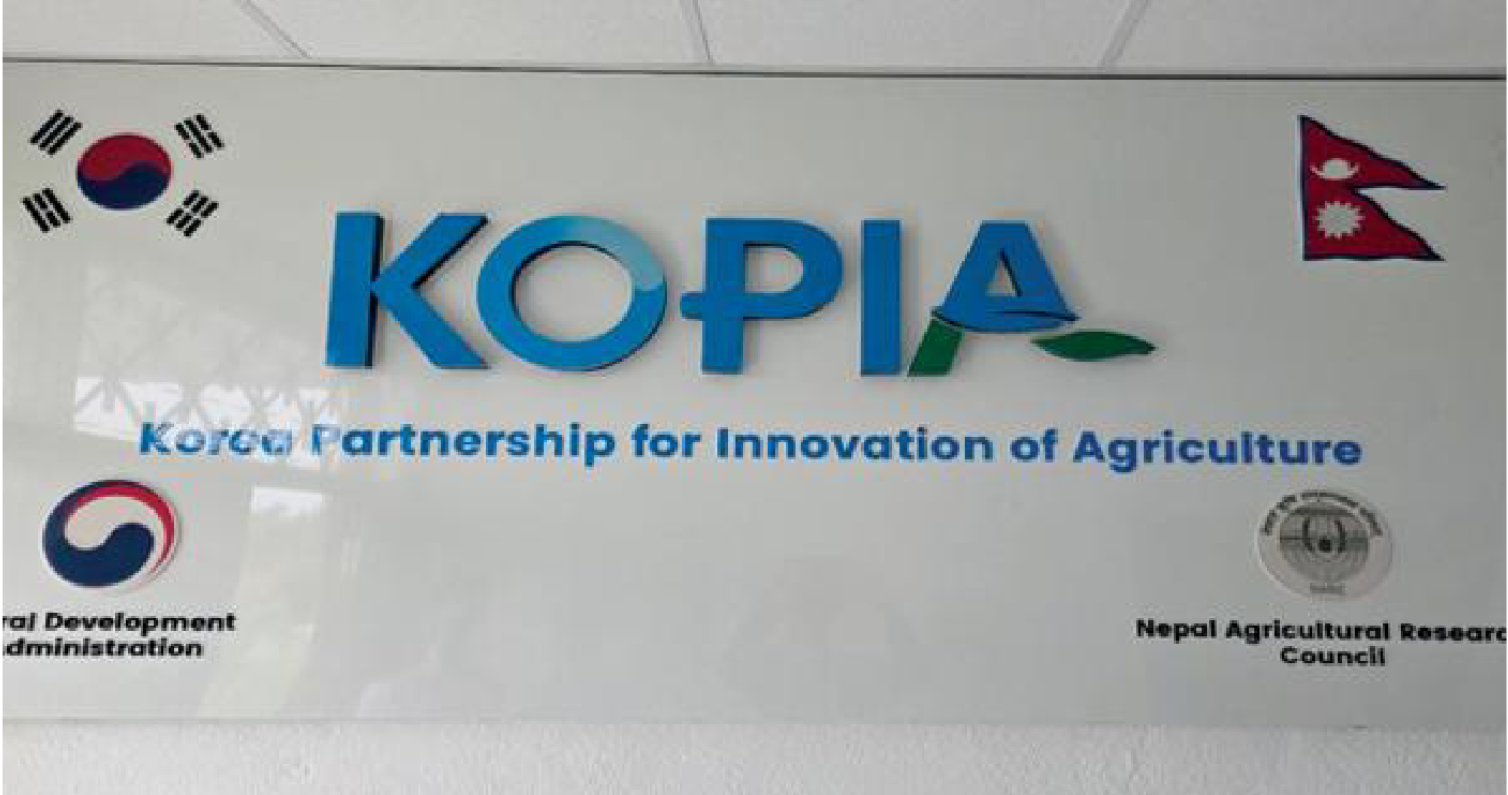
Kathmandu, June 5: The Korea Partnership for Innovation of Agriculture (KOPIA) Nepal Centre has completed its first year of operation, marking a new chapter in agricultural technology cooperation between Nepal and the Republic of Korea.
Established under KOPIA, an overseas agricultural technology cooperation programme implemented by the Republic of Korea’s Rural Development Administration (RDA), the Centre aims to support Nepal’s agricultural development through technology transfer, joint research, field demonstrations, capacity building and the dissemination of improved farming practices.
KOPIA works with partner countries to enhance agricultural productivity, strengthen food security and improve farmers’ livelihoods by sharing Korea’s experience in agricultural research and rural development.
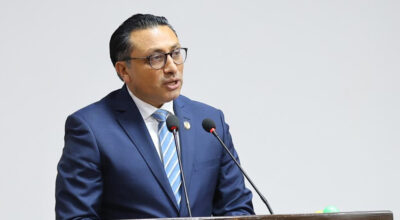
Speaking on the occasion, Dr. Song Young Ju, Director of the KOPIA Nepal Centre, described the institution as more than just a project office.
“KOPIA Nepal Centre is a bridge between Korea’s agricultural development experience and the needs of Nepali farmers,” he said. “Our goal is to work together with Nepali partners to develop, test and disseminate technologies that are suitable for Nepal’s agricultural conditions.”
Dr. Song noted that South Korea had once faced food shortages but successfully transformed its agricultural sector through improved crop varieties, quality seed systems, irrigation, mechanisation, research and effective extension services.
“While Korea’s experience cannot be replicated directly, many lessons can be adapted to Nepal’s context,” he said. “KOPIA’s role is to share these experiences in a practical way and work with local institutions to develop solutions that benefit farmers.”
The Centre has identified rice and potato as priority crops for its initial cooperation projects.
Rice, Nepal’s principal staple crop, remains crucial to food security and rural livelihoods. However, production continues to face challenges including low productivity, limited access to quality seeds, climate variability, labour shortages and inadequate mechanisation.
To address these issues, KOPIA Nepal is collaborating with Nepali partners to identify high-yielding and locally adaptable rice varieties, improve spring rice cultivation, strengthen quality seed systems and expand farmer training and field demonstration programmes.
“Improving rice productivity is directly linked to food security and farmers’ incomes,” Dr. Song said. “Through demonstration plots and training programmes, farmers can observe improved varieties and cultivation technologies firsthand and adopt them with confidence.”
The Centre is also focusing on developing a healthy seed potato production system. Potato is one of Nepal’s major food and cash crops, but farmers often face shortages of quality seed potatoes, resulting in reduced productivity and crop quality.
To tackle this challenge, KOPIA Nepal plans to support technical cooperation in tissue culture, production of disease-free planting materials, seed multiplication and field demonstrations.
“Healthy seed potatoes are essential for improving potato productivity,” Dr. Song said. “Korea has valuable experience in seed potato production and quality control, and we hope to share that expertise with our Nepali partners.”
During its first year, the Centre concentrated on building partnerships, studying local agricultural conditions, identifying project priorities with Nepali institutions and laying the groundwork for field-based activities.
From its second year onward, KOPIA Nepal plans to expand demonstration projects, strengthen farmer training programmes, support quality seed production and promote the wider adoption of successful agricultural technologies across the country. #nepal