


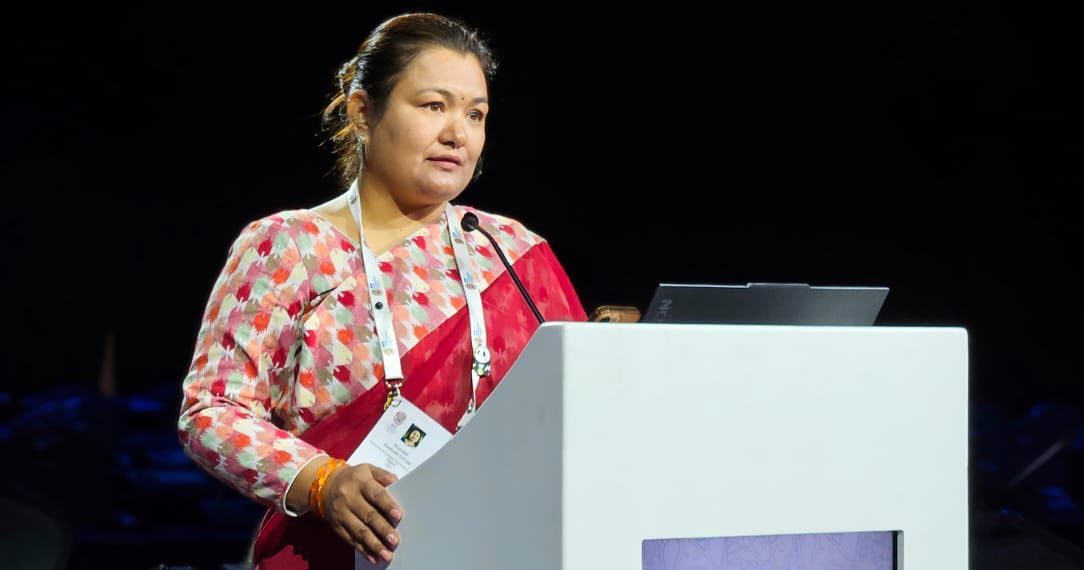
It is an honor and a privilege to stand before you today as a candidate for IUCN Regional Councillor for South and East Asia. I, represent Nepal- a land of diverse cultures and communities, vast spirit, rich wisdom, and remarkable resilience.
More than 2,500 years ago in the planes of southern Nepal known as Lumbini, a young Siddhartha Gautama, who would later become the Buddha found a sarus crane- the tallest Asian flying Bird struck by an arrow. He removed the arrow, cared for the bird, and saved its life. That simple act became more than an expression of compassion, it symbolized the beginning of a philosophy: every form of life deserves respect, care, and protection.
Buddhism’s principles of ahimsa—non-violence—and karuna—compassion—have guided Nepal ever since. Long before the word conservation existed, our ancestors live by its ethos.
Protecting a sarus crane, means protecting wetlands, which are critical for both biodiversity and human existence. Without water, there is no life- life begins with water and ends with water. As long as compassion thrives, humanity thrives. The story of the Sarus Crane is also a story of hope. Through 12 years of collective and continuous effort, Nepal has not only protected these birds but also double their population. This shows that when people and communities come together, conservation is not just possible—it is powerful.
Now, I can proudly say that I come from the countries which never been colonized, yet remain least developed, with an unstable government facing severe climate vulnerability and situated between two giant supportive neighbors. Despite all the challenges, Nepal has achieved conservation successes that inspire the world. In just a few decades, we reversed a 50-year history of decline. We have virtually ended rhino poaching and tripled our tiger population. Our snow leopard population is now around 400. Once on the brink, our forests have been restored, and today more than 45 percent of our land is coved by forests. We have also safeguarded the elusive red panda and pangolins, revived vultures from near extinction, and continue to protect other species that quietly sustain our ecosystems.
Nepal has become a model of conservation success—rooted in our culture, guided by our traditions, and strengthened by the harmony of modern science and indigenous knowledge. From the Peak of the Mountain Everest to the fertile Terai plains, our diverse ethnic, indigenous, and religious communities make conservation not just a policy, but a way of life -our country resilience. Nepal is also nature learning center, a place-where ‘participatory conservation’ can be learn along with unique ground for transboundary conservation, Here, best practices can be shared, exchanged, and learned—making Nepal a true lifelong learning center for conservation.
Mountainous countries like ours, protecting mountain and fresh water ecosystems is not optional—it is essential. These ecosystems regulate water for downstream communities, and without them, the growing pressures of human population, infrastructures development, and industries will lead to disasters. Freshwater species have already declined by 84% worldwide, and countless endangered and endemic species that depend on mountain waters are at risk. Mountains carry a profound responsibility: their snow and rivers sustain millions of lives downstream and eventually flow into saltwater ecosystems, among the richest on Earth. Safeguarding mountain ecosystems is preserving this vital connection—for biodiversity, for people, and for generations yet to come. We embrace this responsibility with accountability, and ownership guided by our cultural values with deep respect for the nature- mountain, rivers, forest and even caves.
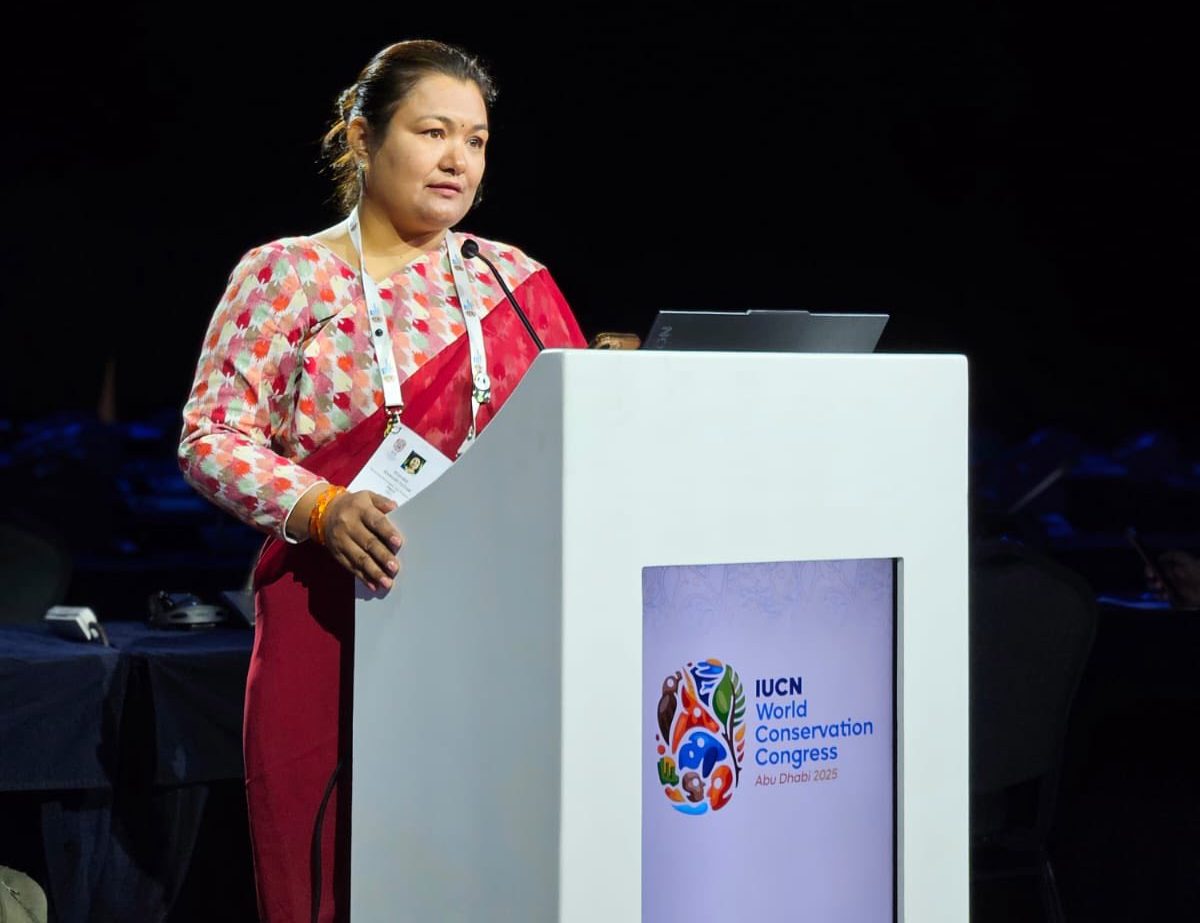
Following in the footsteps of our conservation hero, Dr. Jane Goodall, I too stand here with a hope—hope restored by nature and kept alive by communities. As your Regional Councillor, I will turn this hope into action through championing the integration of indigenous wisdom with modern science, placing communities at the heart of solutions, and ensuring policies uphold both biodiversity and human dignity.
In facing the challenges of our time, let us draw on this wisdom—recognizing every species as worthy of protection, every community as indispensable, and every choice as transformative.”
I am deeply committed to safeguarding our planet and shaping a more sustainable future. I humbly ask for your trust and support—not only to represent Nepal, but to carry the shared aspirations of our diverse nations into the IUCN Council.
Together, let us continue this timeless story of people and nature, compassion and resilience, heritage and innovation. Together, let us create a future where both people and nature thrive in harmony.