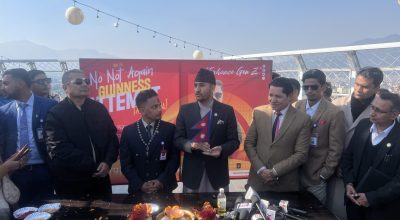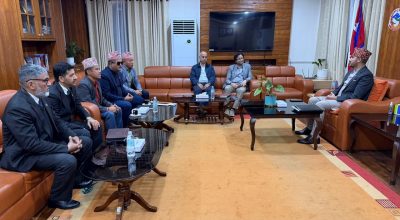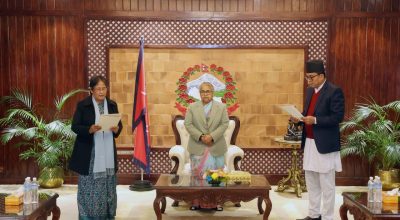



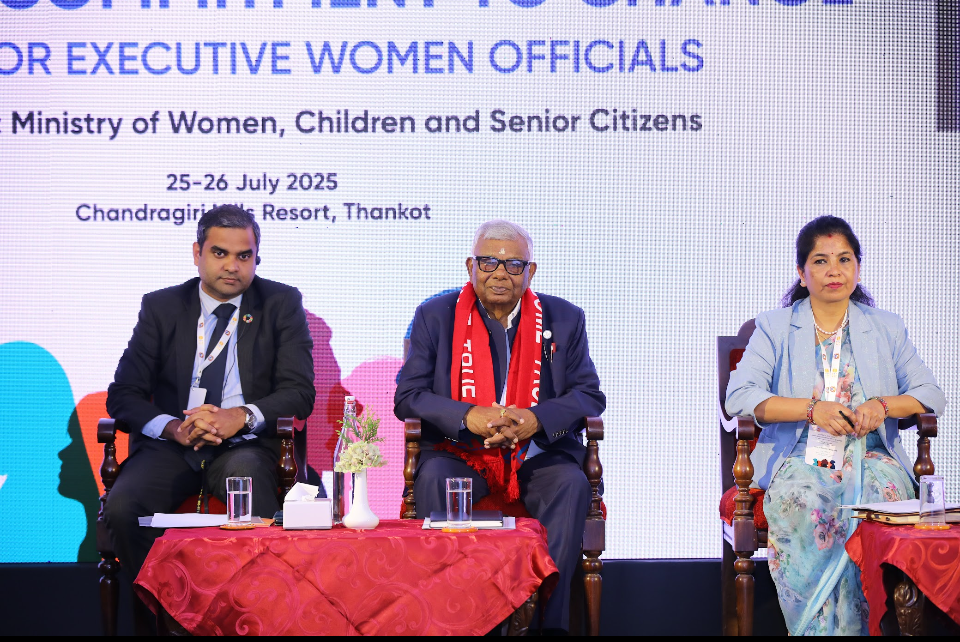
Kathmandu, July 25: The Ministry of Women, Children and Senior Citizens (MoWCSC), in collaboration with UNFPA, the United Nations sexual and reproductive health agency, inaugurated a high-level National Dialogue: Bridging Commitment to Change today in Kathmandu. The forum brings together senior executive women officials from Nepal’s federal ministries and constitutional bodies to chart a collective path forward for gender equality and inclusive governance.
Held under the theme “Bringing Commitment to Change for Senior Executive Women Officials,” the Dialogue offers a strategic, action-oriented space to strengthen inter-ministerial collaboration, institutionalize gender-responsive planning and budgeting, and accelerate implementation of national and international commitments.
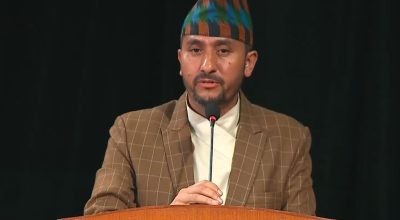
The opening session featured remarks by Hon’ble Minister of Women, Children and Senior Citizens, Mr. Nawal Kishore Sah Sudi, with welcome notes from Joint Secretary Ms. Aabha Shrestha Karn and UNFPA Representative a.i., Mr. Sriram Haridas. The session was chaired by MoWCSC Secretary Ms. Laxmi Kumari Basnet.
“The collective voice of women leaders must shape our national agenda,” said Hon’ble Minister Sudi, highlighting the power of unity, vision, and public leadership. “This is a call not just for policy, but for purpose.”
UNFPA Representative a.i., Mr. Sriram Haridas, emphasized that gender equality must be integrated into governance systems and not remain a standalone ambition. “Every law protecting women’s rights must be more than ink on paper. Real change happens with the beating hearts of our public service—with senior women leaders.”
The opening discussions reflected Nepal’s evolving development context, particularly in view of its upcoming graduation to Middle-Income Country status and its commitments under the Sustainable Development Goals (SDGs). A key focus was on aligning national strategies with global human rights obligations, particularly the Convention on the Elimination of All Forms of Discrimination against Women (CEDAW).
Participants engaged in in-depth deliberations on the CEDAW Committee’s concluding observations and Nepal’s efforts to operationalize them through the National CEDAW Implementation Roadmap. This roadmap was recognized as a vital planning and accountability tool for guiding multisectoral efforts to address gender inequality, harmful practices, and systemic discrimination.
Sessions also explored national initiatives led by MoWCSC, including the National Gender-Based Violence (GBV) Action Plan, the proposed integrated GBV law, and strengthened multisectoral coordination mechanisms to improve prevention and response systems. Emphasis was placed on institutionalizing these frameworks in line with Nepal’s Gender Equality Policy to advance justice, ensure access to services, and deliver inclusive, equitable development.
The Dialogue continues tomorrow with sessions focused on:
The leadership role of women in Nepal’s bureaucracy,
The interlinkages between sexual and reproductive health and rights (SRHR), GBV, and the SDGs,
Emerging legal reforms, including dignified menstruation and the draft umbrella GBV legislation.
The national dialogue will culminate in joint commitments for accelerated action, strengthening interministerial coordination and promoting inclusive, gender-responsive governance to achieve gender equality and the SDGs.
As Nepal advances toward middle-income status, this Dialogue underscores a vital principle: gender equality is not just a development goal — it is a governance imperative. The leadership of senior women in public administration is central to building systems that are inclusive, accountable, and resilient. #Nepal