


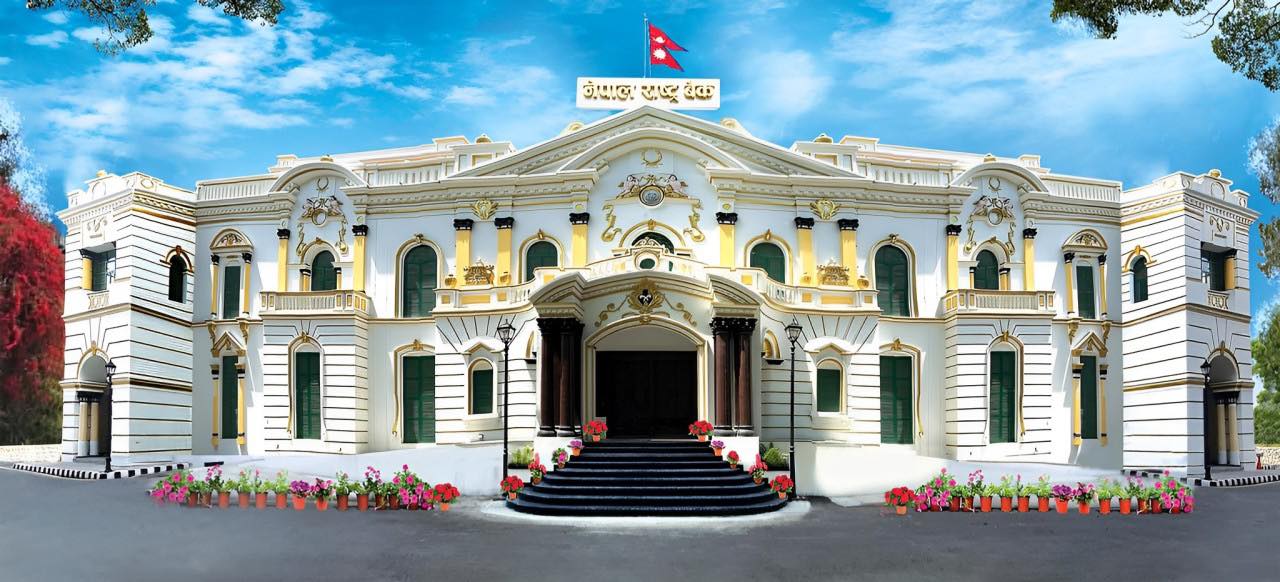
Kathmandu, April 22: Nepal Rastra Bank (NRB), the central bank of Nepal, has decided to use the deposit collection instrument to withdraw Rs 40 billion from the banking system. With excess liquidity accumulating in the system, the central bank will absorb the funds for 160 days.
Recently, due to low demand for loans, liquidity has remained abundant in the banking sector. Banks and financial institutions are providing funds to the central bank at around 3 percent interest.
To manage excess liquidity and interest rates in the financial system, NRB has been using deposit collection instruments and permanent deposit facilities. Only banks and financial institutions licensed under categories ‘A’, ‘B’, and ‘C’ will be allowed to participate in the bidding process.
When allocating long-term deposit collection amounts, bids with the lowest interest rates will be prioritized, and distribution will continue sequentially until the announced amount is covered.
According to NRB notice, as deposits have surged, the bidding will be conducted today through the online purchase system, and interest rates will be determined via auction. The minimum bid amount is Rs 100 million, and the maximum will be divisible by Rs 50 million without remainder, up to the total announced amount.
The principal and interest of this 160-day deposit collection instrument will be paid on Ashoj 21.
According to the central bank’s open market operations procedures, if long-term excess liquidity is observed in the financial market, the Operations Committee may, as needed, use structural open market operations with a maximum maturity of six months. Based on this provision, NRB has repeatedly employed deposit collection instruments. Nepal #NRB