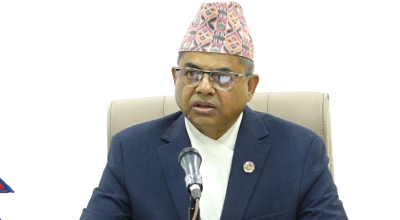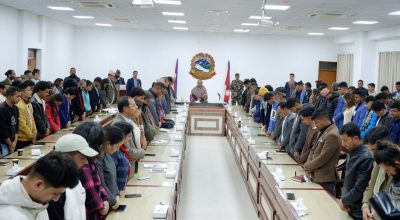




Kathmandu, Dec 10: “Although women are entitled to equal and meaningful role in political leadership, gender-based discrimination from the households to political institutions continues to limit their participation,” said participants at a programme held in Kathmandu.
The participants, primarily women from media, politics, and trade unions, highlighted that they remain marginalized when it comes to leadership opportunities in politics, similar to other sectors. They complained that political parties, both large and small, rarely prioritize women candidates for direct elections and in their respective executive positions.
As they said, women are often fielded only in constituencies where parties are likely to lose, whereas male candidates are preferred in constituencies with higher winning prospects.
Journalist Krishna Paudel, presenting a working paper on “Gender-based Discrimination in Politics and Women’s Participation in the Upcoming Election” at an event organized by the Nepal Press Union Women’s Department, urged political leadership to ensure at least 33 percent women candidates in the upcoming elections. She also called on the Election Commission to monitor parties’ compliance with gender balance in candidate selection.
Journalist Anita Bindu emphasized that proactive intervention by women is essential for securing meaningful participation in political leadership.
“Political empowerment of women is a prerequisite for empowerment in other sectors,” she said, adding that women frequently face character assassination, digital harassment, moral undermining, and threats when challenging male-dominated norms. She stressed that women’s participation should extend beyond quotas.
Political analyst Purushottam Dahal stated that inclusivity is fundamental to democracy, advocating for 50 percent representation of women across all spheres.
“Women need representation not only in policy-making but also at the implementation level,” he asserted, adding that despite legal progress, a significant de facto gap persists in women’s political participation.
Senior journalists, including FNJ Vice-Chair Nitu Pandit, Sancharika Samuha Chair Kamala Panthi, WWJ Chair Ramkala Khadka, former Chair of Bipul Pokhrel, NPU Chair Shiba Lamsal, and media person Bimala Tumkhewa, expressed solidarity with women’s causes.
Women’s Department Coordinator Saloja Dahal, who chaired the session, expressed hope that political leadership will address the gap in regard with meaningful participation of women and sexual and gender minorities in politics.