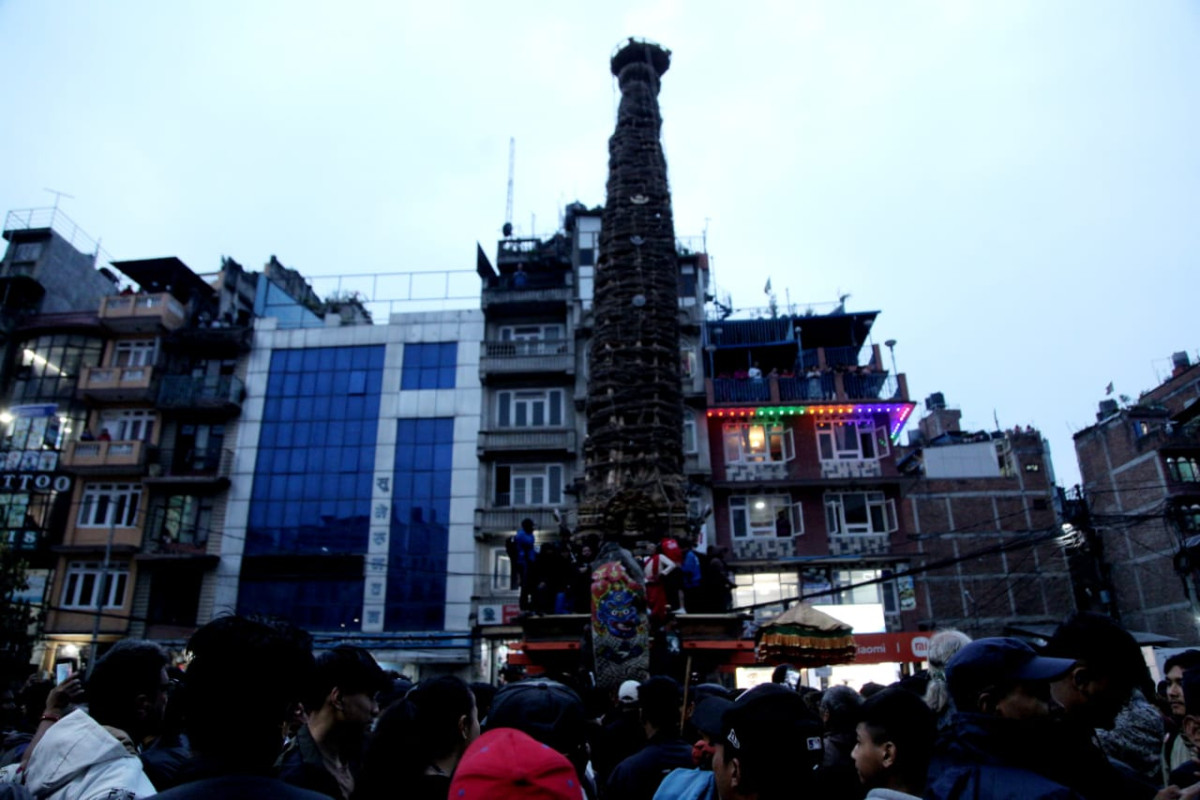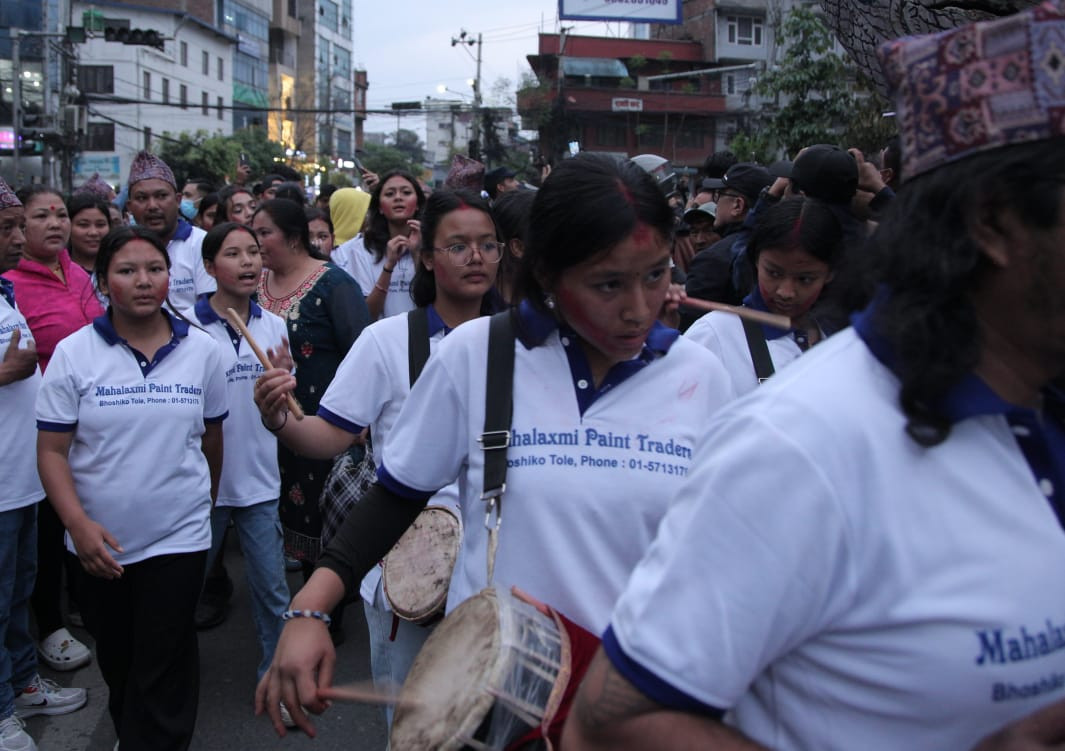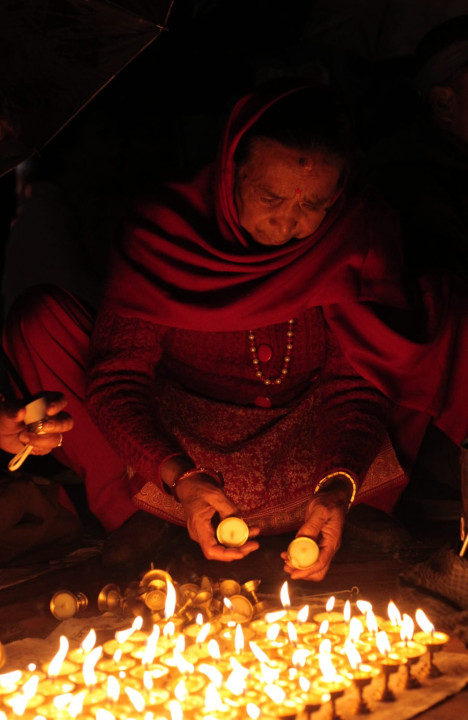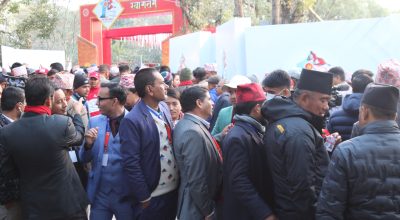



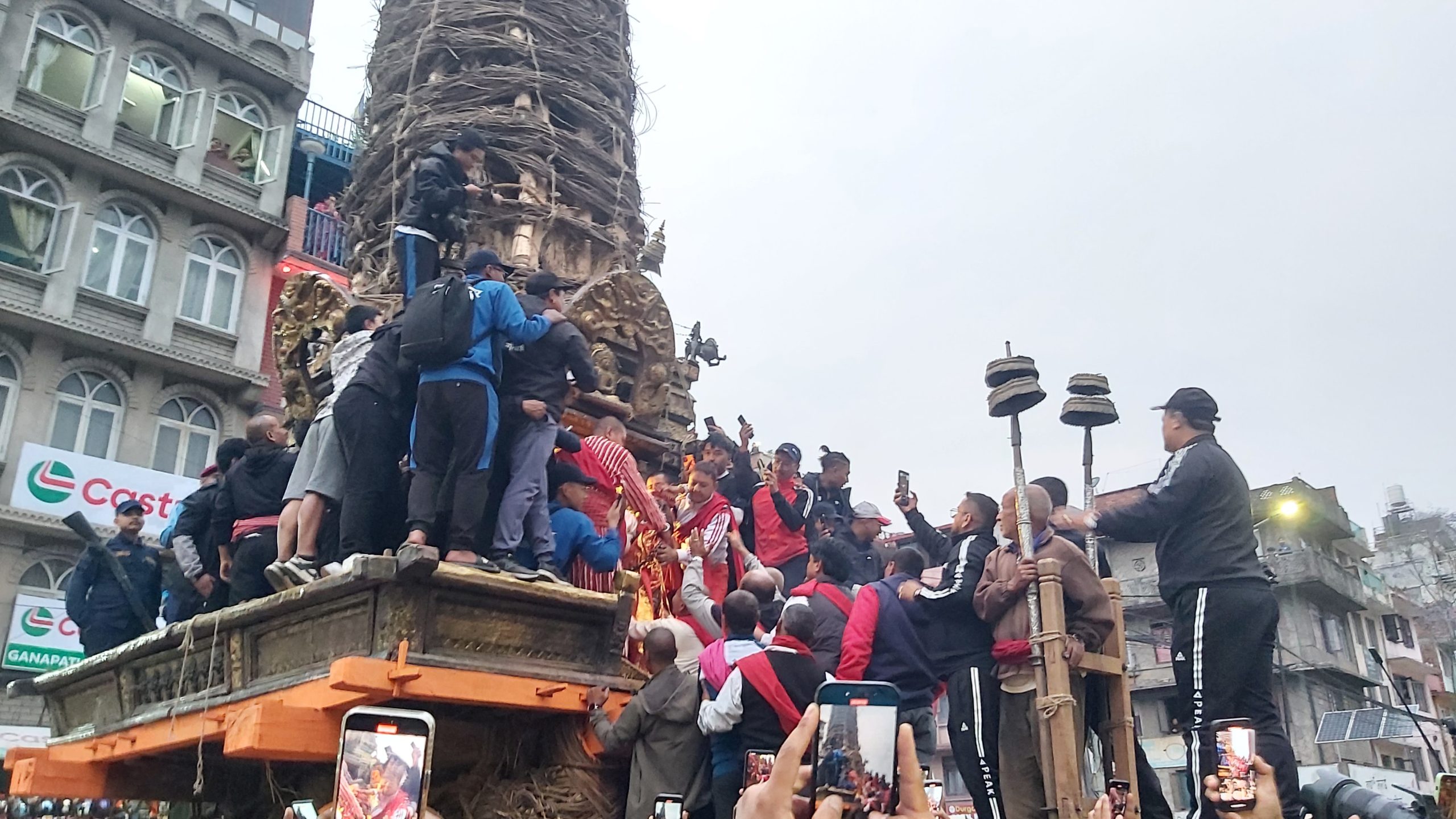
Lalitpur, April 28: The deity of rain and prosperity, Rato Machhindranath, has been ceremoniously installed on the chariot on Monday. Following proper rituals, the idol of Rato Machhindranath, which was residing at the Machhindra Bahal in Lagankhel, was brought to Pulchowk on Monday evening. The idol was carried with traditional music by the chief priest Yagya Ratna Shakya and other Panejus (ritual specialists), and then placed on the chariot.
To mark the occasion, celebratory cannon fire was performed. Every year on the first day of the bright fortnight of the month of Baisakha, Rato Machhindranath is placed on the chariot in keeping with tradition. According to Prem Maharjan, the head of the Nyal Guthi (a traditional trust), the chariot will be pulled to Gaabahal four days later. “Nine neighborhoods celebrate the festival in Gaabahal, and the following day, a feast is organized,” he said.
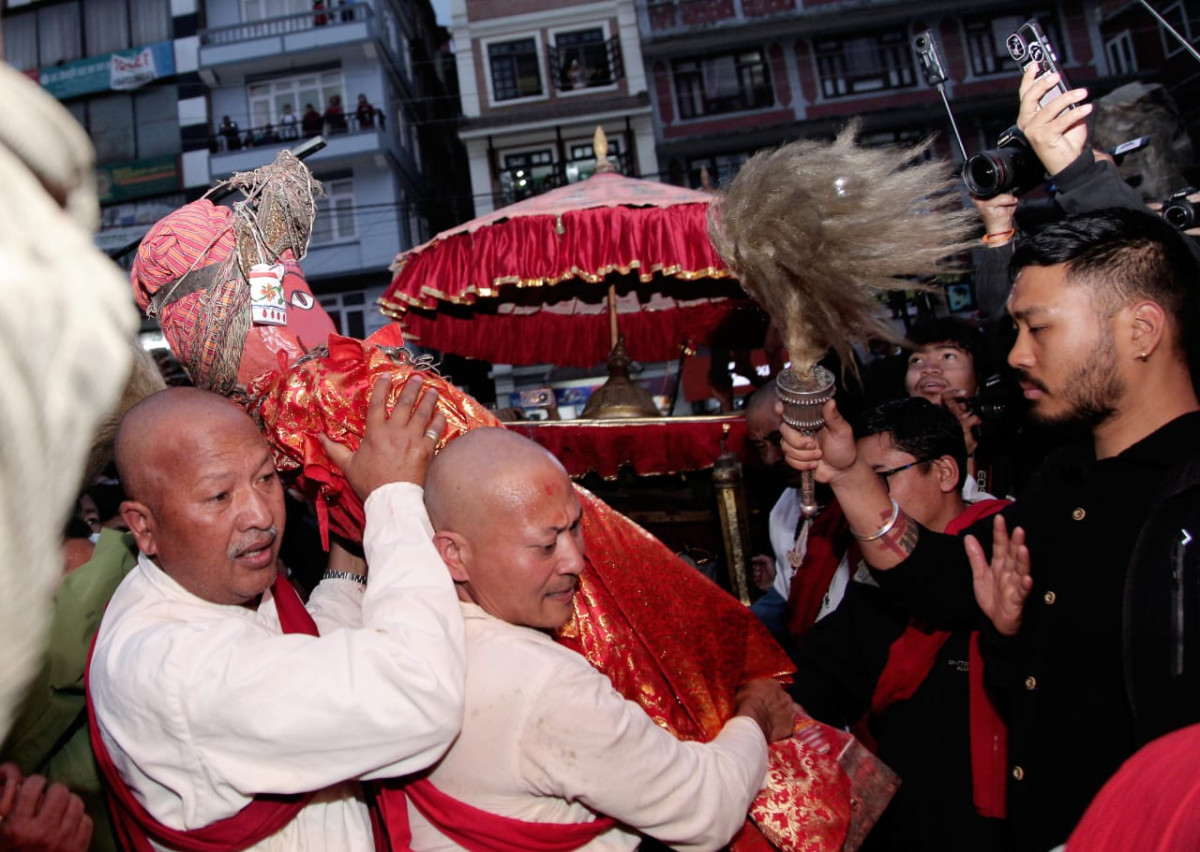
According to trustee Ratna Dangol of the Nyal Guthi, the construction of the chariot takes 15 days. Until it reaches Jawalakhel, the maintenance is the responsibility of the Nyal Guthi. “Rato Machhindranath is accompanied by 108 Lokeshwar (bodhisattvas), and among them, Padmavani Lokeshwar was also ceremoniously installed on the chariot today. Prior to this, a kalash yatra (ritual procession with holy water) was conducted from Katuwaldaha, and the water was offered at the feet of Rato Machhindranath. This was followed by devotional hymns and chants by the priest,” he added.
Once representatives of the then King Narendra Dev of Bhaktapur were present at Tah Bahal, the ritual procession to Pulchowk proceeded, as explained by Kamalraj Bajracharya—one of the 32 Panejus. “When installing Lokeshwar on the chariot, four Panejus carry the idol in the presence of the Guruju’s Platoon. One person holds an umbrella over the idol, while another walks with a ceremonial sword shouting chants of victory,” he said.
Machhindranath Jatra is known as the longest-running festival in the Kathmandu Valley. According to tradition, the deity stays six months at Tah Bahal in Patan and six months in Bungamati. Last Mangsir (around November–December), the deity was brought to Patan’s Tah Bahal.
Legend has it that once, when Gorakhnath came to beg in Kantipur (ancient Kathmandu), the locals refused him. In retaliation, he captured the Nine Nāgas (snake deities) at Pashupati’s Mrigasthali, sitting on them as a throne. This led to a 12-year drought. Searching for a solution, it was revealed that bringing Gorakhnath’s guru, Machhindranath, would cause him to stand and release the Nāgas, restoring rain and prosperity. Consequently, King Narendra Dev of Bhaktapur, King Bandhudatta Bajracharya of Kathmandu, and Lalit the farmer from Patan together brought Machhindranath from Kamakhya in India.
In the Kathmandu Valley, Rato Machhindranath, also known as Karunamaya or Lokanath, is highly revered. He is worshipped under various names such as Rato Machhindranath, Matsyendranath, Bungmalokeswar, Bungadya, Aryavalokiteshvara, and the Rain God (Vrishtidev).
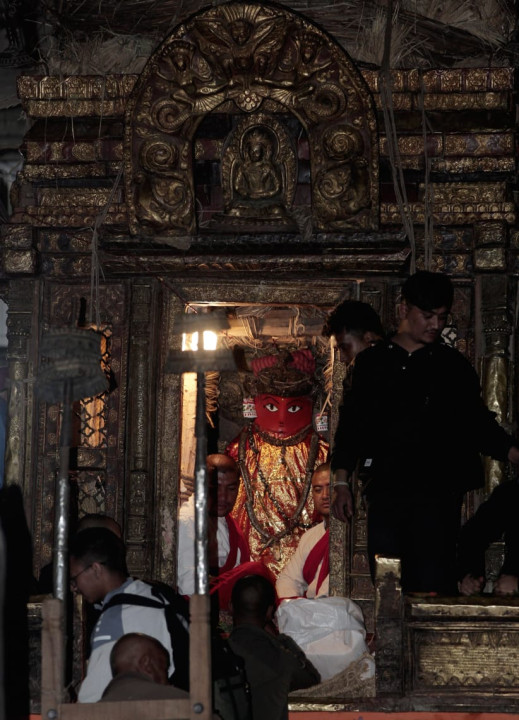
The image of Karunamaya is enshrined on a 32-armed, 48-foot tall chariot. According to Suryaman Dangol of Patan, it was King Varadev, son of King Narendra Dev, who initiated the tradition of building the chariot. “Hindus worship Machhindranath as a historical saint and guru Karunamaya, while Buddhists revere him as Padmapani, the fourth among the Five Dhyani Buddhas,” he explained.
Dangol further noted that the image of Raktavalokiteshvara (Rato Machhindranath) has a reddish face, large eyes, a flattened nose, and stands four feet tall. According to a book written by Munindraratna Bajracharya, the deity is adorned with a jewel-studded crown, a forehead mark (tika), earrings, a serpent-jewel necklace (representing Karkotaka Naga), bangles, armlets, and anklets. #nepal #culture