


Kathmandu, Nov 5: Two unusual scenes unfolded in Nepal’s major political parties on Tuesday. The rebel faction of the dissolved Parliament’s largest party, Nepali Congress, not only organized a separate gathering but also unilaterally announced the schedule for the party’s upcoming 15th General Convention.
Meanwhile, the third-largest party in the House, CPN (Maoist Centre), has officially split, and leadership of CPN (Unified Socialist), Rastriya Swatantra Party (RSP) and Rastriya Prajatantra Party (RPP) have been facing tremendous amount of pressure to safeguard their parties.
The Terai-Madhes based regional and fringe parties like Janamat Party are heading in the same direction.
Nepali Congress in dilemma
Although factionalism in the Nepali Congress is not new, the group advocating for a special general convention — led by General Secretary Gagan Thapa and Bishwoprakash Sharma — has intensified its activities. Thapa and Sharma both had initiated a signature campaign to remove party president Sher Bahadur Deuba and convene a special convention while Deuba was hospitalized after being injured during the Gen Z protest.
That same faction continues to insist on holding a special convention, while the establishment side, led by acting President Purna Bahadur Khadka, maintains that the regular general convention should be held in Baisakh (April/May), not earlier. Rejecting this, the Gagan faction held its own gathering on Tuesday and even released a schedule proposing the general convention in the month of Poush (December/January).
In response, Deuba-faction Deputy General Secretary Mahendra Yadav published a separate schedule, insisting on holding the regular convention in Baisakh. While the party’s central committee meeting continues, rival factions have already begun releasing competing timetables for the next convention.
The establishment camp argues that the convention should take place after the March 5 elections, while the Shekhar Koirala-led group demands it before the elections. Meanwhile, the Gagan Thapa group rejects both positions, insisting instead on a special convention. Analysts now warn that the party appears to be on the verge of a split, with signs of deep internal division becoming more visible.
On Tuesday’s Central Committee meeting, leader Krishna Sitaula accused Gagan Thapa of using social media “secretariats” to tarnish the party’s image, further highlighting internal tensions. Thapa immediately rebutted Sitaula’s claims.
Maoist Centre and Unified Socialist on the brink of collapse
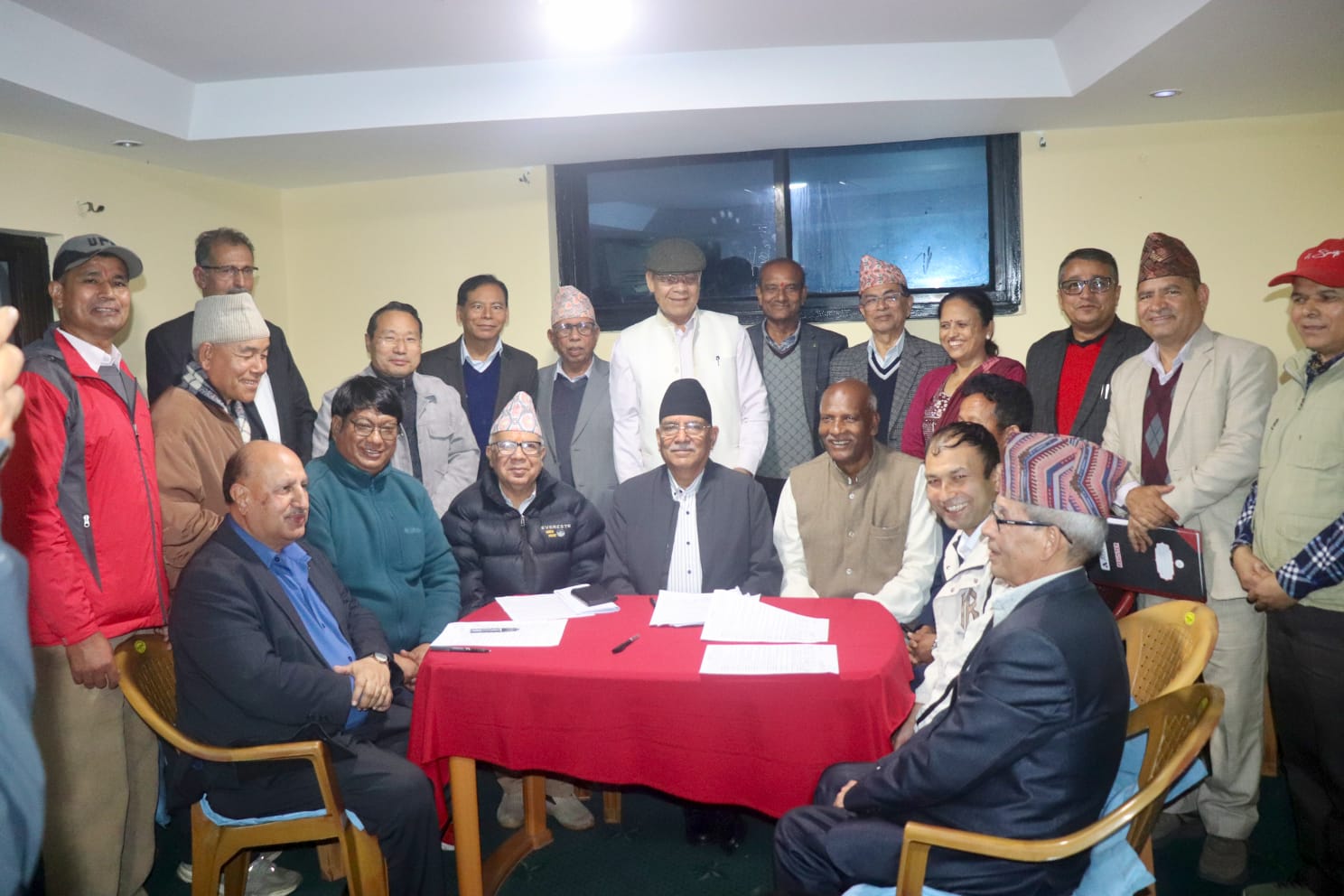
The CPN (Maoist Centre) has not only reached the brink of a split but has formally fractured after Chairman Pushpa Kamal Dahal “Prachanda” decided to merge the party with the CPN (Unified Socialist) led by Madhav Kumar Nepal.
In response, Deputy General Secretary Janardan Sharma and leader Ram Karki announced their withdrawal from the Maoist Centre, declaring their involvement in a new movement called Progressive Campaign Nepal (Pragatisheel Abhiyan Nepal). They announced this decision at a press conference while Prachanda and Nepal were holding a unity meeting at the Nepal Academy in Kamaladi.
The Unified Socialist is also showing signs of collapse. While some leaders have joined Madhav Nepal in the merger process, others are preparing to return to the CPN UML, and some are planning to reform the CPN (Unified Socialist) itself.
Senior leaders Jhalanath Khanal, Ghanashyam Bhusal, and Ram Kumari Jhakri have not yet made their positions clear, but sources say they are unwilling to join the Maoist Centre, signaling a deeper fragmentation within left politics.
Tensions surface inside Rastriya Prajatantra Party (RPP)
A similar scene played out in the Rastriya Prajatantra Party (RPP), where General Secretary Dhawal Shumsher Rana convened a separate meeting of his supporters, expressing frustration with the current party leadership under Chairman Rajendra Lingden.
Rana has been demanding that the party convention be held by Mangsir 17 (early December), while Lingden has set Mangsir-end (mid-December) as the deadline for district and provincial conventions before deciding on the national one. Lingden has promised to discuss the matter in the upcoming central committee meeting, but Rana has accused him of deception and manipulation.
Political analysts observe that since the Gen Z protest, Nepal’s major political parties have entered a phase of internal disarray and competition for dominance. #nepal #genz #politics