


Kathmandu, Aug 1: The stakeholders, including the parliamentarians repeatedly stressed the need to mainstream risk-sensitive land use planning, from zoning and building controls to community relocation and the protection of forests and riparian buffers. They focused a discussion on how Nepal’s land laws can better protect people living in hazard-prone areas.
During the event, Mr. Kedar Neupane, former Secretary at the Ministry of Land Management, Cooperatives and Poverty Alleviation, highlighted the relationship between land tenure and disaster risk while doing presentation. He emphasized how insecure or poorly planned land use amplifies exposure to floods, landslides and other hazards, and argued for policy coherence between disaster-risk reduction, environmental conservation and land administration.
Following the first presentation, Mr. Ganesh Bhatta, Joint Secretary at the Ministry of Land Management, Cooperatives and Poverty Alleviation, highlighted provisions related to disaster management contains on the Ninth Amendment to the Land (Related) Act, 2021 B.S. (1964 A.D.). He explained how the amendment seeks to clarify categories of land that must be safeguarded because of disaster risk and ecological value, and how the draft aligns with national Disaster Risk Reduction priorities.
Responding to both presentations, Hon. Roshan Karki emphasized that there is a growing trend of people migrating from the hill to the Terai regions leading to increased population density in the lowlands. Hon. Karki further highlighted that many individuals who lost their land due to disasters such as landslides, floods, earthquakes, and other different disaster caused by the global warming/climate change have not been effectively resettled by the Government of Nepal. In this context, she recommended that instead of forcibly acquiring land from local residents in the hills, the government should consider purchasing land from them and facilitating resettlement in those areas.
Hon. Surya Dhakal stated that 55 members of parliament have already registered amendments to the Land Bill. He remarked that various types of recent disasters have further increased the number of landless people. He emphasized that the decision made by the Nepal Government itself has also contributed to landlessness. He added that after declaring areas up to 7 kilometers from national parks as buffer zones, many more citizens have become landless. Expressing hope in the proposed legislation, he added, “we believe this bill will definitely help address the issues faced by the landless and squatters.” “We must work on minimizing economic and physical losses. Similarly, he added that disaster management is not just about post-disaster rescue and relief it’s about long-term resettlement and recovery.
Hon. Ranju Kumari Jha stated that floods and landslides have continued to increase the number of victims, forcing them to live under extremely difficult conditions. Since this is a matter of social justice for the affected, she emphasized the need for a long-term solution. Also, she emphasized that such kind of program must have organized earlier as the members of parliament have already registered amendments to the Land Bill.
Hon. Bina Lama emphasized that landlessness in Nepal is largely driven by disasters, yet the government has failed to develop effective policies to address the issue. Given the country’s limited land resources, she argued that simply distributing land to landless individuals is not a sustainable solution. Instead, she proposed that the government retain ownership of public land and lease it to landless people for a fixed period at a set rate. She explained that this approach will help protect public land while enabling people to live securely and take responsibility for its proper use.
National Assembly Member Garima Shah emphasized the importance of educating the younger generation on disaster management and preparedness. She pointed out that disasters are turning citizens into refugees within their own country and called for long-term, sustainable solutions.
MPs Harkamaya Bishwakarma, Rajendra Laxmi Gaire, Bijula Rayamajhi, Durga Rai, Mina Lama, and other members of parliament noted that many landless squatters living along riverbanks are highly vulnerable to disasters. They urged the government to properly categorize these populations and prioritize their relocation to safer areas. The MPs also highlighted that traditional fishing communities such as the Kumal and Bote, as well as individuals from marginalized groups, including those living below the poverty line, Dalits, and other disadvantaged communities are among the most severely affected.
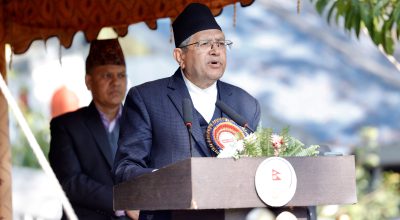
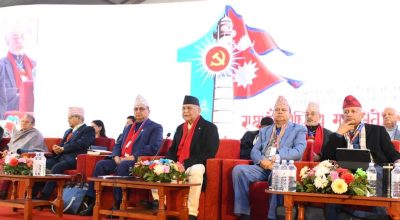
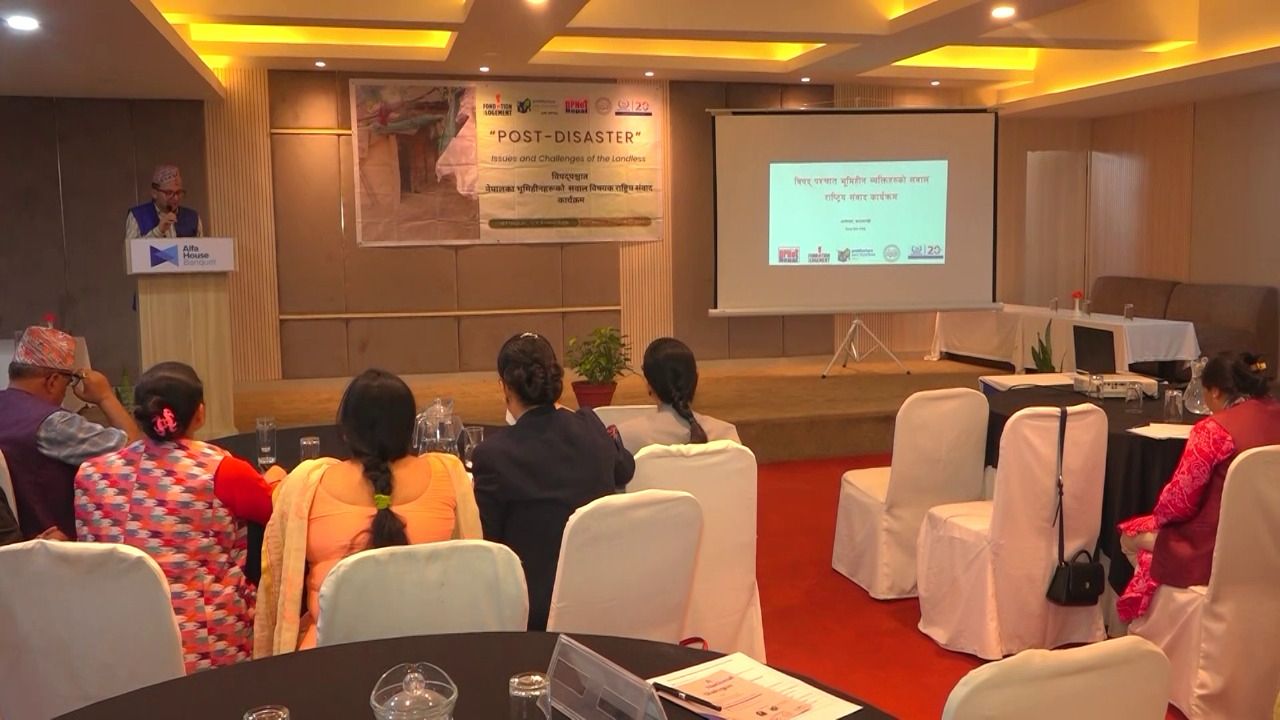
All these discussions took place during a national dialogue on post-disaster issues and challenges faced by the landless, facilitated by journalist Bijaya Poudel. The event was organized by DPNet with collaboration from Jagriti Child and Youth Concern Nepal (Jcycn), ASF Nepal, and DIMAN Nepal. It brought together 65 participants, including 32 Members of Parliament (24 from the House of Representatives and 8 from the National Assembly), senior government officials, civil society leaders, and media personalities. The dialogue opened with remarks from ASF Nepal, setting the stage for a day of focused discussions on law, policy, and implementation.
Tilottam Poudel, President of Jcycn, emphasized the need to prioritize the education, health, protection, and resettlement of vulnerable groups—such as women, children, gender minorities, persons with disabilities, and the elderly—affected by disasters. He stressed that laws on disaster management, climate governance, and land must center on at-risk populations, particularly those rendered landless. Civil society representatives echoed his views, calling for inclusive participation, transparent risk-mapping, and coordinated land decisions to support resilient recovery.
The event was chaired by Dr. Raju Thapa, Chairperson of the Disaster Preparedness Network–Nepal (DPNet). In his closing remarks, Dr. Thapa extended a vote of thanks and reaffirmed DPNet’s commitment to fostering continued dialogue with on disaster risk reduction (DRR) with the stakeholders. He pledged that DPNet would prepare and submit concrete, written recommendations to parliamentarians for inclusion in the ongoing amendment of the Land Bill. He also expressed sincere appreciation to all the participants for their active participation. #nepal