


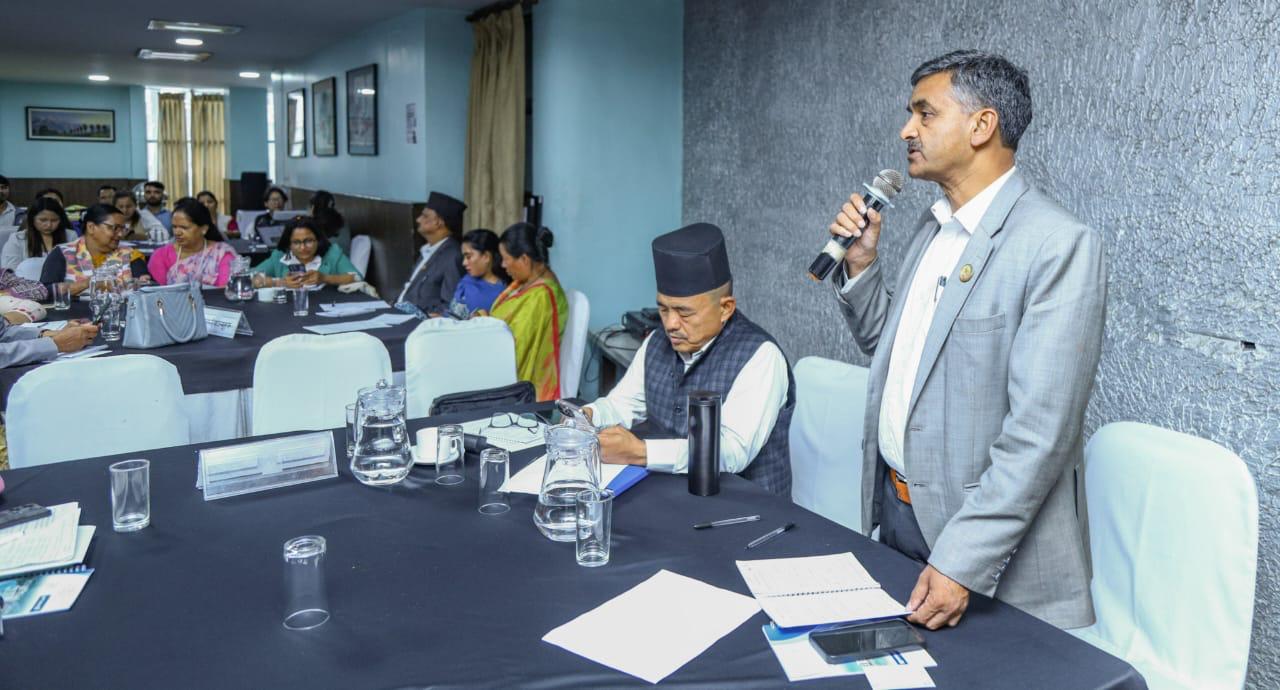
Kathmandu,July 23 : Stakeholders, including the parliamentarians, have strongly emphasized the need for meaningful youth engagement in entrepreneurship, green economy, and technological literacy while involving them in climate change and social campaigns.
Chair of the Parliamentary Committee on Monitoring and Evaluation of the Implementation of the Directive Principles, Policies, and Obligations of the State, Hon. Thakur Prasad Gaire, stated that as global temperatures near a 2°C rise, glacial melting is already affecting ocean levels, making climate change and disasters a shared global concern. He emphasized the importance of raising awareness among youth, adolescents, and children about these risks, and pledged his commitment to engaging youth in the pursuit of climate justice. Highlighting the severe impact of carbon emissions from developed countries on Nepal, he noted that global warming is threatening human existence. With these he also shared that preparations are in the final phase to establish a regional parliamentary committee in Asia to foster unified efforts in addressing climate change.
MP Garima Shah warned that Nepal could soon face a food shortage, as the country has been forced to declare the Terai region drought-affected even during the monsoon and the crucial rice-planting season. She attributed the declining water table to poor development practices and stressed the need to revise the nation’s development plans, policies, and strategies.
MP Sita Rana, head of the Parliamentary Forum for Child Rights, emphasized that disasters caused by climate change affect people of all age groups. She called for awareness from the local level to reduce inevitable disasters through collective action.
MP Ranju Jha emphasized the importance of youth engagement in disaster risk reduction planning and the need to promote youth-led climate action starting from the local level. She added that meaningful youth participation in policy-making is more important than simply having large numbers of youth in various programs, in fact, such participation should be made mandatory.
Climate researcher Amrit Devkota presented a paper on the overall impact of climate change and disaster risks in Nepal. He emphasized that climate change is a global issue and called for continuous advocacy at local, national, and international levels to achieve climate justice. He urged parliamentarians to make climate change and disaster risk a political priority, positioning themselves as champions of the cause. He also encouraged them to support youth-led initiatives and promote meaningful youth engagement in disaster risk reduction.
National Planning Commission Member Hon’ Prakash Shrestha said that the 16th Five-Year Plan prioritizes to climate issues and emphasized that collective effort and unity are needed to implement it well.
Vice Chair of the National Youth Council, Surendra Basnet, shared that Youth Vision 2035 is currently being developed and reaffirmed the Council’s commitment to giving priority to climate change and disaster management and Youth Friendly Local Governance (YFLG).
Senior Divisional Meteorologist Dr. Indira Kandel explained that rising temperatures are causing mountain melting, leading to GLOF, floods and landslides in Nepal. She noted the installation of 500 rain gauges across the country to improve disaster information sharing, along with 250 water gauges and weather radars to monitor and reduce flood-related damage. She also shared that, the data from water and rainfall measurement instruments, information is being shared with the aim of reducing the loss of lives and property due to floods in coastal areas.
Bhaba Raj Regmi, Deputy Secretary-General of the NGO Federation of Nepal, advocated for planned green economy programs to create employment for youth within the country.
Bimala Aryal, Mayor of Sunwal Municipality, shared that Sunwal Municipality is Nepal’s first child friendly municipality (CFLG) and is actively conducting climate awareness campaigns that have positively influenced local youth.
All these commitments were made during a Policy Dialogue program entitled “Ensuring and Promoting Meaningful Youth Participation in Disaster Friendly and Climate responsive Governance was organized by the Jagriti Child and Youth Concern Nepal (Jcycn) in support of British Council on July 22, 2025 in Kathmandu. The event was chaired by mr. Tilottam Poudel, president of Jcycn which was began with a warm welcome from British Council Country Director Mr. Rustam Modi, who shared his happiness about partnering with JCYCN to help raise awareness among young people about climate change, a challenge the whole world is facing.
The event brought together more than 70 participants, including 20 members of parliament (17 from the House of Representatives and 3 from the National Assembly) representing eight different parliamentary committees. These MPs pledged to raise climate change and disaster-related issues in Parliament. The event also saw active participation from members of the National Youth Council, development partners, UN agencies, civil society organizations, and youth climate activists.
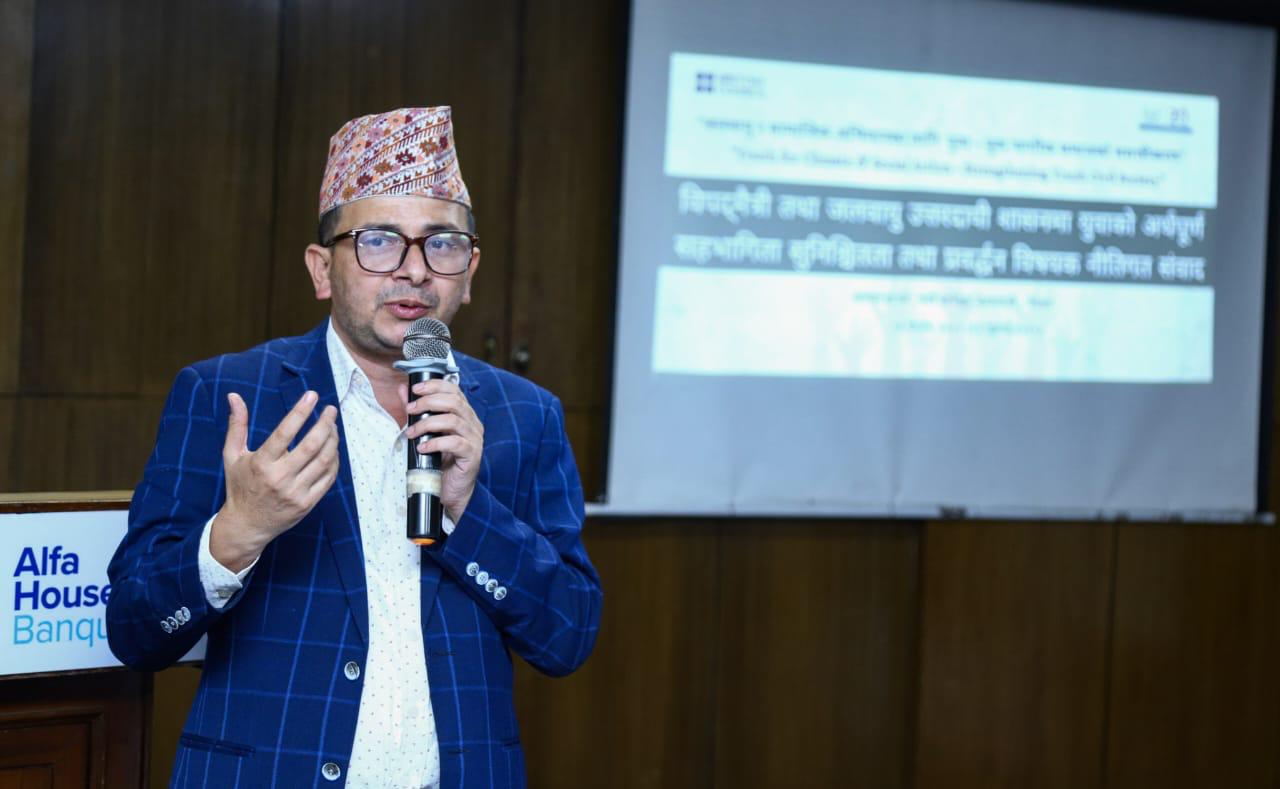
Mr. Tilottam Paudel, President of Jcycn, shared that the organization has conducted awareness programs and training on climate change and disaster issues with youth and adolescents in Madi and Tilottama municipalities in support of UNDP and Sunwal and Madhyabindu municipalities in support of British Council. He also highlighted Jcycn’s experience working with 14 local governments across all seven provinces, and its ongoing advocacy for Youth Friendly Local Governance (YFLG), Child Friendly Local Governance (CFLG), Nutrition Friendly Local Governance (NFLG), and girls’ empowerment program. He also mentioned that JCYCN is actively working to empower girls, and as part of this effort, a Girls’ Learning and Resource Centre has been established in Devchuli, Nawalpur
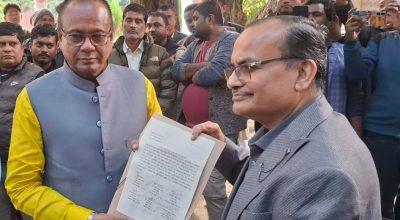
During the event, Ms. Sabnam Sunar, a former peer educator of JCYCN under the Girls Empowerment Program, recited a poem highlighting the importance of youth engagement in climate governance and called for the promotion of Youth-Friendly Local Governance (YFLG). Similarly, Ms. Kala Basyal the forer peer educator of Jcycn from Sunwal Municipality handed over a memorandum to MP Thakur Prasad Gaire and other participating members of parliament. The memorandum outlined 11 key points, including the need for inclusive disaster response, climate-responsive governance, meaningful youth participation, youth empowerment, allocation of resources for youth-led initiatives, and youth involvement in policy-making.
In response to the memorandum, MPs Bina Lama, Tara Lama, Bijula Rayamajhi, Ran Kumari Balampaki Magar, along with other members of Parliament, committed to raising these issues in the House and the National Assembly. They also pledged their continued support in advancing these important agendas. #nepal