


WASHINGTON, DC – Corruption may simply be a way of life for US President Donald Trump, but it is the defining issue of his presidency. From doling out pardons and policies in exchange for cash donations or favors to encouraging foreign governments and non-state actors to invest in his family’s crypto product, Trump’s corruption schemes have reached heights of novelty and scale unseen in American history.
The significance of this corruption cannot be appreciated without recognizing the role it plays in Trump’s effort to dismantle “the system.” That mission is being pursued through methods reminiscent not only of Russian President Vladimir Putin’s kleptocratic Kremlin, but also of Soviet-era communist power structures. Trump reigns through capricious, personalized power and indifference to the law. As I wrote during the first Trump administration, the president and his cronies see no problem with using state power to advance private business interests. Blatant nepotism, petty graft, and pay-to-play lobbying and influence schemes are all on the table.
Trump’s second administration makes what we saw under his first seem mild. The president and his appointees are restructuring the government to make corruption easy, lucrative, and unpunishable, and to destroy impartial, accountable government. Self-enrichment and anti-system goals go hand in hand.
Trump’s meme coin is a case in point, since it allows anyone in the world to pay him under the table in exchange for personal favors. The Trump family has already generated as much as $1 billion from their crypto ventures, exhibiting the kind of rapaciousness that we saw from the oligarch-kleptocrats who “grabitized” (prikhvatizatsiya) Russian state resources after the collapse of the Soviet Union.
This is no accident. Trump embodies the fusion, and sometimes committed marriage, of two previously distinct worlds: the West and the former Soviet bloc. The systemic corruption that brought us this president has been percolating globally for decades, through the meshing of these worlds. The deregulatory and outsourcing agenda that swept the West in the 1980s, starting under US President Ronald Reagan and British Prime Minister Margaret Thatcher, found vast new theaters in former Soviet and Eastern bloc states in the 1990s.
American-style privatization got ahead of itself in Russia, with the sell-off of state-owned assets occurring in the absence of the necessary legal and regulatory infrastructure (thanks in part to Western aid and advisers). Thus, public assets that once belonged to everyone ended up in the hands of a few men. This new class of oligarchs then created a new class of Westerners: high-octane, high-income professional “enablers” whose job was to offshore, launder, and hide the unprecedented avalanche of dirty money flooding into the world’s financial system from ex-communist countries – and to polish oligarchs’ images.
These ill-gotten gains – stashed in offshore locations such as the United Kingdom, Switzerland, Austria, Malta, Cyprus, and the United States – underpinned and continue to underpin Kremlin influence operations in the West. Kremlin operatives (some now unmasked and back in Moscow) have long helped gut the Republican Party from within. Right-wing media channels have also been infiltration targets. While the West used to be the source of ideas and values that could gain a foothold elsewhere, one need only listen to American influencers to see that the flow has reversed.
Consider how the “Department of Government Efficiency” (DOGE), set up by Trump as part of his effort to dismantle the system, emulated communist practice. Under the Soviet system, it was common for party organizations wielding informal power to override official government agencies and functions. Despite having been neither confirmed nor vetted by Congress, Elon Musk was allowed to pursue an unprecedented purge of the federal government. The illegality of his conduct hardly mattered; as under communism, the party leader is the only source of control.
Of course, this model of informal, extra-legal power – through direct reporting to the leader – does have a lesser American precedent in the 1980s Iran-Contra scandal. In that case, the Reagan White House circumvented the federal government and Congress when it authorized a handful of trusted operatives to sell arms to Iran to fund the Contra rebels in Nicaragua – funding that had been expressly outlawed by Congress.
But there is an essential difference between the Iran-Contra scheme and DOGE. When the former was exposed, Congress and both political parties denounced it, and at least some of those responsible were held to account. Today, neither the Republican-led Congress nor the Supreme Court tried to stop DOGE. Under such a model, conflict-of-interest rules seem quaint. As a longtime Washington insider once told me, “There is no conflict of interest, because we define the interest.”
By using his office as a cash cow, Trump has made no secret of his own interests. And he can get away with it through a tried-and-tested Soviet practice: appointing incompetent and inexperienced subordinates who owe their master everything. His cabinet’s near-farcical amateurishness makes its members political putty. With an obedient cadre that is fully implicated in his corrupt and unlawful behavior (something he did not always have during his first presidency), Trump has been systematically dismantling the government agencies that would otherwise be monitoring corruption and foreign influence operations and enforcing rules to curb them.
That is why Attorney General Pam Bondi has disbanded the Kleptocracy Asset Recovery Initiative and the Task Force KleptoCapture, created in 2022 to enforce Western sanctions against Russia and Putin-allied oligarchs; redirected prosecutions under the Foreign Corruption Practices Act and the Foreign Extortion Prevention Act; dissolved the FBI’s Foreign Influence Task Force; curtailed enforcement of the Foreign Agent Registration Act; and dismantled the cryptocurrency enforcement unit.
The Trump family’s focus on crypto is telling; it is a striking case where the missions of multiplying personal wealth and destroying the system converge. The technology’s practical uses seem to lie almost entirely in circumventing anti-money laundering and anti-corruption rules. Transactions are anonymized, and even regulators are often in the dark about who is behind many crypto exchanges, where they are located, and who their customers are. It is anyone’s guess who is driving the massive surges in $TRUMP coin’s valuations.
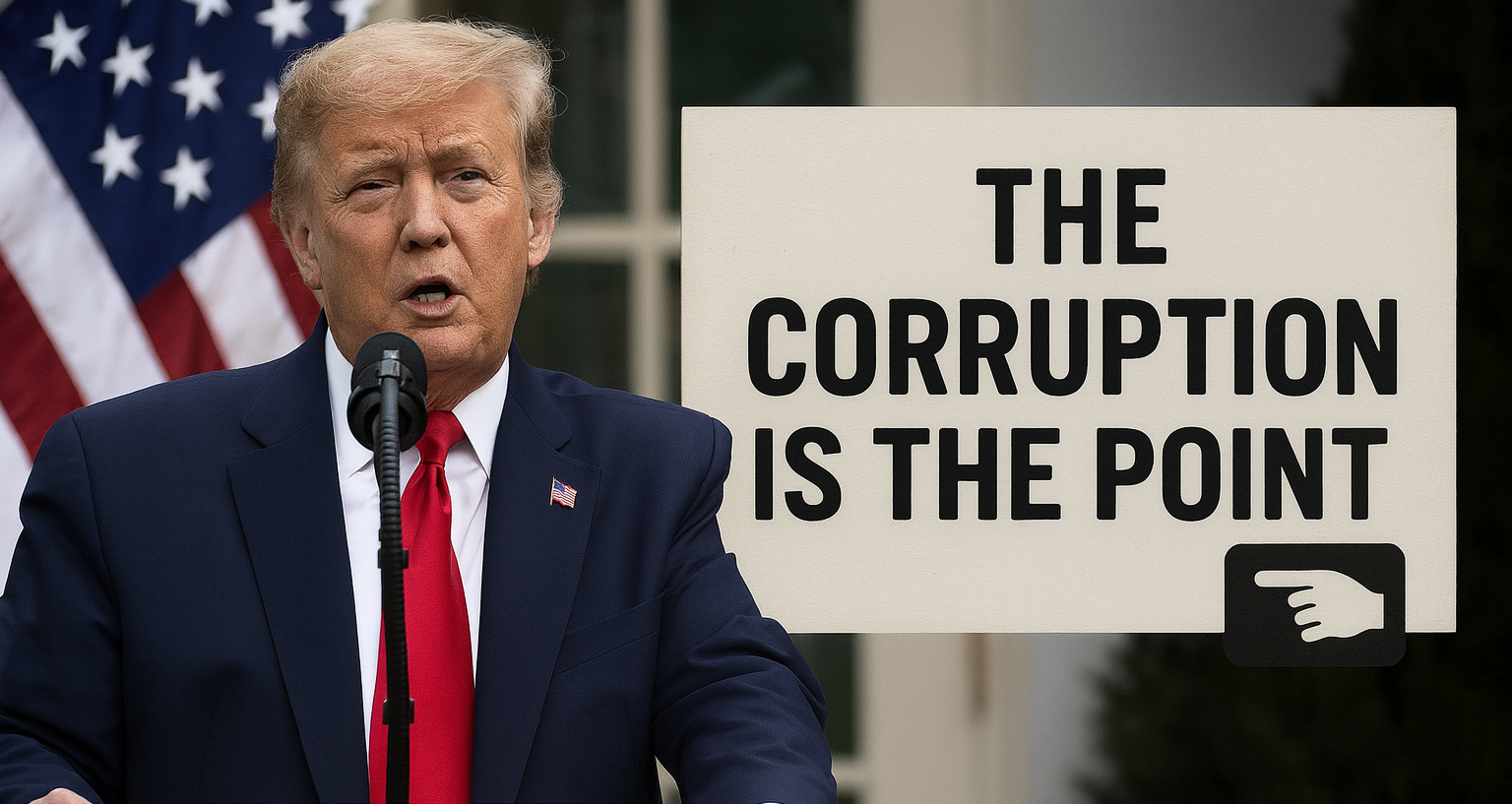
Trump’s corruption may help bring down the system, especially given the growing risks that crypto poses to financial stability. And that is the point. In his first term, Trump helped destabilize the US and the international system; today, he actively seeks to destroy democratic institutions and the rules-based world order. Soviet leaders would have marveled at his methods.
Janine R. Wedel, author of Shadow Elite (Basic Books, 2009) and Unaccountable: How the Establishment Corrupted Our Finances, Freedom, and Politics and Created an Outsider Class (Pegasus Books, 2014), is a social anthropologist at the Schar School of Policy and Government at George Mason University.
Copyright: Project Syndicate, 2025.
www.project-syndicate.org