



Kathmandu, May 13: Finance Minister Dr. Swarnim Wagle has said the budget for fiscal year 2026/27 will reflect the election commitments of the Rastriya Swatantra Party (RSP), focusing on good governance reforms, economic restructuring, and private sector-led growth.
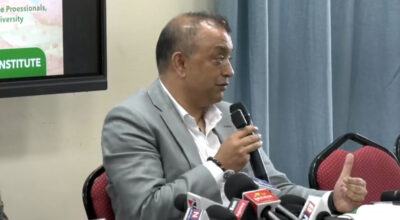
Speaking at the Finance Committee meeting under the House of Representatives on Tuesday, Dr. Wagle said the government faces a major resource management challenge, with regular liabilities amounting to around Rs. 1.33 trillion and a resource gap nearing Rs. 700 billion.
He said the upcoming budget would be guided by the party’s “100 Foundations of Transformation” and the government’s 100 immediate governance reform measures, many of which have also been incorporated into the policies and programmes unveiled on Monday.
According to Dr. Wagle, the government has already sent budget ceilings to ministries and instructed them to accommodate programmes within the allocated framework.
Highlighting weak capital expenditure, he said only around Rs. 1.5 trillion of last year’s Rs. 1.964 trillion budget was actually spent, adding that even achieving Rs. 200 billion in capital spending by the end of the fiscal year would be considered “fortunate.”
“In an economy worth Rs. 6.6 trillion, capital expenditure of Rs. 200 billion is insufficient to meet development aspirations,” he said.
To address funding shortages, the government is preparing to move ahead with an “Alternative Financing Bill” and expand the use of private sector participation models, including hybrid annuity financing in road infrastructure projects.
Dr. Wagle said the government had already repealed 15 outdated laws to signal a more entrepreneur-friendly and private sector-oriented economic policy.
He outlined five major themes for the upcoming budget:
- delivering the “dividend of good governance”;
- restructuring the economy from a remittance-driven model to a production-oriented digital economy;
- expanding connectivity and integrated infrastructure;
- promoting universal social upliftment and middle-class expansion; and
- strengthening culture, tourism, foreign relations, and diaspora engagement.
He added that the government plans to allocate more than Rs. 100 billion toward social sector programmes and middle-class expansion through greater financial inclusion.
The finance minister also said the government has introduced liberal policies for the securities and capital markets, including measures aimed at encouraging stock market growth. #Nepal