


Kathmandu, July 2: Nepal’s report under the fourth cycle of the United Nations Human Rights Council’s Universal Periodic Review (UPR) was formally adopted during the 62nd session of the Human Rights Council in Geneva on Monday.
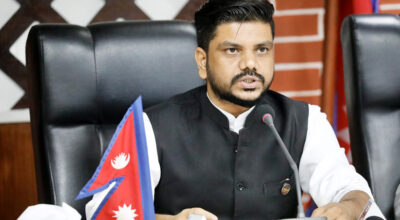
Nepal was represented at the session by Ambassador Ram Prasad Subedi, Nepal’s Permanent Representative to the United Nations in Geneva, and National Human Rights Commission member Mihir Thakur. Representatives from UN agencies, member states and civil society organisations also participated in the discussion.
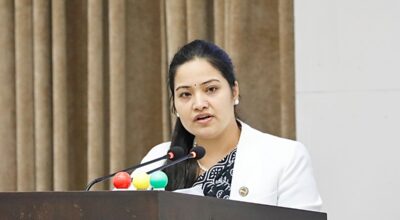
Representing the Forum for Women, Law and Development (FWLD) and Equality, Advocate Sabin Shrestha delivered a joint oral statement urging reforms to strengthen Nepal’s human rights framework. The statement called for expanding the legal definition of rape under the Muluki Criminal Code to cover all forms of non-consensual sexual acts based on the principle of consent, in line with international human rights standards.
Civil society organisations also urged the government to remove the statute of limitations for filing rape cases, arguing that stigma, fear, trauma and limited access to justice often prevent survivors from reporting sexual violence within the prescribed timeframe. They noted that survivors of conflict-related sexual violence are particularly affected by these legal time restrictions.
The joint statement further raised concerns over the Sexual Harassment at the Workplace (Prevention) Act, 2015, stating that its protections largely apply only to workers in the formal sector. It called for amendments to extend legal protection to women employed in the informal economy, including domestic workers, agricultural labourers and construction workers.
Nepal’s fourth-cycle UPR review was conducted on January 21, 2026. Following the review, the UPR Working Group issued 284 recommendations on February 3, 2026, addressing a broad range of human rights concerns.
Among the recommendations, several countries, including Brazil, the Gambia and Ireland, urged Nepal to reform its child marriage laws by recognising children involved in child marriages as victims rather than offenders and prioritising their protection, rehabilitation and access to justice. #nepal