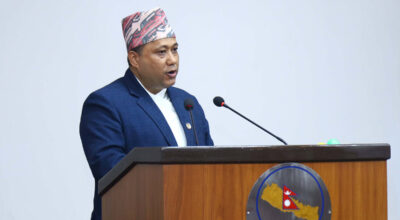



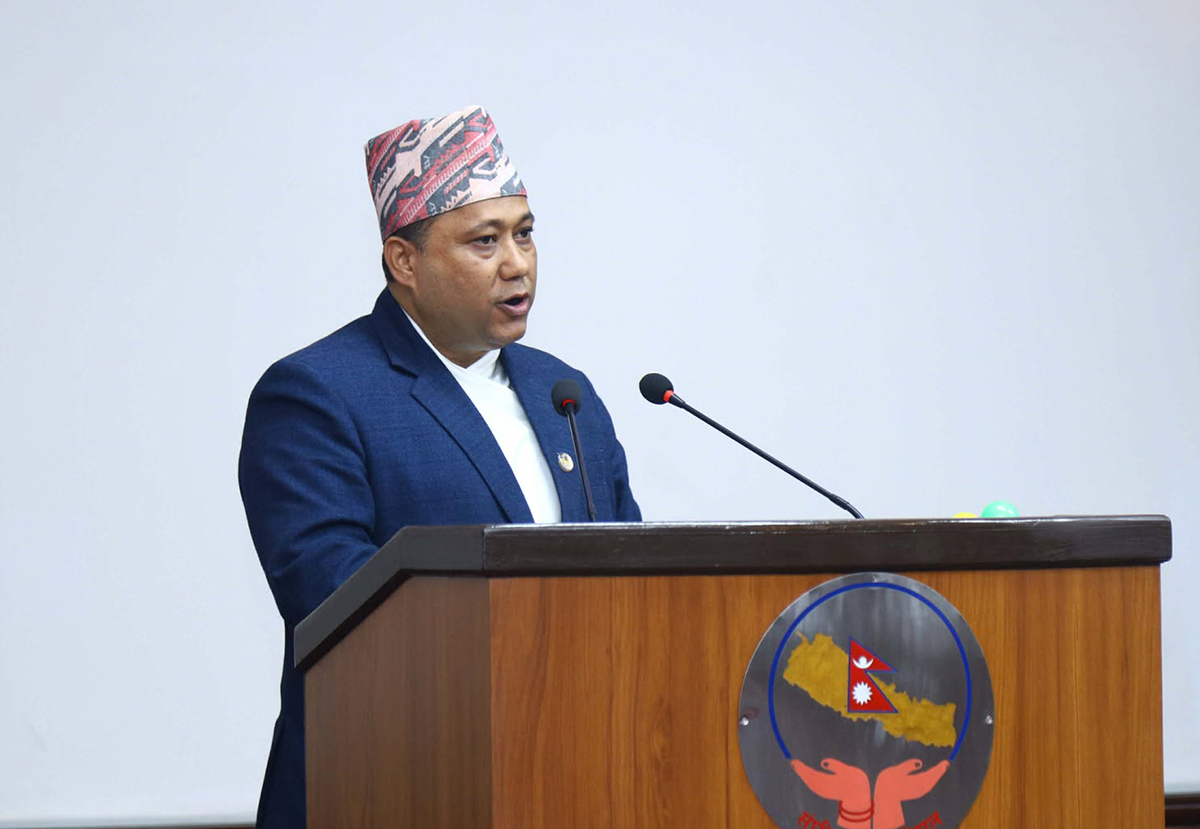
Kathmandu, July 2: Foreign Minister Shisir Khanal has dismissed reports claiming that Nepal signed an agreement with any party to extract uranium in Mustang, while reaffirming the government’s commitment to resolving border disputes with India through diplomatic dialogue based on historical evidence and international agreements.
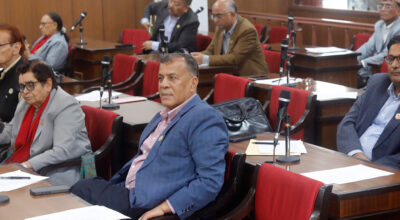
Responding to questions from lawmakers in the National Assembly on Wednesday, Minister Khanal said there was no truth to reports suggesting that the government had entered into any agreement related to uranium exploration or mining in Mustang.
He clarified that although preliminary geological studies have indicated the possible presence of uranium deposits in the district, the government has not signed any agreement or reached any understanding with any domestic or foreign party regarding the exploration or extraction of the mineral.
“The government has already rejected these baseless reports,” Khanal said. He added that the Department of Mines and Geology would conduct further scientific studies before any future decisions are considered.
The minister also emphasized that Nepal remains fully committed to the constitutional provisions governing the use of natural resources and would not enter into any agreement that contradicts the country’s long-standing non-aligned foreign policy or the principles of Panchsheel.
Commitment to Resolving Border Disputes
Minister Khanal reaffirmed the government’s commitment to resolving all outstanding border issues with India through bilateral diplomatic negotiations.
He said that while most sections of the Nepal–India border have already been demarcated by a bilateral technical committee, disputed areas including Limpiyadhura, Lipulekh, Kalapani, and Susta remain unresolved. According to Khanal, Nepal’s claims over these territories are supported by historical treaties, official maps, and documentary evidence.
“We are clear that these territories belong to Nepal,” he said, adding that border disagreements between neighbouring countries are not unusual and should be resolved peacefully through dialogue and diplomacy.
The minister noted that the Nepal–India Boundary Working Group and other bilateral mechanisms continue to hold regular meetings to address technical issues and improve border management.
Progress on Susta Embankment
Updating lawmakers on infrastructure development in the disputed Susta area, Khanal said that India has not objected to Nepal’s construction of an approximately one-kilometre embankment along the Narayani River within Nepali territory. However, he noted that India has requested prior coordination before construction begins on an additional 132-metre section of the embankment.
Khanal further informed Parliament that joint teams from Nepal’s Armed Police Force (APF) and India’s Sashastra Seema Bal (SSB) recently conducted a joint inspection of the Susta border area as part of ongoing coordination and confidence-building efforts between the two neighbouring countries. #nepal