


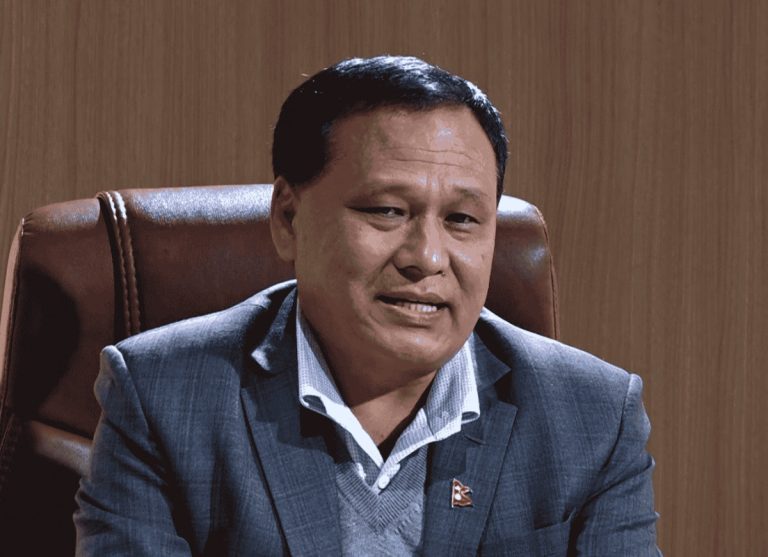
Kathmandu, Dec 20: Minister for Energy, Water Resources and Irrigation Kulman Ghising has emphasized advancing the construction of
the 225 MW Saptakoshi multipurpose hydropower project with a reservoir to address erosion in the lower banks of the Narayani River and promote overall development in Chitwan and Nawalparasi districts.
Speaking at a programme organized today by the Chitwan Chamber of Commerce and Industry in Narayanghat, he stated the Saptakoshi hydropower project should be built in a way that it would not submerge the religiously significant Devghat area.
He further stressed that benefits should be derived from reservoir projects in the upper plains, such as Budhigandaki and Tanahun.
“To control erosion and flooding from rivers in the long term, reservoir projects should be constructed in the upper plains as part of an integrated river basin management plan. Collecting rainwater in the wet season and regulated water in the winter from reservoir projects on tributaries of the Narayani River, including Seti, Budhigandaki and Kaligandaki, can help control floods and provide benefits for agriculture and water transport”, his personal secretariat quoted Minister Ghising as saying.
It may be noted that a feasibility study for the Saptakoshi Multipurpose Hydroelectric Project on the Narayani River flowing through the borders of Chitwan, Tanahun and Nawalparasi, was conducted in 1985 with the assistance of the Japan International Cooperation Agency (JICA).
The dam of the project will be constructed about one kilometre down from Devghat, the confluence of the Trishuli and Kaligandaki rivers. The study indicated that Devghat could be submerged if the project was constructed.
By creating a reservoir at Devghat, electricity could be generated and irrigation facilities could be provided to hundreds of hectares in Chitwan and Nawalparasi, it is stated.