


MADRID – The world is on the cusp of a profound geopolitical restructuring, as escalating great-power rivalries erode the multilateral structures that have supported the global order since the mid-20th century.
To prevent the international system from sliding into chaos and conflict, those unwilling to accept a world governed solely by raw power must find ways to reinforce today’s debilitated multilateral institutions through informal arrangements and bilateral agreements.
From the end of World War II to the early 2010s, multilateralism provided the framework for international cooperation. Though imperfect and often inconsistent, it was the most effective model of global governance ever created. But after more than a decade of continuous erosion, it is clear that the multilateral system as we know it can no longer facilitate collective action.
Without a framework capable of coordinating relations among countries, the alternatives are stark: a world government – an unfeasible prospect – or a steady drift toward anarchy. Multilateralism emerged as the pragmatic middle ground: collective decision-making and binding rules, rather than a single global authority or none at all.
Born of unique historical circumstances, this model took shape as the United States – the dominant postwar global power – promoted a treaty-based system guided by enlightened self-interest. That vision was realized at the Bretton Woods and San Francisco conferences, which led to the establishment of the United Nations, the International Monetary Fund, the World Bank, and the General Agreement on Tariffs and Trade, as well as its successor, the World Trade Organization.
In principle, if not always in practice, these multilateral institutions were open to all countries, with bodies like the WTO and the International Civil Aviation Organization providing a shared framework of rules, standards, and responsibilities. But in recent years, they have been severely undermined by the rise of sovereigntism in developed economies like the US and in emerging powers like China.
The US, for its part, played a significant role in weakening the very institutions it helped create. The 2003 invasion of Iraq and its intervention in Libya’s civil war in 2011 showed that the world’s major powers did not see themselves as bound by the so-called rules-based international order. This trend was reinforced by US President Donald Trump’s election in 2016, while his return to office in 2025 represented an explicit repudiation of the multilateral approach.
Meanwhile, Russia and China have been eager to undermine a system they view as detrimental to their interests. Russia’s 2008 invasion of Georgia and invasions of Ukraine in 2014 and 2022 openly defied international law, bringing large-scale war back to Europe. Likewise, China’s “Made in China 2025” industrial strategy violates WTO rules, and its aggressive actions in the South China Sea show complete disregard for the 2016 arbitral ruling that rejected its expansive maritime claims.
The consequences are now widely evident: on the issues that matter most, multilateral institutions no longer drive global decision-making. Paralyzed by cross-vetoes among its permanent members, the UN Security Council has been largely inactive, with the notable exception of its recent endorsement of Trump’s Gaza peace plan. At the same time, the WTO – whose establishment in 1995 was multilateralism’s last meaningful achievement – can no longer enforce its own rules since the US rendered its appellate inquorate in 2019.
This institutional paralysis is part of a broader trend. No major multilateral institution has been created in decades, while informal arrangements – lacking binding rules and often involving non-state actors – have proliferated, offering more agile and adaptable forms of coordination better suited to an increasingly fragmented world. Today, multilateral institutions account for only one-quarter of the global governance ecosystem.
In this environment, preventing the disintegration of the international order is a daunting task. What is needed are intermediate mechanisms that do not depend on universal participation or the adoption of comprehensive, binding rules. While achieving global consensus is virtually impossible, informal alliances, public-private platforms, and flexible coordination mechanisms can help mitigate geopolitical risks.
Gavi, the Vaccine Alliance – which has immunized over one billion children since 2000 – offers a useful model, as do the Institute of Electrical and Electronics Engineers, with its globally accepted technical standards (including Wi-Fi), and the International Organization for Standardization (ISO). Although lacking legal authority, these bodies have achieved technical legitimacy and broad voluntary compliance. Once secondary to multilateral institutions, they may now emerge as pillars of global coordination.
As private actors, subnational governments, academic institutions, and professional networks continue to gain influence, diplomacy is no longer the exclusive domain of foreign ministries. Global governance, in turn, is becoming increasingly decentralized, especially in critical areas like cybersecurity.
To avert a global catastrophe, today’s institutional vacuum must be filled by flexible, workable arrangements: less formal, less universal, and less binding, yet still capable of facilitating cooperation among countries and key actors. These include public-private partnerships, interregional agreements such as the EU-Mercosur trade deal, and “coalitions of the willing” like the Just Energy Transition Partnerships.
Admittedly, this approach involves higher transaction costs and cannot guarantee certainty or uniformity. But the task facing international policymakers is not to design the perfect model – it is to identify the one that is most viable in a rapidly changing world teetering on the edge of systemic collapse.
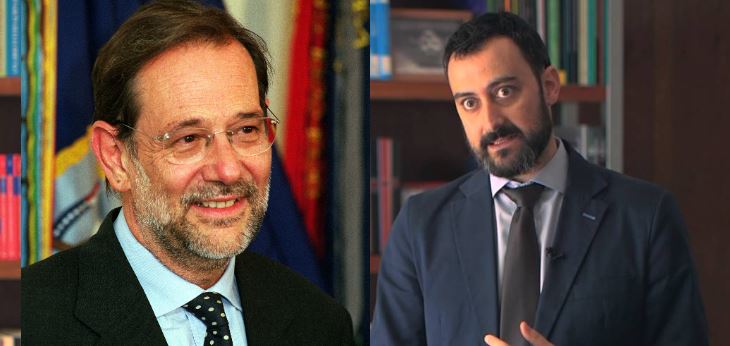
Javier Solana, a former EU high representative for foreign affairs and security policy, secretary-general of NATO, and foreign minister of Spain, is President of EsadeGeo – Center for Global Economy and Geopolitics. Angel Saz-Carranza is Director of EsadeGeo – Center for Global Economy and Geopolitics and Professor of Strategy and Policy at Esade.
Copyright: Project Syndicate, 2025.
www.project-syndicate.org