


Narayan Ghimire
Kathmandu, Nov 13: Two months have passed since the Gen Z protest of September 8–9 that shook Nepal, toppling the KP Oli-led government and prompting the dissolution of the House of Representatives (HoR). The tragic event claimed over 72 lives— 45 of them declared martyrs — and caused massive damage to both public and private property, leaving the nation in shock.
Political parties and observers are still dissecting the causes and consequences of the violent assaults on the legislature, executive, and judiciary. Meanwhile, the interim government, mandated to hold HoR elections on March 5 next year is ramping up its preparations, gradually engaging major political stakeholders in the process.
Among the hardest hit was Nepal’s private sector, now struggling to rise from the ashes. Industrialists and entrepreneurs who suffered huge losses during the arson and vandalism are in dire need of confidence and government support to rebuild.
The fires that engulfed business complexes and hotels, including Hilton Hotel, Bhatbhateni Super Store, Hyatt Regency Hotels, among others, did not just destroy properties but also wiped out massive investments and jobs overnight. Bhatbhateni’s owner, Min Bahadur Gurung, broke down in tears during a televised interview, lamenting the devastation. Many others, too, lost properties worth billions within days, sending shockwaves through the business community. Investors and entrepreneurs — big and small alike — are now demanding stronger guarantees of safety for their ventures to prevent such losses in the future.
Political shock and economic fallout
Although the President Ram Chandra Paudel swiftly filled the political vacuum by appointing a new government and mandating elections, the economic toll remains severe. Reviving damaged industries will require flexible policies, active cooperation, and above all, renewed confidence. Restoring morale after such catastrophic losses is perhaps the biggest challenge of all.
While the world is advancing beyond the fourth industrial revolution, Nepal continues to face recurring economic shocks. This latest crisis is unique because it fuses political turmoil with economic paralysis.
Long-standing issues — youth exodus, brain drain, unemployment, remittance dependency, neglect of agriculture, and lack of good governance — continue to cripple Nepal’s economy. Frequent changes in government have further eroded long-term vision and alienated young people whose aspirations were ignored. This political myopia has deepened the current economic woes.
Worse still, political parties’ rhetoric of “revolution” and “struggle” rarely translated into tangible economic transformation. Whether in the name of socialism, communism, or democracy, the promises to uplift the national economy have largely remained unfulfilled.
Infrastructure bottlenecks and economic slowdown
Major national pride projects such as Gautam Buddha International Airport and Pokhara International Airport remain underutilized. Local entrepreneurs in Bhairahawa often blame political leaders for failing to operationalize these infrastructures fully. Even during technical disruptions at Tribhuvan International Airport, international flights are rerouted to neighboring countries instead of these airports—a frustration for local businesses.
A recent report by Nepal Rastra Bank also highlighted that even Bagmati Province—home to the federal capital—lacks reliable road infrastructure. This inefficiency, coupled with climate change-induced disasters, continues to harm the economy and vital infrastructure. Sustained economic growth depends on the smooth functioning of such essential facilities.
Inevitably, these recurring shocks have undermined annual growth rates, disrupted periodic plans, and delayed Nepal’s progress toward climate goals, sustainable development targets, LDC graduation, and foreign investment growth.
Austerity and accountability
Despite its primary mandate of conducting free and fair elections, the interim government must address these urgent economic challenges. The concerns of industrialists and youth, in particular, demand immediate attention.
One positive sign is the appointment of a seasoned economist, Rameshwor Khanal, as Finance Minister. From the outset, Minister Khanal introduced austerity measures and outlined how to manage election expenditures. His crackdown on excess allowances, politically influenced hiring, and underperforming contractors has sent a message of fiscal discipline. Even the bloated bureaucracy has begun retrenchment to align with this policy.
Furthermore, legal action against corrupt officials and politicians reflects a renewed commitment to good governance—one of the central demands of the Gen Z movement. Indeed, good governance is the foundation of economic progress; ending political protection for corrupt networks discourages unfair business practices and restores investor confidence.
Govt seeking collaboration from private sector
To truly revive the economy, the government must foster a business-friendly environment. Entrepreneurs have approached line ministers for support to rebuild industries and restore lost assets.
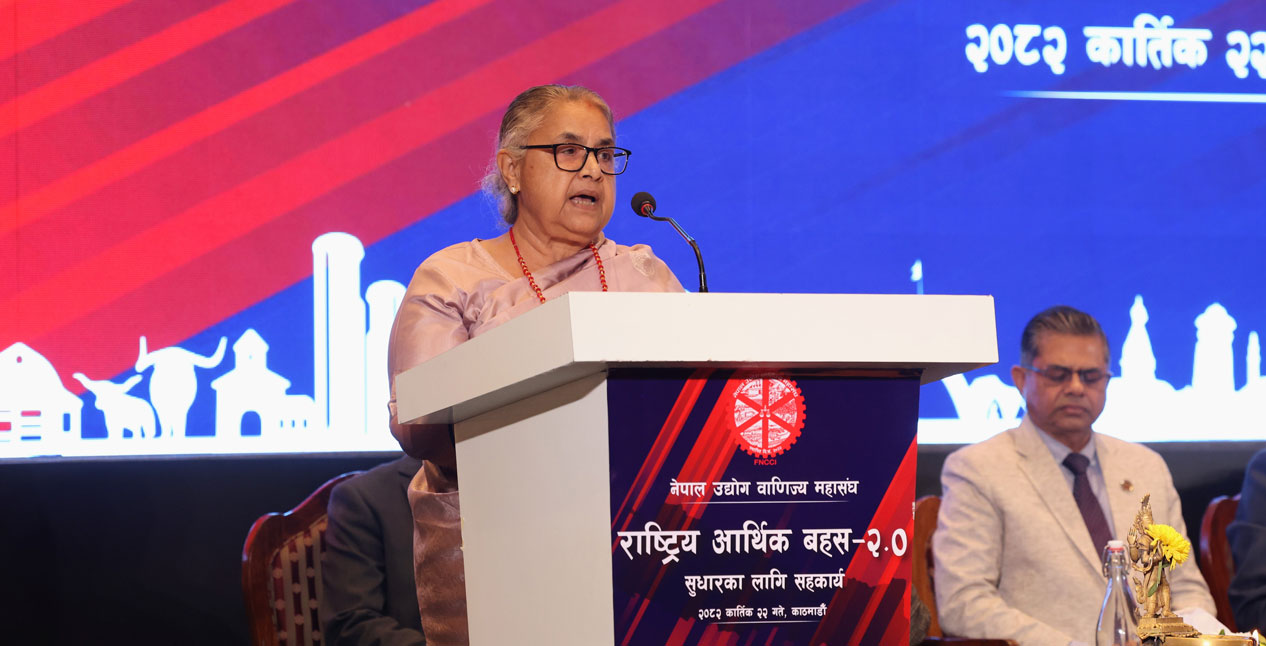
Prime Minister Sushila Karki, in her address at the recent National Economic Dialogue 2.0, described industrialists, entrepreneurs, and workers as the indhan (fuel) of the national economy.
“I believe private sector industries are the foundation of economic prosperity,” PM Karki emphasized. “All Nepalis are engineers; society, government, and the system are the engines; and industrialists, entrepreneurs, and workers are the fuel that drives national progress.”
If the interim government, in its remaining four months, implements the vision articulated by PM Karki—focusing on collaboration and confidence-building within the private sector—it can set the stage for a genuine economic rebound.
After all, the true strength of any government lies not only in its political stability but also in its capacity for economic delivery. #nepal #economy #genz