


Thousands of people living across the country are suffering from burn-related incidents every year. Commonly, people suffer burns from lightning, chemical scalds and flame. After the incidents many victims are forced to live completely different lives, often facing social isolation and challenges.
The WHO reported in 2021 that a total of 180,000 people from around the globe were killed from burns-related injuries. According to the Department of Health Services, Nepal Health Fact Sheet 2025, around 79,630 people were injured from burn-related violence.
Burn survivors in Nepal continue to struggle not only with physical injuries but also with social exclusion, psychological trauma, financial hardship, and limited access to rehabilitation services. The personal story of those survivors is very heart-wrenching.
Shraddha (name changed) from Surkhet, who is 23 years old now, was just 12 when she mistook a bottle of acid for water and washed her face with it. For a girl who enjoyed playing outdoors with friends, life took a tragic turn after severe burns on her face. She remarks that she has stopped going to the market and interacting with people as unwanted attention and social judgement surround her throughout. Even with a shawl wrapped all around her face, revealing only the eyes, she feels that every step outdoors is emotionally overwhelming and socially daunting. She now spends most of her time isolated inside her home and is reluctant to share anything further, as she believes that sharing her story cannot bring any meaningful change in her life.
It seems that the constitutionally guaranteed right to education and the right to live a dignified life are not for girls like Shraddha. She thought marriage and social engagement were not for girls like her. Burn survivors like Shraddha are unable to get back into normal life because of our societal behaviour, such as stigmatisation, discrimination and social judgement. It seems that the battle for burn survivors does not end with medical treatment; rather, it begins after the treatment, in society.
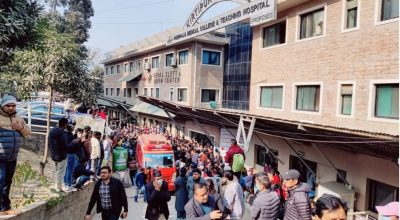
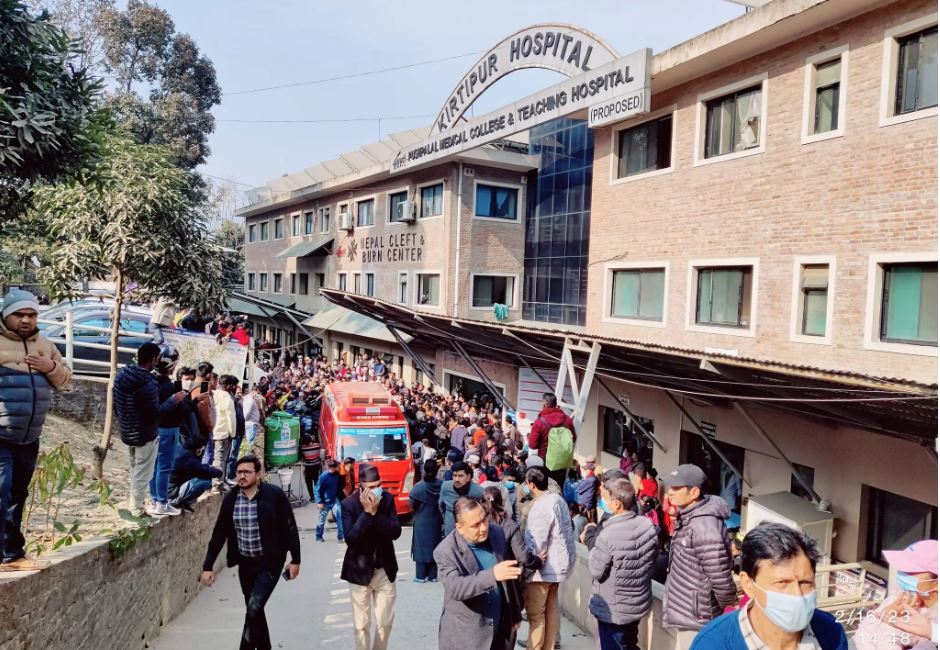
Santosh (name changed), a 12-year-old boy from Bajura, came into contact with a low-hanging high-voltage electric wire on his way to take animals for grazing. His friends rushed him to a nearby health post, where instead of initial care, he was immediately referred to Bheri Hospital. The Bheri Hospital could not provide specialised burn care treatment and referred again to the Kirtipur Hospital. In this long, arduous journey from Bajura to Kathmandu, Santosh’s situation worsened; the wounds were severely infected, leaving doctors at Central Hospital with no other options but to amputate his left arm. Parents of Santosh shared that, “Had there been good hospitals nearby, his condition wouldn’t have been this critical.” Additionally, they added that “For a family like ours, meeting even the daily needs is difficult. The medical treatment had added an additional financial strain, but with Burn Violence Survivors (BVS) -Nepal’s support, Santosh received medical treatment, nutritional support and psychosocial counselling.”
Santosh’s discharge from the hospital was the beginning of the physical and social struggles. Being a left-handed person and having to amputate his left arm, he struggled to complete even the daily tasks. Additionally, his friends mocked and teased him by calling him ‘dudhay’ (a derogatory word used for a person with an amputee hand), which led to mental stress, emotional turmoil, and loss of confidence. A relative of Santosh stood up against this discrimination, and in support of the locals, Santosh was admitted to the Disabled Rehabilitation Centre, Gokarna, to continue his education.
The survivors are being mocked by their friends due to a lack of awareness about providing respectful behaviour for survivors. So, our curriculum has to include the issues to prevent such incidents and give respect to victims even after the incidents. Besides in the textbooks, it is required to conduct short-term awareness programmes for burn survivors in coordination with local governments and schools. People are doing the wrong practice during the first aid treatment, too. They used to apply turmeric, aloe gel, and cow dung to the wound, which is an unsafe practice; therefore, an awareness programme is most required to ensure the dignified life of the survivors.
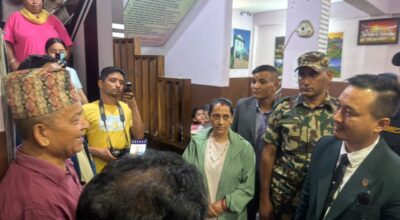
Pratikshya Giri, executive director of BVS, says, “Burn survivors often face social isolation long after their physical wounds have healed. ” Many survivors struggle with visible scars and changes in appearance leading to low self-esteem and fear of being judged. In addition to their personal battle, unwanted attention, stigma, and discrimination from society make it difficult for survivors to participate in social, educational, and employment opportunities. The emotional impact of exclusion can be as challenging as the burn injury itself. Thus, it is essential to create an inclusive and compassionate society for their rehabilitation and reintegration.”
According to the report of the WHO published in 2023, burns are the second most common reason for disability in Nepal. Likewise, another report published by BVS Nepal shows that among 100 burn victims, 47.6 per cent suffered flame burns, 44.5 per cent suffered scald burns, 6.5 per cent suffered electrical burns, 0.8 per cent suffered chemical burns, and 0.5 per cent suffered lighting burns in the duration between November 2019 and October 2020.
Though the Constitution of Nepal has ensured the right to live with dignity and the right to health as fundamental rights, burn survivors are compelled to live beyond this. Adequate healthcare, rehabilitation, psychosocial support, and social inclusion are not accessible for them.
There are some legal provisions related to burning. The Health Facility Operation Standards, 2077, under section 70 (d) of the standards, stated that 10 per cent of the total beds be set aside for the poor, helpless, and neglected patients who come to the hospital for treatment and free treatment be provided.
Likewise, a cabinet meeting held on 18th October 2024 decided to bear the free intensive care of burn survivors from B.P. Koirala Health Science Academy, Narayani Hospital in Madhes Province, Kritipur Burn Hospital, Surkhet Provincial Hospital, and Seti Provincial Hospital in the Far Western region.
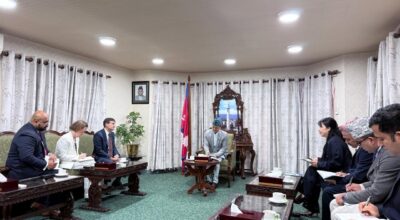
While incorporating the burn issue in the 100 Points Governance Reform Agenda and the expansion of medical treatment in provincial hospitals mark a great initiative by the new government. The BVS-Nepal team has been strengthening its advocacy initiatives to ensure survivors receive continued support even after treatment ends. Only holistic support that assists burn survivors with post-burn treatment, counselling, and skills development training followed by seed money support can help survivors overcome emotional, financial and social obstacles. The new government must incorporate the following to encourage and empower survivors,” says Adv. Smriti Pantha, advocacy officer at BVS-Nepal. So, strong implementation of existing laws, survivor-centred policies, psychosocial support, rehabilitation services, and public awareness are urgently needed to ensure that burn survivors can live with dignity and equal opportunities in society. #nepal