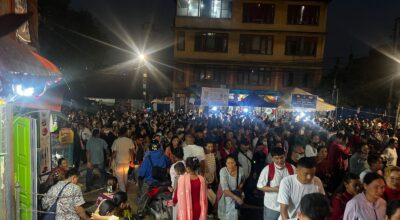



Speculations are rife about the controversial order reportedly given to the Nepal Police to open fire on demonstrators marching toward the Parliament building in New Baneshwor during the September 8, 2025, protest organized primarily by Gen Z youth against the government’s social media ban. The incident left 19 people dead and triggered nationwide outrage.
The following day, grief and anger quickly spread across the country. What began as an expression of public dismay over the killing of 19 unarmed protesters—mostly young citizens—morphed into an unprecedented wave of violence in Nepal’s modern history. The September 9 protests, initially spontaneous and emotionally charged, were soon infiltrated by criminal elements who exploited the chaos to pursue their own agenda.
In the ensuing mayhem, mobs ransacked and torched major state institutions including the Parliament, Supreme Court, Special Court, District Courts, Office of the Attorney General, Commission for the Investigation of Abuse of Authority, Special Court, the Prime Minister’s residence, the President’s Office, ministers’ quarters, and the historic Singha Durbar complex—the government secretariat.
Several media institutions, residences of political leaders, and business establishments and department stores were also looted, vandalized and set ablaze, creating widespread fear and insecurity.
Although the protesters had demanded the resignation of then Prime Minister KP Sharma Oli and Home Minister Ramesh Lekhak, who resigned late evening on September 8, —holding them accountable for the September 8 deaths—most of the large-scale destruction took place after Oli had already stepped down. This timing alone makes it evident that criminal and politically opportunistic groups had hijacked the movement, using genuine grievances as a pretext for lawlessness.
Amid the unfolding crisis, on October 2, 2025, a faction of Gen Z demonstrators led by Sudan Gurung—who, ironically, is not himself a Gen Z activist but rather an opportunistic instigator—pressured Home Minister Om Prakash Aryal to immediately arrest Oli and Lekhak. A few days earlier, the same group, joined by some parents of the deceased protesters, had filed a complaint at a police office demanding their arrest.
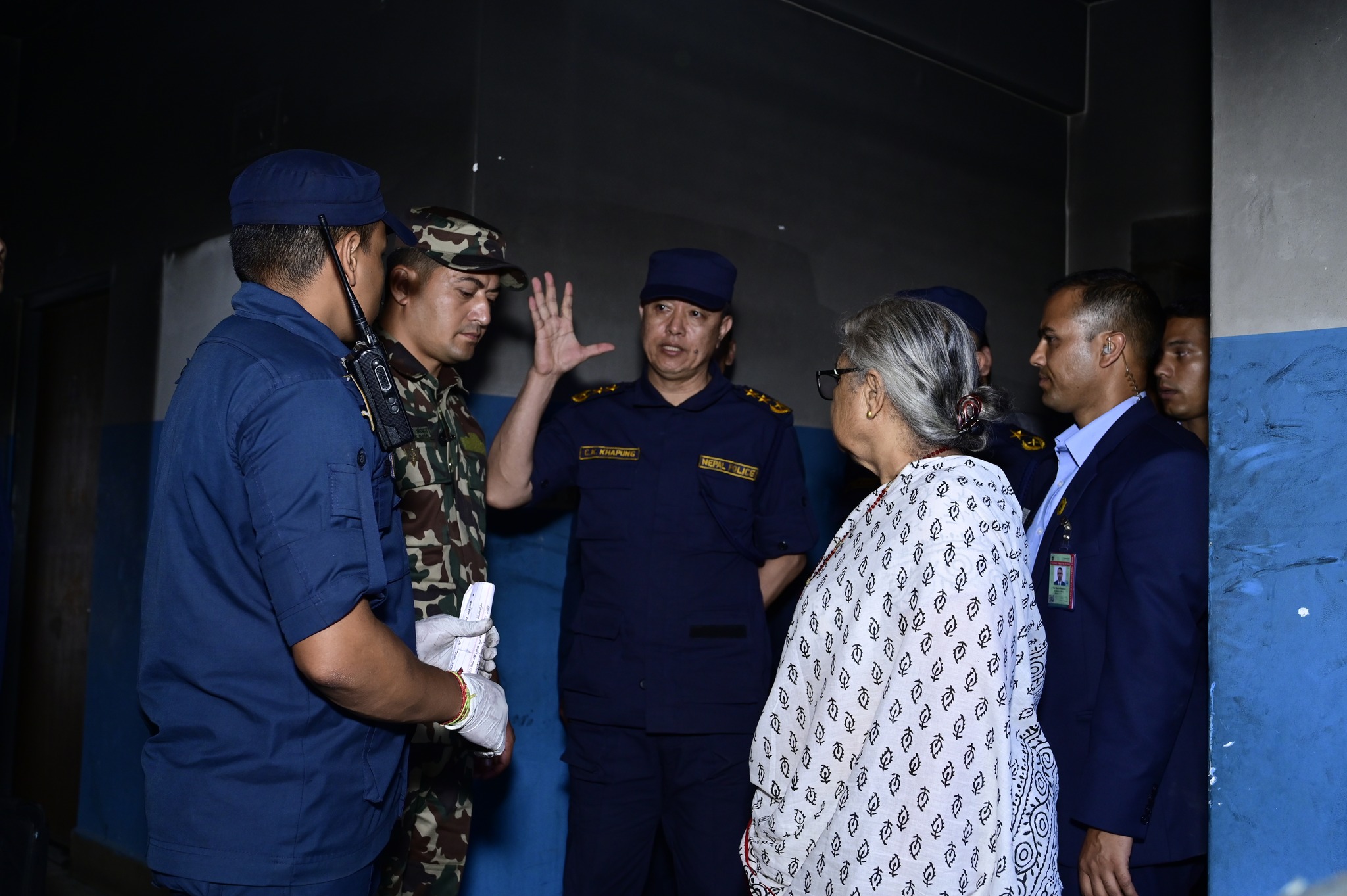
Bowing to the mounting pressure, Home Minister Aryal convened a high-level meeting with Inspector General of Police (IGP) Chandra Kuber Khapung and other senior security officials, instructing them to execute the arrests. However, IGP Khapung displayed rare prudence, composure, and legal clarity in the face of political coercion.
He reportedly reminded the Home Minister of four key points:
First, that a government-formed probe commission was already investigating the September 8 incident, and arresting individuals before the inquiry’s conclusion would contravene legal due process.
Second, that the Nepal Police does not have the jurisdiction to take direct legal action against a sitting or former prime minister and home minister without due constitutional procedures.
Third, that such a move could provoke serious confrontation and unrest across the nation. And fourth, that acting arbitrarily on politically motivated complaints would set a dangerous precedent—potentially requiring the police to arrest other public figures such as Kathmandu Mayor Balendra Shah or even police officials accused by rival factions.
Startled but unrelenting, Home Minister Aryal pressed ahead with his stance. IGP Khapung then took a principled position, reportedly telling the minister he would rather resign than lead the police into an act that could ignite nationwide chaos and endanger Nepal’s fragile peace.
The chiefs of the Armed Police Force and the National Investigation Department seconded his view, warning of disastrous consequences if political vendetta trumped institutional integrity.
Subsequently, Aryal, accompanied by security chiefs, met Prime Minister Sushila Karki at her Baluwatar residence. During the late-night meeting, which lasted until 2 a.m., IGP Khapung reiterated his position: that arresting Oli and Lekhak without conclusive evidence or legal authority would backfire catastrophically. He even said that if Nepal Police have to arrest Oli and Lekhak at any cost, an order in writing signed by the Prime Minister should be issued.
Other senior officials concurred, and PM Karki finally agreed to forward the complaint to the Investigation Commission for review.
However, the Commission—soon after Oli publicly denounced it as “fake”—returned the complaint to the police, claiming that the matter fell under police jurisdiction. This back-and-forth revealed more than bureaucratic confusion; it exposed deep political manipulation aimed at misusing and discrediting Nepal Police and exacting revenge on political rivals.
The episode underscores the growing incompetence and political immaturity of Prime Minister Karki and Home Minister Aryal, who appear guided more by ego and resentment than by statesmanship. Karki’s entrenched antipathy toward political parties is not only undermining governance, but also jeopardizing the timely conduct of the federal elections scheduled for May 5, 2026.
It is worth recalling that Karki herself rose to prominence through political appointments—first as Nepal’s first female Chief Justice and later as the country’s first female Prime Minister, both positions made possible by party recommendations.
Her increasing isolation and overreliance on hidden orchistrator balen Shah and unappointed advisers like Sudan Gurung threaten to deepen the crisis and alienate key democratic institutions.
In contrast, the calm leadership demonstrated by IGP Khapung has earned wide public respect. His restraint prevented what could have easily escalated into a direct confrontation between rival political and youth factions. The day after his principled defiance, the student wing of the CPN-UML filed a nationwide series of complaints against Mayor Balendra Shah and Sudan Gurung, accusing them of orchestrating violence and devastation that resulted in the deaths of 75 people.
Karki’s government, if it continues to act impulsively and vindictively, risks creating a political smokescreen in which both domestic and external forces could exploit instability to derail Nepal’s democratic process. The caretaker government formed on the “principle of necessity” must now demonstrate maturity, not malice.
Reports suggest that Mayor Balendra Shah, who has long viewed Oli as his political adversary, recently visited PM Karki to press for the arrests. The irony is that no similar punitive measures were taken against past leaders responsible for casualties and destruction during the 1990 and the 2006 people’s movements. Selective application of justice undermines democratic legitimacy and erodes public trust in institutions.
Meanwhile, the security vacuum created by the unrest remains alarming. More than 5,000 inmates who escaped from various prisons on September 9 are still at large, and over 600 police-issued weapons are missing. Several of these fugitives have already committed serious crimes, including murder and attempted rape.
A retired senior police official recently warned on national television that many of these criminals can handle firearms, and if future protests occur, they could infiltrate crowds and trigger deadly violence beyond the state’s control.
The September 9 rioters not only looted weapons, uniforms, and boots stripping off police personnel and from police posts but also brutally assaulted officers, torched vehicles, and burned down police offices. Many officers returned to duty on sleepers and without uniforms, traumatized yet determined to restore order. Hundreds of police personnel remain displaced and psychologically scarred.
In such circumstances, the government’s primary responsibility should be to support the security forces—acknowledging their sacrifices, replenishing lost equipment, and rehabilitating affected personnel. Instead, political leaders appear intent on demoralizing them.
Had IGP Khapung not exercised such foresight and restraint, Nepal could have already plunged into another cycle of violent unrest. His decision exemplifies not only professional acumen but also patriotic commitment to safeguarding the nation.
The Nepal Police, often criticized in normal times, have in this instance shown commendable courage, discipline, and devotion to duty. They deserve appreciation, not disparagement. The nation owes them gratitude for averting an imminent catastrophe and working tirelessly to restore normalcy. To discredit or dishearten them now would be an injustice—to the institution, to democracy, and to the people they protect.