


Kathmandu, Aug 19: With Bangladesh becoming the first South Asian country to accede to the UN Water Convention in June 2025, signaling a shift toward multilateral water diplomacy, Nepal faces critical questions about its own transboundary water strategy.
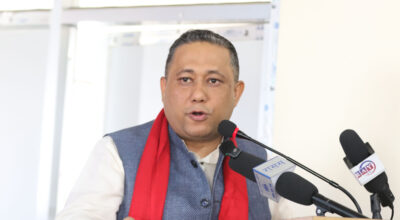
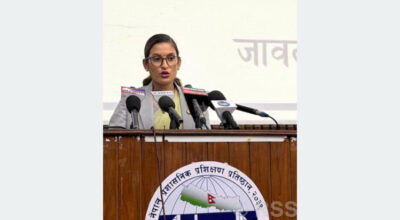
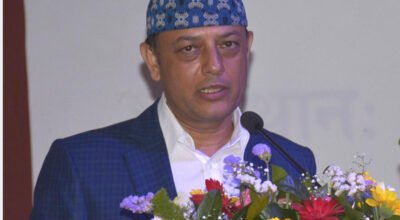
As Madhesh Province experiences severe groundwater depletion affecting millions along the Nepal-India border, the need for innovative diplomatic and technical solutions has never been more urgent. In this exclusive interview, Krishna Adhikari from RSS speaks with Jiwan Mallik, Harvard Kennedy School graduate and energy policy specialist, who explores how Nepal can navigate the changing landscape of regional water diplomacy while addressing the Indo-Gangetic aquifer crisis through engineering innovations and cooperative frameworks.
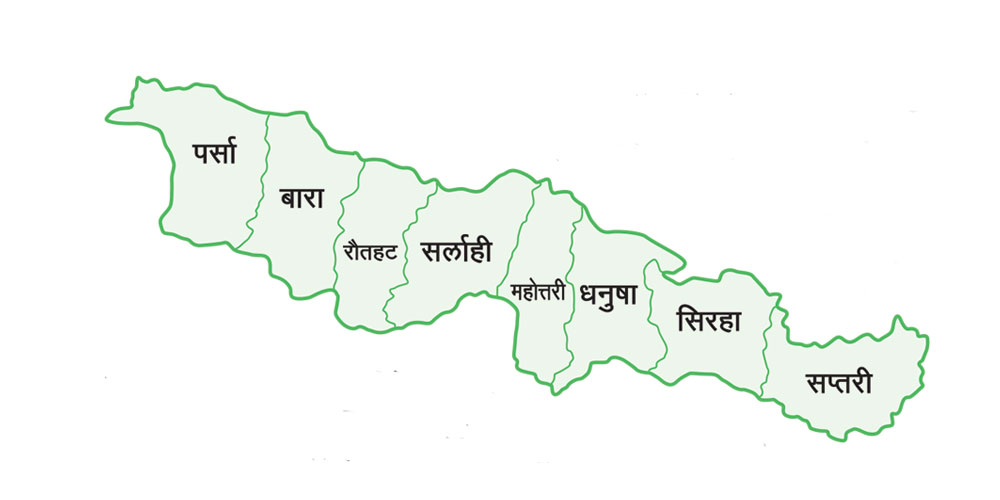
Bangladesh’s recent accession to the UN Water Convention represents a new approach to transboundary water issues in South Asia. How does this regional shift affect Nepal’s approach to groundwater cooperation, particularly for the Madhesh crisis that spans international borders?
Bangladesh’s move is a game-changer for regional water diplomacy. It signals that bilateralism alone may no longer be sufficient for addressing complex transboundary water challenges. For Nepal’s Madhesh groundwater crisis, this creates both opportunities and pressures.
The Indo-Gangetic aquifer system that underlies Madhesh is essentially one continuous geological formation, but it’s managed by multiple states with different policies, priorities, and technical capacities. When Bihar or Uttar Pradesh increases groundwater extraction for agriculture or industry, it directly impacts water availability in Nepal’s Madhesh districts.
What Bangladesh has done is recognize that multilateral frameworks can provide stronger legal mechanisms and technical support than purely bilateral arrangements. For Nepal, this raises the question: should we also consider multilateral approaches for groundwater management, or can we develop innovative bilateral mechanisms that achieve similar results?
The advantage of multilateral frameworks is third-party technical support and standardized monitoring protocols. But for groundwater specifically, the challenge is that aquifer management requires very localized technical interventions that bilateral cooperation might handle more effectively.
Bangladesh chose the UN Water Convention over other frameworks because it offers robust technical and financial support mechanisms. How can Nepal develop similar institutional support for groundwater cooperation within bilateral arrangements?
Nepal can learn from Bangladesh’s strategic thinking while adapting it to bilateral cooperation frameworks. Bangladesh recognized that effective water cooperation requires more than just legal agreements, it needs institutional support, technical assistance, and financing mechanisms.
For groundwater cooperation with India, Nepal should advocate for a comprehensive bilateral agreement that includes technical working groups, joint monitoring commissions, and shared financing facilities. This creates institutional depth similar to multilateral frameworks but within bilateral arrangements that India prefers.
We also need sub-national cooperation. Madhesh Province should develop sister relationships with adjacent Indian states like Bihar and Uttar Pradesh. These state-to-state partnerships can move faster than national negotiations while building trust through practical cooperation.
Domestically, Nepal needs updated water laws that recognize transboundary aquifer management as a national priority, with clear institutional mandates and resource allocation mechanisms.
What specific solutions can address groundwater sustainability while respecting cross-border sensitivities?
Successful transboundary groundwater management requires engineering solutions that create mutual benefits rather than zero-sum competition. I see three categories of technical interventions that can work across borders.
First, coordinated artificial recharge systems. Instead of each side building independent recharge infrastructure, we could develop integrated systems that maximize recharge efficiency across the entire aquifer. For example, flood water capture and recharge projects in Nepal’s Chure-Madhesh could be designed to complement similar infrastructure on the Indian side, creating a regional recharge network.
Second, smart monitoring and data sharing systems. Advanced groundwater monitoring using remote sensing, IoT sensors, and hydrogeological modeling can provide real-time aquifer data. When both countries share this information, it enables coordinated management decisions and early warning systems for critical depletion zones.
Third, demand management through precision irrigation and crop optimization. By introducing water-efficient technologies and climate-appropriate crop varieties simultaneously across the border region, we can reduce overall groundwater demand while maintaining agricultural productivity. This requires coordinated agricultural extension services and technology transfer programs.
The key is designing interventions that provide immediate local benefits while contributing to regional sustainability. Farmers need to see improved water security and crop yields, not just abstract aquifer health improvements.
How can Nepal develop effective policy frameworks for transboundary groundwater cooperation with India?
Nepal needs a multi-layered policy approach that operates at local, national, and international levels simultaneously. The most effective transboundary water cooperation happens when local communities, technical experts, and government officials all see clear benefits from collaboration.
At the bilateral level, Nepal should advocate for a formal India-Nepal Groundwater Management Agreement, similar to existing surface water treaties but adapted for aquifer characteristics. This agreement should establish joint monitoring protocols, shared data standards, and coordinated management decisions for critical aquifer zones.
But equally important is sub-national cooperation. Madhesh Province should develop sister relationships with adjacent Indian states like Bihar and Uttar Pradesh. These state-to-state partnerships can address technical cooperation, data sharing, and joint project implementation more quickly than waiting for national-level agreements.
Domestically, Nepal needs updated water laws that recognize transboundary aquifer management as a national priority. Our current legal framework treats groundwater as a local resource, but transboundary aquifers require national-level policy coordination and resource allocation.
How can international organizations and development partners support transboundary groundwater sustainability in Madhesh?
International partners can play crucial roles as neutral facilitators, technical advisors, and funding sources for transboundary cooperation. The most effective support provides incentives for collaboration while building local capacity for long-term management.
The World Bank and Asian Development Bank have experience with transboundary water projects that could be adapted for groundwater. Their regional approach to infrastructure financing can support coordinated investments that benefit multiple countries while addressing shared aquifer sustainability.
What is your vision for sustainable groundwater management in the Madhesh region over the next decade?
I envision the Madhesh-Bihar-UP region becoming a model for transboundary groundwater cooperation—demonstrating how shared water resources can strengthen rather than strain international relationships.
By 2035, we should have stabilized groundwater levels across the region through coordinated management, innovative technology, and agricultural transformation.
This means integrated monitoring systems providing real-time aquifer data, coordinated artificial recharge networks capturing monsoon floods for groundwater banking, and precision irrigation systems that maintain agricultural productivity while reducing water demand.
This vision requires persistent effort and political will. If aquifer depletion and water conflict will be continued, it will be far worse for both countries. The question isn’t whether we can afford to cooperate, but whether we can afford not to cooperate on this fundamental resource that millions depend on for their survival and prosperity.#nepal #Cross-Border #rss