


Kathmandu, July 6: Poet Gunjan Rai was arrested by Nepal Police’s Cyber Bureau for allegedly abusing singer Eleena Chauhan on social media. According to reports, the arrest was based on a formal complaint filed by Chauhan.
Rai, a resident of Lalitpur, is notably the same poet who recently secured eighth place at the National Poetry Festival organized by the Nepal Academy. His poem had been listed among the top 25 selected works, making his arrest particularly surprising to many.
Initially, news of his arrest did not disclose his identity as a poet. However, once it became known that he was not just any individual, but a recognized poet, public reactions were filled with disbelief and disappointment.
Further investigations revealed that Rai had been operating multiple fake social media accounts to repeatedly harass and defame Chauhan, intensifying public shock. Many questioned how someone engaged in the creative and expressive field of poetry could resort to such actions.
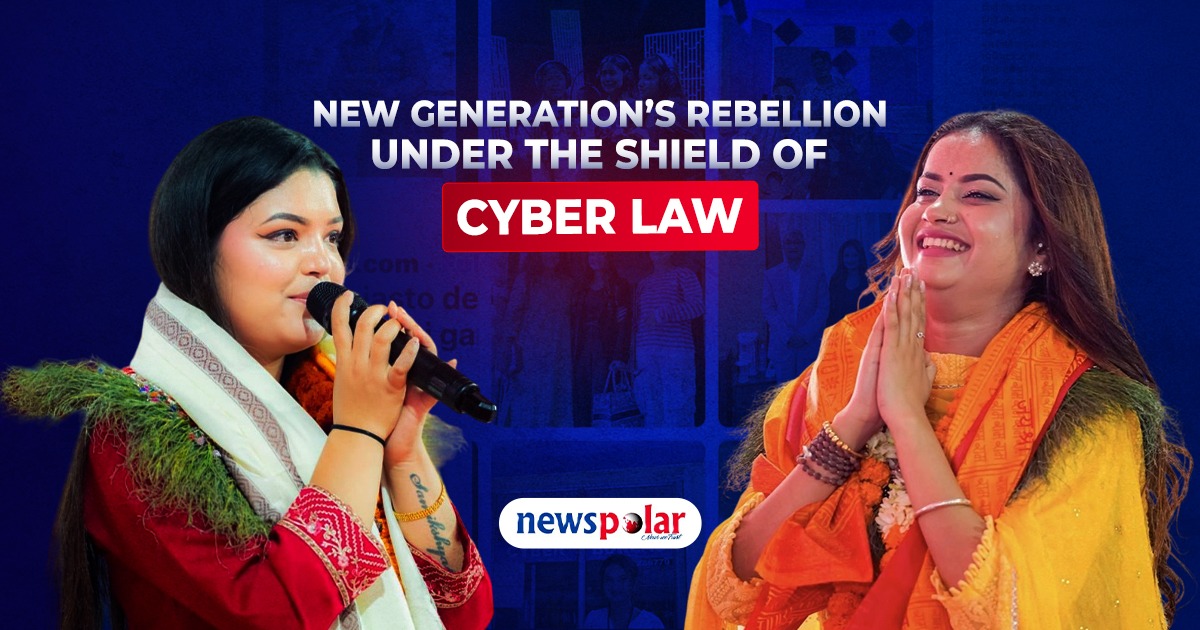
Singer Eleena Chauhan, along with fellow artist Samikshya Adhikari, had filed complaints with the Cyber Bureau seeking legal action against individuals involved in online abuse. This incident highlights a growing trend of social media being misused as a tool to vent personal grudges, defame individuals, and attack public figures.
Public personalities—ranging from artists and celebrities to politicians—are increasingly falling victim to fake accounts and targeted online harassment. Meanwhile, others exploit social platforms to spread misinformation and slander under the pretense of becoming viral.
One recent example includes a video from the YouTube program Tough Talk by journalist Dilbhushan Pathak, which made unverified allegations against Jaybir Singh Deuba, the son of Nepali Congress President Sher Bahadur Deuba. The video lacked credible sources, prompting Jaybir to file a complaint with the Cyber Bureau. Initially, some defended Pathak on the grounds of press freedom, but as more people watched the video, they realized it lacked journalistic integrity and was instead character assassination disguised as reporting.
This led even professional journalists to question whether Pathak’s actions aligned with the ethics of responsible journalism. Pathak, operating without a registered media outlet in Nepal like Press Council Nepal and Department of Broadcasting and Information, had long been producing and broadcasting such content, but the case involving Jaybir sparked wider concern and division within Nepal’s media community. About 35 journalists defended the video, while others strongly opposed it.
Much like the surprise surrounding poet Rai’s arrest, Pathak’s case also raised eyebrows, especially given his reputation as a journalist. People questioned how someone of his stature could resort to such tactics.
These incidents illustrate a broader shift among Nepal’s younger generation. Unlike the older generation, which often tolerated online abuse and refrained from legal action, younger public figures like Chauhan, Adhikari, and Jaybir Singh Deuba are actively fighting back through legal means. They refuse to accept unchecked defamation and misuse of social media, opting instead to challenge such behavior with the full force of the law.
This pushback marks a form of resistance—perhaps even a rebellion—against the normalization of online abuse. While senior political figures like Sher Bahadur Deuba and Dr Arzu Rana Deuba (Minister for Foreign Affairs) have long been subjects of social media slander, they have typically chosen to ignore it. But the younger generation, it seems, is not willing to remain silent.
Even, the young artists have begun publishing photos of those who were engaged in defaming them or caracter assasination.
Their response is not just a personal act of defiance—it is a stand for accountability in the digital age. #cyber #cybercrime #cyberbullying #nepal