


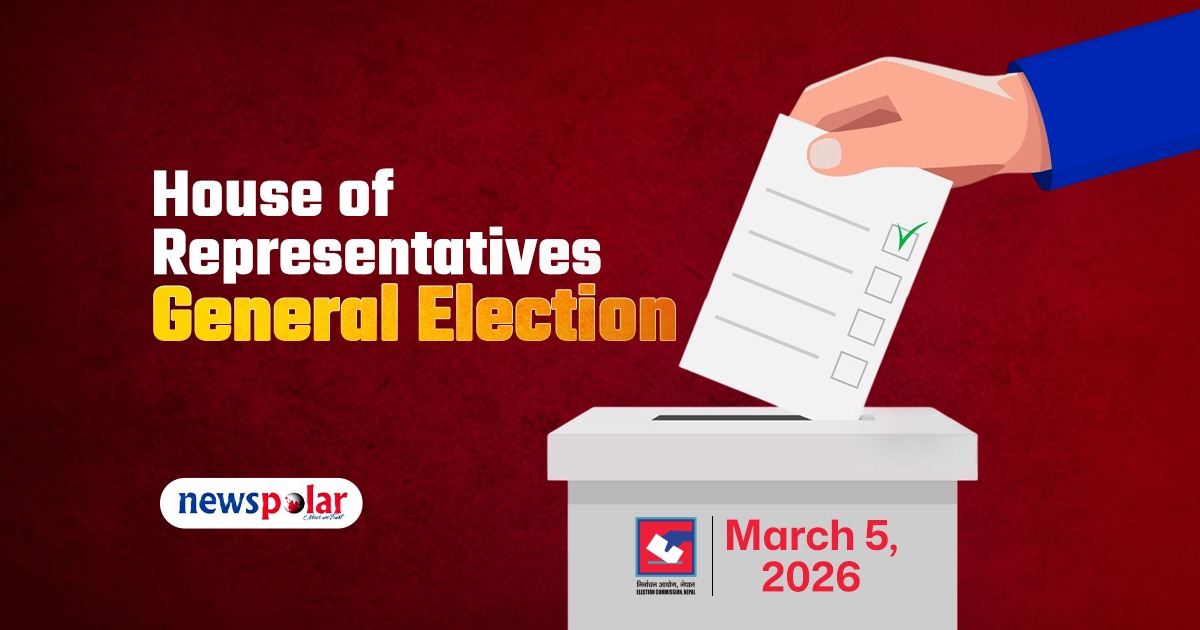
Kathmandu, Jan 22 — The Dalit community has witnessed a very limited number of candidacies in the upcoming House of Representatives (HoR) elections scheduled for March 5, particularly under the first-past-the-post (FPTP) electoral system.
Among the major political parties, the Nepali Congress (NC) has fielded its Assistant General Secretary Prakash Rasaili Snehi as a Dalit candidate from Bajhang. The CPN (UML) has nominated Chakra Snehi from Dadeldhura and Bimala Biki from Bardiya–2. Similarly, the Nepali Communist Party has given tickets to only two Dalit candidates—Padam Biswokarma from Syangja–2 and Man Bahadur Sunar from Kanchanpur–3. The Rastriya Swatantra Party (RSP) has nominated Khagendra Sunar from Banke–3.
Commenting on the issue, Padam Sundas, a Dalit movement leader and former ambassador, stated that major political parties have historically treated the Dalit community merely as a vote bank while consistently depriving them of meaningful political opportunities. “The contribution of Dalit leaders within political parties is no less than that of other communities, yet they are denied tickets during elections. Despite Dalits comprising around 13 percent of the total population, discrimination persists in the distribution of electoral tickets,” he said.
Similarly, Bindu Pariyar, President of the Association for Dalit Women’s Advancement of Nepal (ADWAN), criticized major parties for their lack of sensitivity toward Dalit representation. She remarked that the Nepali Congress, which claims a democratic legacy, as well as the Nepali Communist Party and the CPN (UML), which advocate for the rights of marginalized communities, have failed to ensure adequate inclusion of Dalits. According to her, the reluctance to directly nominate Dalit candidates has resulted in their minimal representation in Parliament.
Pariyar further argued that, just as the Constitution mandates at least 33 percent representation of women in Parliament, there should also be a compulsory provision to ensure proportional representation of Dalits.
Historical data indicate a declining trend in Dalit representation in Parliament. In the House of Representatives elected in 2022, there were 15 Dalit members, accounting for 5.81 percent of the total. The 2008 Constituent Assembly had 50 Dalit members (8.32 percent), while the 2010 Constituent Assembly included 40 Dalits (6.65 percent). In the 2018 House of Representatives, Dalit representation stood at 20 members, or 7.27 percent.
Currently, only eight out of 59 members of the National Assembly are from the Dalit community.
Although Article 42(1) of the Constitution guarantees socially disadvantaged groups the right to participate in state bodies on the basis of inclusiveness, stakeholders note that this provision has yet to be effectively implemented in practice. #nepal #dalit #election