

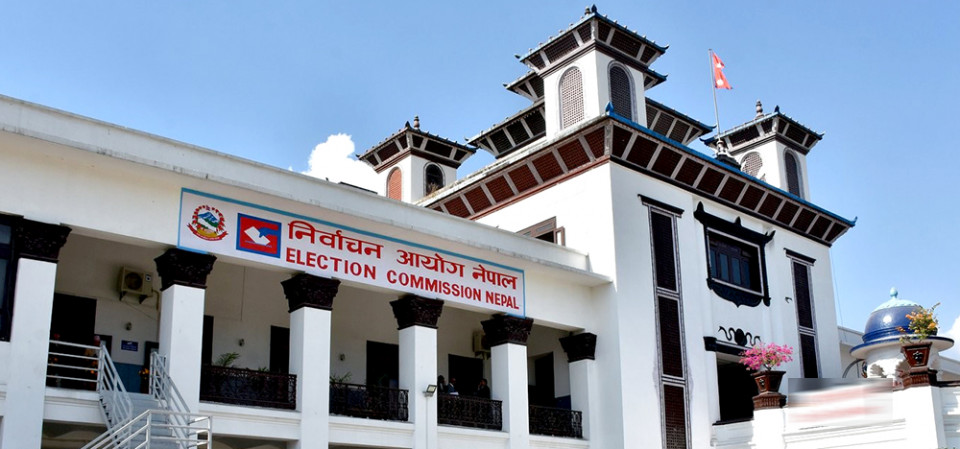
Kathmandu, Dec 6: The Election Commission (EC) has issued a 30-point directive to political parties in preparation for the House of Representatives (HoR) election scheduled for March 5, 2026.
In addition, the EC has set December 26 as the date for the National Assembly (NA) election.
According to Assistant Spokesperson Prakash Neupane, the directives were issued to all political parties registered with the EC under Clause 57 of the Political Party Act, 2073. The directives focus on ensuring good governance and upholding inclusive proportional representation in the upcoming elections.
To guarantee inclusive proportional representation, each political party must ensure that women’s representation does not fall below one-third and must nominate candidates accordingly under the first-past-the-post system. Parties are also required to structure their nominations in line with the national goal of achieving 40 percent women’s representation in Parliament by 2030, in accordance with the Sustainable Development Goals (SDGs).
Political parties have been instructed to refrain from any activities that undermine mutual harmony and must adhere to the Constitution of Nepal while respecting the country’s social, cultural, linguistic, ethnic, regional and gender diversity.
The EC has further directed political parties to cooperate in making polling stations gender-friendly and accessible for persons with disabilities, and to ensure that their political documents, including election manifestos, reflect gender and social inclusion principles.
The principle of inclusive proportional representation must be applied in a way that maintains at least one-third women’s representation and reflects the country’s social diversity when nominating candidates for all posts not specifically reserved for women, Dalits, and minority communities.
Parties must also ensure the meaningful participation of women, marginalized groups, and targeted communities in training, workshops, seminars, discussions, and interaction programmes.
During election campaigns, political parties are prohibited from directly or indirectly intimidating, defaming, insulting, or attempting character assassination against women, children, persons with disabilities, marginalized groups, or any candidates. Discriminatory actions are also strictly forbidden.
The directive states that political parties must ensure that language used on social media does not disseminate false, misleading, or malicious content that could negatively affect women and indigenous nationalities.
Likewise, political parties are required to make adequate arrangements to inform voters about gender and inclusivity in elections, the importance of voting, and the voting process. All office-bearers, members, and workers of political parties must adhere to the election code of conduct.
The directive further instructs political parties to ensure that children are not involved in political activities. Additionally, parties are prohibited from engaging in undemocratic acts such as obstructing, restricting, or coercing other parties in the conduct of their election-related activities. #nepal #election