


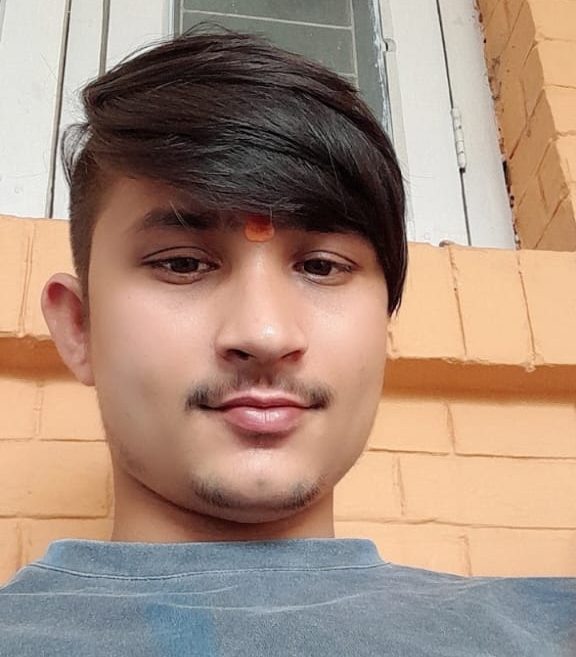
Sarlahi, Nov 25: Twenty-six-year-old Parbati Subedi has yet to regain emotional stability. The events of Bhadra 24 (September 9, 2025) continue to haunt her, and she breaks down whenever she recalls the day her 27-year-old husband, Dev Kumar Subedi, was fatally shot during the Gen-Z movement. Every passing day has been marked by grief.
“The day somehow goes by, but when evening comes and I realize he will not return, my heart collapses,” Parbati says. The plans she and her husband had made—repaying their debts and securing their daughter’s future—now remain painfully incomplete.
Rumors of the Gen-Z protests began circulating in the third week of Nepali month of Bhadra, creating a sense of uncertainty. Dev, employed as a daily-wage worker at the Road Division Office in Sainbu, Lalitpur, lived with Parbati and their nine-year-old daughter in the office quarters. His responsibilities ranged from office assistant to driver and security guard.
After student casualties were reported on the first day of protests (September 8), the unrest intensified. On September 8 (Bhadra 23), many government offices in Kathmandu were open, so Dev continued his duties. However, as demonstrations escalated in the afternoon, authorities imposed a curfew.
Amid rising public outrage over the previous day’s violence, Dev felt compelled to go outside. “He returned to our room after completing some office work,” Parbati recalls. When she asked whether the office would remain open, he said he did not know.
The couple carried on with their daily routines, with their daughter beside them. Dev’s modest income barely met household expenses, prompting Parbati to work part-time. They had recently planned to expand a small vegetable business in Kalimati to supplement their earnings.
Reflecting on the day of the incident, Parbati says Dev left with Rs 35,000 to settle payments for lapsi (hog plum) after meeting his business partner. He said he would eat at his partner’s home, but returned after failing to find transportation. When Parbati urged him to eat, he refused, saying he had already eaten while distributing fruits to protesters.
She tried to dissuade him from going out again, reminding him of the previous day’s violence. But Dev insisted: “A storm of change is sweeping outside. How can youths like us stay home? Corrupt leaders have hollowed out the country. I will go to Kalimati and return.” Moments later, a large crowd of protesters passed by, alarming Parbati. She and her sister attempted to look for him but were overwhelmed by the crowd and returned home.
Soon after, a man from a nearby hotel came running and told her to go to the hospital. When she asked what had happened, he initially told her Dev had been shot in the leg to reduce her shock. At the hospital, she saw Dev being taken for surgery around 3 p.m. He gestured reassuringly, signaling that he would be fine.
The bullet had pierced the right side of his abdomen and exited from the left. Still in disbelief, Parbati waited through the night. The following morning, around 9 a.m., doctors informed the family of his death. She fainted upon hearing the news. Dev’s final rites were later performed at Pashupati and subsequent rituals held in Sarlahi.
Parbati draws strength from her daughter, though she knows how hard Dev had worked to secure the child’s future. She insists that his sacrifice must not be forgotten. “Many lives were lost,” she says. “They gave their lives against corruption and injustice. Their sacrifice is meaningful only if these problems end.” She urges the new government to implement the Gen-Z agenda and support affected families. “A life was not just lost,” she adds. “Parents lost a son, a wife lost her husband, and children were orphaned. Their blood was not shed for anyone’s power or prestige.”
Dev’s elderly parents—85-year-old Ujir Bahadur and 67-year-old Yasoda Kumari—are equally devastated. Having already lost a son to a snakebite in 2070 BS, this second tragedy has left them shattered.
Dev, remembered for his friendly and compassionate nature, completed his early schooling in Katari and his SLC in Dudhauli, Sindhuli. His elder brother, Bhanu Bhakta, describes him as outspoken, emotional, and easily moved, yet capable of forming friendships effortlessly. The family originally hails from Hardeni, Katari Municipality-11 in Udayapur district, and migrated to Lalbandi Municipality-5, Major Ganj, Sarlahi, eight years ago.
Dev last visited home in July for office-related work. That visit became his final meeting with his parents. After seeing the leaking roof and missing window panes, he had promised to return in winter to repair them.
Every time his father sees the unrepaired roof or broken window, he is reminded of his son. Ujir Bahadur, who is hard of hearing, and Yasoda, who suffers from lung problems, require regular medical care in Kathmandu. After losing his younger son, Ujir had visited Kathmandu once more, but could not bring himself to return to the old places or the hospital due to overwhelming memories.
“This time our elder son took us to a different hospital,” he says. “The children are managing everything. We need medicines worth six to seven thousand rupees every month. At this age, living after losing a young son feels like an illness in itself.” Hearing neighbors describe Dev as a martyr only deepens the parents’ sorrow.
Parbati urges the government to honor Dev as a martyr, saying his contribution should be officially recognized. She has also requested local authorities to erect a statue in his memory. Dev’s elder brother, Bhanu Bhakta, adds that beyond the government’s financial assistance of Rs 15 lakh, what the family truly seeks is meaningful acknowledgment of Dev’s sacrifice. #genz #nepal rss