


Communities across Nepal’s terai plains and hill districts face some of the country’s most severe climate risks — from devastating floods to dangerous heatwaves. But in 57 high-risk communities across Lumbini and Sudurpaschim provinces, a new programme is helping people not just survive these threats, but prepare for them.
The Climate Resilience Programme, implemented by Practical Action with support from the Zurich Climate Resilience Alliance since 2024, has a core objective of building resilient livelihoods for communities exposed to climate-induced disasters. Its interventions prioritise the reduction of disaster risk within local-level planning processes, investments, and practices.
To do this, the programme applies the Climate Resilience Measurement for Communities (CRMC) tool, developed by the Alliance, to assess the strengths and gaps in community resources and capacities. This assessment helps communities and local stakeholders identify priority resilience needs and make informed decisions on actions that strengthen their ability to cope with climate risks.
Investment in Early Warning Systems and Technology
Early warning systems are among the most effective measures for managing residual risks and reducing disaster-related losses, and the programme has made significant investments to bring them closer to the communities that need them most.
In the Karnali, Donda, Pathariya, and Babai river basins, the programme has expanded community access to early warning systems by supporting the Department of Hydrology and Meteorology (DHM) in repairing 11 hydrometeorological stations and installing 2 new automatic hydrological stations along the Pathariya and Babai rivers, along with 2 new meteorological stations in Budhiaap and Dhakela. Risk polygons have also been developed for Aurahi and Pathariya.
But infrastructure alone is only part of the story. In five communities, automated sirens have been installed and directly linked to the DHM’s systems, enabling the rapid dissemination of warnings. These five Multi-Hazard Automatic Sirens are operated by Local Emergency Operation Centres of the local governments, putting the response mechanism in local hands.
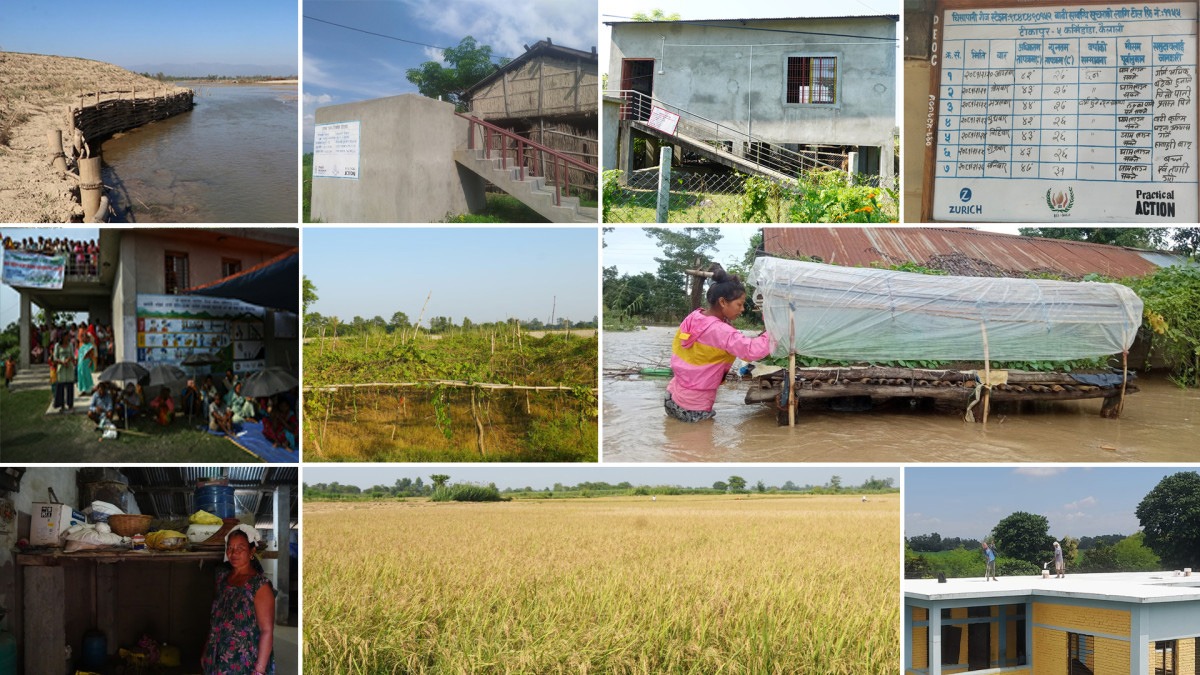
At the community level, 17 weather information boards established in the previous phase between 2018 and 2023, remain in active use. Community leaders use widely available weather apps such as AccuWeather to update 7-day forecasts and compare them with DHM’s bulletin, helping farmers use weather information to their convenience.
Capacity Building and Community Mobilisation
In all 57 communities, the programme has formed Community Disaster Management Committees (CDMCs) and task forces for search and rescue, first aid, early warning, and women’s groups, with clear roles and responsibilities to perform. More than 4,000 community members and government officials have been directly trained in community-based disaster risk management, community action for disaster response, and early warning systems.
For more than 10 years, on June 5 every year, communities perform flood mock exercises in the leadership of CDMC and early warning task force members to stay prepared for flood events.
Risk Reduction and Infrastructure Development
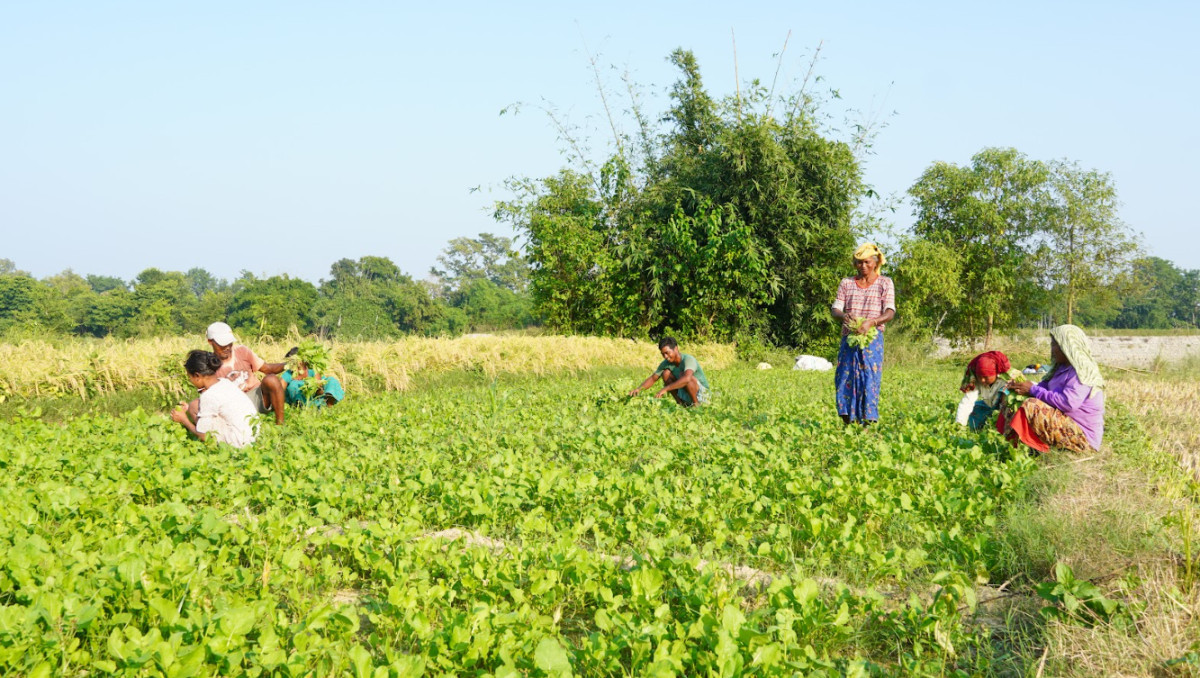
Today, along the rivers of Kailali, Bardiya, and Kanchanpur, communities are thriving in areas that were once vulnerable to flooding. Bio-dykes stand tall, shielding homes, farmland, and livelihoods from the seasonal rise of rivers. Vegetable fields flourish along riverbanks, and farmers are cultivating cereals, sugarcane, peanuts, and vegetables in once fallow areas.
This resilience is the result of years of effort. Back in 2065 BS (2008–09 AD), floods from the Doda River displaced families in Tilki and Shuklaphanta Municipality, and inundated the entire village in Laljhadi. Riverbank erosion and slope slumping damaged farmland, leaving large areas fallow. In response, Practical Action introduced bio-dykes — a sustainable, nature-based solution constructed from locally available materials like bamboo, sand-filled sacks, ropes, and wire, and built using community skills. These embankments were first piloted in Tilki and Nanda Gau, with repairs also made in Bardiya and Kailali.
The results were tangible. In Bangalipur village, Ward No. 2 of Bardiya, a 220-metre-long embankment protected 215 households from flooding. Similar interventions along the Budi River in Rajpurwa and Muktakamaiya Tole, and along the Doda River in Tilki, prevented erosion and allowed previously abandoned land to return to cultivation. Successes in Balapur and Gulariya Municipality have since attracted attention from federal and local organisations, prompting budget allocation for further bio-dyke construction.
Bio-dykes have now been constructed in Rajpuruwa and Muktakamaiya Tole (Rajapur Municipality); Satbigha, Baklahwa, and Farela (Janaki Rural Municipality); and Dakshinpur (Geruwa Rural Municipality).
Beyond flood barriers, the programme has also invested in infrastructure that protects what communities depend on most, i.e. their food and shelter. Previously, locally used storage methods like Daheri or Bhakari, made from mud and wheat husks, would get wet during floods, spoiling the grain. Even bamboo-based storage would allow water to seep in, posing a risk to stored food.
Raised granaries address this directly. Unlike traditional practices, these structures are built 3 to 4 feet above ground, depending on the terrain, keeping grain and seeds safe from floodwaters. In Rajapur Municipality and Geruwa Rural Municipality, raised granaries, locally called “Uchha Bhakari”, have been constructed for 39 households, and similar structures have been built in Wards 5, 7, and 8 of Tikapur Municipality, Kailali.
The impact extends beyond storage. The community-based raised granary in Ward No. 1, Murghawa, Rajapur Municipality, has benefited 115 households and can hold up to 250 quintals of grain. During floods, these buildings also serve as shelter for elderly people, persons with disabilities, the infirm, pregnant women, and children. Local households report feeling secure, knowing their crops, property, and important belongings are protected.
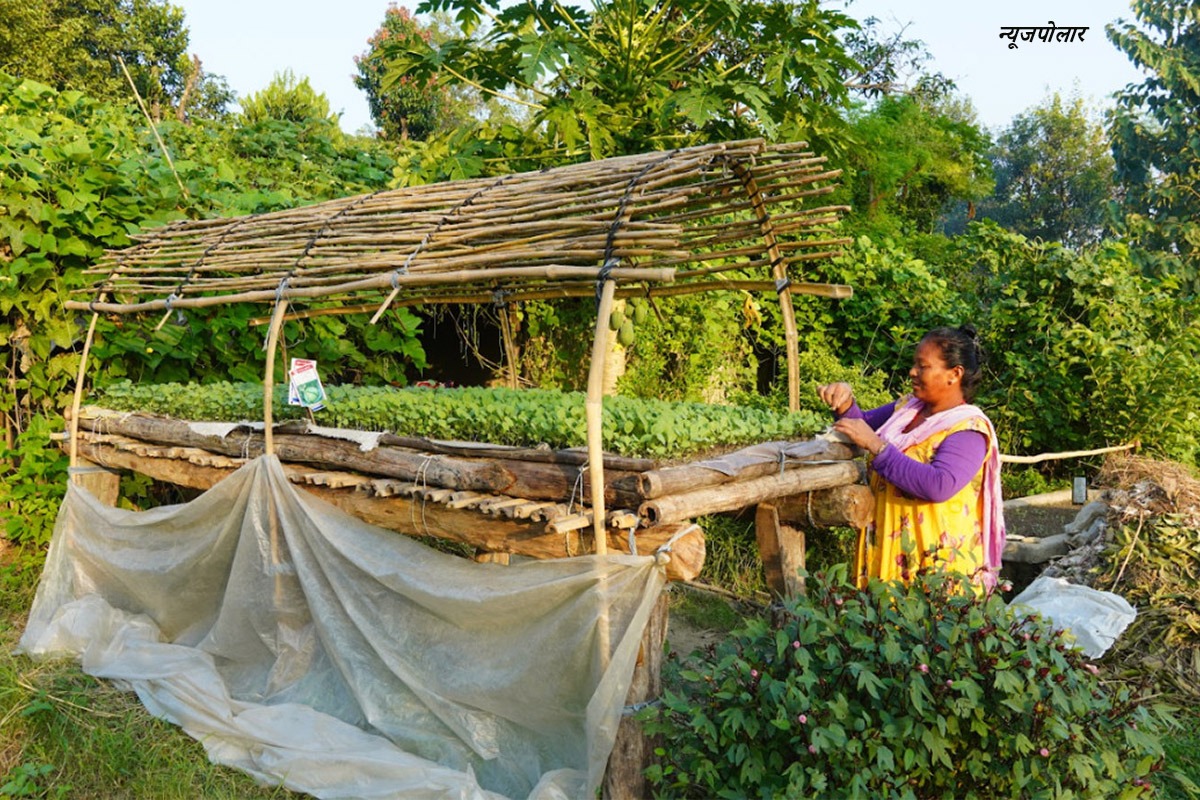
Over 12 communities now benefit from these interventions, and more than 34 safe shelters have been built to protect residents during extreme weather events. Infrastructure such as raised granaries, nurseries, and tubewells ensures that seeds, grains, and drinking water remain safe even during monsoon floods.
Diversification of Livelihoods and Insurance
Resilience is not possible without economic strength. The programme has directly linked over 200 people to income-generating activities through skill-based programmes such as plate-making, bamboo-based materials, river-bed farming, and mason training.
But for farming communities in flood-prone areas, income alone is not enough because a single flood can erase what takes years to build. Thus, in the Karnali and Khutiya river basins of Bardiya and Kailali districts, a flood insurance programme has been introduced to ensure quick compensation when floods strike.
Unlike conventional insurance, this programme is based on risk modelling and pre-agreed triggers, removing the need for immediate on-site damage assessment. Using the Chisapani hydrological station on the Karnali River as a reference, payouts are automatically triggered when flood levels exceed predefined thresholds. After data verification by the Department of Hydrology and Meteorology, the insurance company deposits payouts directly into farmers’ accounts via local cooperatives, which makes the whole process quick, transparent, and hassle-free.
The programme has been implemented across Rajapur, Geruwa, and Madhuwan Municipality in Bardiya, and Tikapur and Janaki Rural Municipality in Kailali. In the past four years, over 8,500 farmers have purchased this insurance product from Shikhar Insurance Company.
Its influence is also being felt at the policy level. Following stakeholder discussions facilitated with the Nepal Insurance Authority, the Authority has recently issued the Parametric Insurance Directive 2082, which has opened new avenues for risk transfer solutions for climate-vulnerable farmers across the country.
Systemic and Policy-Level Support
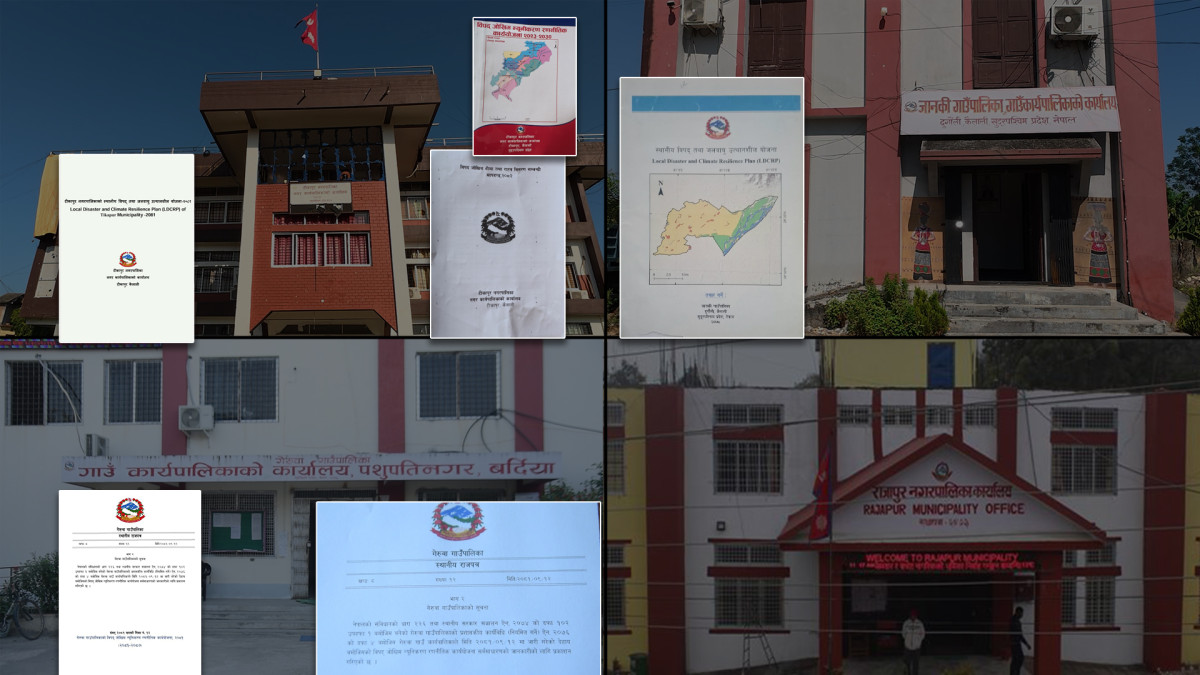
Community-level resilience can only go so far without the policies and institutions to back it up. The programme has provided technical support to 13 municipalities across three provincial governments in the development of disaster risk reduction policies and standard operating procedures.
The results are visible on the ground. In Tikapur Municipality, Kailali, a five-year strategic plan now prioritises multi-hazard early warning systems, livelihoods, and gender equality. Previously, the lack of clear standards caused delays in relief distribution; now, with disaster risk insurance and relief distribution standards in place, processes are transparent and fast. During last year’s floods, with an effective flood early warning system, zero human casualties were recorded in Tikapur.
In Janaki Rural Municipality, the “Disaster Risk Insurance Operational Procedure 2081” specifically focuses on protecting farmers’ paddy crops. By working through Local Disaster and Climate Resilience Plans, a one-window system has now been established. In Bardiya, Geruwa and Rajapur Municipalities have utilised risk maps for developing response plans, making it easier for communities to receive relief materials and support during disasters. Madhuwan Municipality has also advanced insurance and strategic action plan formulation processes.
The laws and policies developed with the programme’s technical support provide local representatives and officials with legal safety, transparency, and accountability. With clear policy guidance, relief funds can now be spent appropriately before, during, and after disasters. As people increasingly check weather information and take precautions during sowing or harvesting periods, local citizens have become more engaged in disaster management. This has enhanced the operational capacity of local governments in the process. These practices adopted by local authorities have also become models for other municipalities.
School Resilience Programme
Climate resilience in the programme areas extends into the classroom. In 14 schools across three districts, resilience initiatives have helped increase attendance among girls and marginalised students, reduced educational gaps by promoting safe learning environments, and strengthened relationships between schools, parents, and local governments.
Students are being prepared not merely as recipients of support, but as advocates for disaster and climate resilience. Through inter-school competitions, students from grades 6 and above are engaged in various extracurricular activities. Orientation programmes are conducted for principals and school management committees, and school improvement plans are regularly updated.
The programme also supports the construction of safe physical structures, including community safe shelters and secure evacuation routes. During disasters, schools function as temporary shelters, and if access to school buildings is disrupted by floods, alternative arrangements ensure that teaching and learning continue without interruption.
One emerging innovation stands out. As rising temperatures affect classrooms across the programme areas, four schools have begun testing heat reflective paint, a technology that reflects sunlight off surfaces rather than absorbing it, significantly reducing heat buildup inside classrooms. Also referred to as cool roof technology, it is a small but practical response to one of climate change’s quieter consequences.
The Climate Resilience Programme’s approach is distinct from traditional disaster management in one fundamental way: it treats resilience as something communities build for themselves, not something done to them. By combining early warning systems, capacity building, safe infrastructure, and financial tools such as flood insurance, the programme has helped communities across Lumbini and Sudurpaschim provinces cope with disasters more effectively.
Strong partnerships with local governments and the appropriate use of technology have made this a replicable model, and as climate risks intensify across Nepal, other communities may not be able to afford to ignore it. #nepal