

Kumar Dahal
Kathmandu, Sept 15: Nearly 500 years before the United States adopted its presidential system of governance in 1779, Britain had already laid the foundations of parliamentary system. The ideas of French political philosopher Montesquieu gave birth to the strong parliamentary system in Britain and an appealing presidential system in America—both of which remain central models for most countries of the world today.
But there is no absolute philosophy or system in politics. As John Stuart Mill, the champion of liberty and democracy, emphasized, public opinion must always remain the foundation of political philosophy and systems. The market freedoms encouraged by the Industrial Revolution of the 18th century were challenged by Karl Marx’s theory of dialectical materialism.
Whether in parliamentary or presidential systems, governments eventually accepted the market’s freedom. Yet, the obsession of political parties and institutions with power reached its peak—visible in the First and Second World Wars, the post-1970 global order, and the growing divide between eastern and western democracies. These tensions widened the gulf between political and market opportunity.
For the generation that came of age after the 1990s, a period defined by rapid technological advances and the rise of artificial intelligence, traditional systems appeared out of step with new ideas, habits, and challenges. Many leaders failed to adapt, revealing a generation gap in politics—one older leaders have been reluctant to admit.
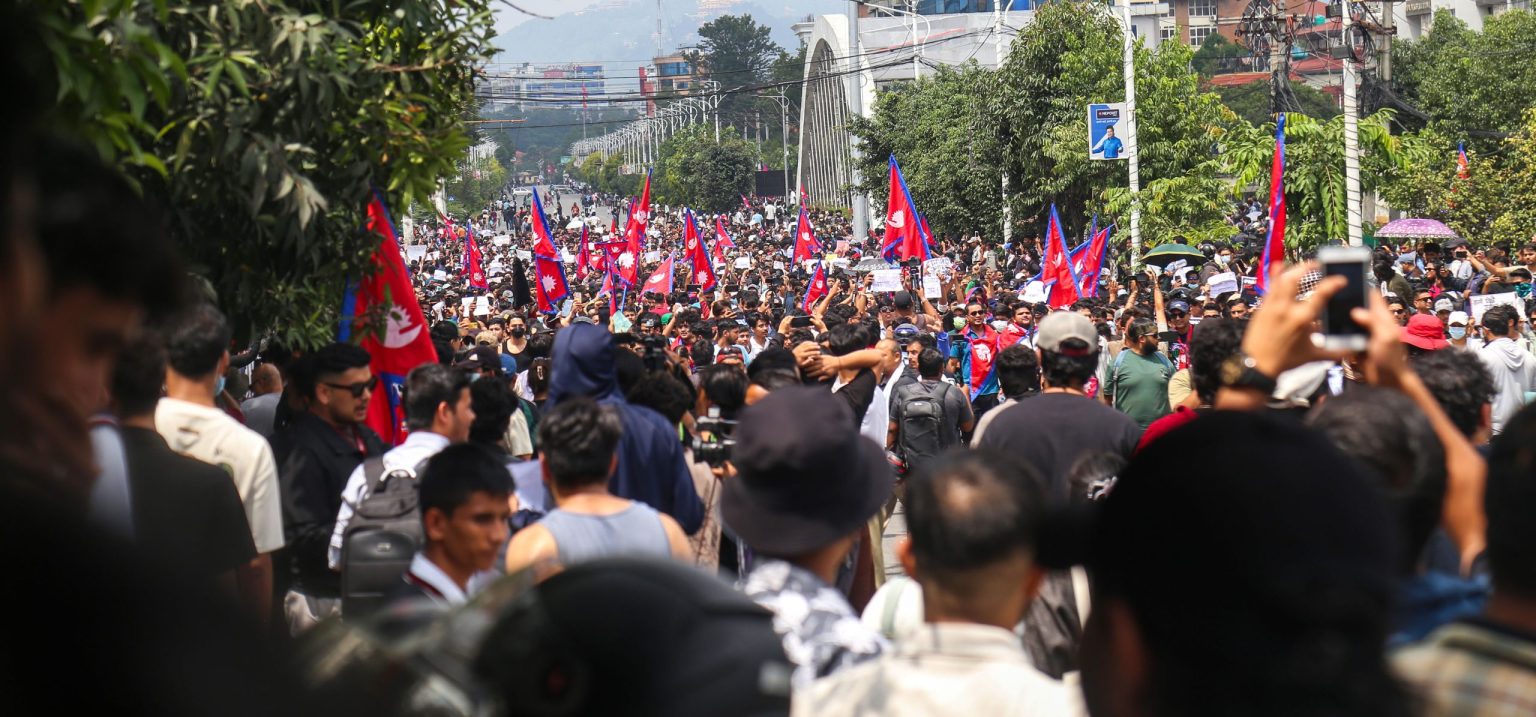
The Gen Z protests that emerged in the Philippines, Sri Lanka, Bangladesh, and Nepal, as well as movements seen in Indonesia and France, are often portrayed by major powers as struggles within their spheres of influence. Yet these uprisings resemble earlier tides of history—from Alexander’s empire to the Mughal expansion—which ultimately faded, leaving only the certainty of change.
In Nepal, many in power fail to see that change is slipping from their grasp. Gen Z’s aspirations are drawn to democratic ideals, especially those championed by countries like India and the United States. Post-1990 youth seek freshness and freedom—freedom they believe should transcend politics itself. And that notion was born in those very countries. Today, this awareness is spreading worldwide.
This generation longs for equality above presidential or parliamentary labels. Capital has lifted technology so high that young people now trust the principle of Vasudhaiva Kutumbakam — “the world is one family” — over narrow national inequalities. This is both the benefit and the risk of globalization since the 1990s, and the ultimate expression of capitalism. No politician or leader should fear or regret it.
The shift underway points beyond politics or ideology toward humanity and global fraternity. It protects no group or special interest. Gen Z’s unified voice, feeling, and outlook suggest that world economics and politics are entering a second stage.
The first stage of socio-economic history was bound by religion and rigid social rules. The second stage was the dominance of capital and monopolistic trade, which gave birth to the political and economic theories that shaped global governance until today. Now, technology is propelling politics and markets alike into a new era—signaled by the youth, though often mistaken by older generations as rebellion. But the Gen Z movement is not mere dissent; it is the transformation demanded by time, influenced by global forces already reshaping Nepal.
In Nepal, political change has long stalled, replaced by endless compromises. Ideal leaders who emerged were absorbed by old practices. Today’s Gen Z seeks answers to what earlier generations ignored: the meaning of culture, history, tradition, and Nepal’s exemplary figures. From 1950 to 2025, no one truly pursued this search—they only pursued themselves. Nepal simply copied the parliamentary system adopted by the world.
That system was not inherently flawed, but its weaknesses were never addressed. Governance remained trapped in majority-minority battles, clinging to the worst aspects of parliamentarism. That very flaw has placed power today in the hands of the new generation.
The democratic ideals envisioned by John Stuart Mill are now visible in the 21st century. The freedom Gen Z seeks is no less than advanced democracy. It may be experimental, but Gen Z begins with experiments, and the challenge will be to prove how nationalist and principled they can remain as they achieve results. Governing within the limits of divided democracy and global politics will not be easy.
Older generations must trust that Gen Z—educated in the world’s best universities and attuned to the digital age—also understands global politics. We must therefore welcome change and support them. Those who thrive in politics and take pride in the glare of power may find this uncomfortable, but it is the demand of our times.
May Nepal’s future not repeat its past. Best wishes to the Gen Z youth now stepping into governance. #GenZ #nepal #KumarDahal