


Kathmandu, Nov 6: In the past seven years, the revenue of telecom service providers has dropped by about 28 percent. According to the Nepal Telecommunications Authority (NTA), the two main telecom service providers earned Rs. 98.71 billion in fiscal year 2074/75 (2017/18), but that figure fell to Rs. 71.21 billion in the last FY 2081/82.
The drop in telecom revenue has directly affected profits, which in turn has impacted the companies’ ability to further investment in infrastructure such as 5G. Experts in the telecom sector warn that without immediate policy reform, the telecom industry could face serious problems.
Former NTA chairman Bhesh Raj Kandel stated that although telecommunications should be treated as an essential service, in Nepal it has been taxed like a luxury good. According to him, telecom companies must pay a 30 percent corporate tax, while most other sectors pay only 25 percent.
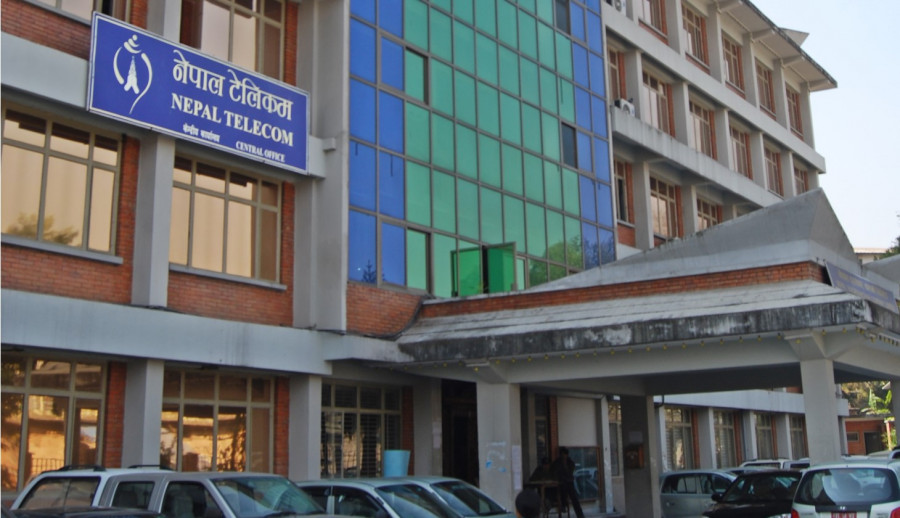
According to Nepal Telecom (NT), the company’s continued revenue decline is due to policy issues, the rise of OTT (over-the-top) services, and high license renewal fees. Additionally, heavy taxation has also reduced profitability.
In fiscal year 2081/82 (2024/25), Nepal Telecom earned Rs. 38.73 billion, with a profit of only Rs. 2.66 billion — a steep drop from Rs. 6.23 billion in the previous year. Much of the revenue was spent on GSM license renewal, which alone cost Rs. 20 billion. The company also reported that after paying numerous taxes and fees, its profit was significantly reduced.
Similarly, Ncell — another major private sector telecom operator — stated that the telecom sector is among the most heavily taxed industries. Former CEO Jabbor Kayumov shared to Kamal Kumar Basnet, editor at RSS that telecom companies are required to pay between 50 and 60 percent of their income to the government as taxes and fees, which is much higher than in most other countries. Moreover, the telecom sector’s contribution to Nepal’s GDP has declined to only 1.2 percent, while its contribution to total government revenue stands at 3.4 percent. According to Ncell, telecom companies now contribute three times more revenue than the tobacco and alcohol industries.
In fiscal year 2081/82, Ncell earned Rs. 32.48 billion, out of which Rs. 16.98 billion — or 52 percent of its income — was paid to the government under 13 different tax categories, including GSM and ISP licenses, TSC, OTT, VAT, customs duties, TDS, advance tax, royalties, RTDF, frequency fees, and social service contributions.
According to the NTA, in fiscal year 2080/81 (2023/24), telecom companies collectively earned Rs. 68.5 billion and paid Rs. 37.7 billion to the government in taxes and fees.
Currently, telecom companies must pay 13% VAT, 10% telecom service charge, 4% royalty, 2% rural telecom development fund contribution, and 2% ownership tax (on SIM cards and landlines), along with various other fees and advance taxes.
Experts say that, compared to 10 Asia–Pacific countries, Nepal has the highest telecom tax rate. In China, telecom companies pay 6% VAT and 25% corporate tax; in India, 18% GST and 25% corporate tax; and in Thailand, 7% VAT and 20% corporate tax.
According to the GSMA Mobile Connectivity Index 2023, Nepal ranks 119th globally. The report notes that “countries where telecom companies pay lower taxes have higher levels of investment, network expansion, and better service quality.”
Studies by the World Bank and the International Telecommunication Union (ITU) show that every 10% increase in broadband access leads to a 1.3% rise in a country’s economic growth rate.
Stakeholders have called for the removal of sector-specific taxes such as the 10% telecom service charge, 2% ownership tax, 4% royalty, and 2% rural telecom development fund contribution. They also recommend reducing the corporate tax rate from 30% to 25% and capping the license renewal fee — currently Rs. 20 billion for five years — to 8% of annual revenue, as proposed by Nepal Telecom in its feedback on the draft of the new Telecommunications Act. #nepal #telecom