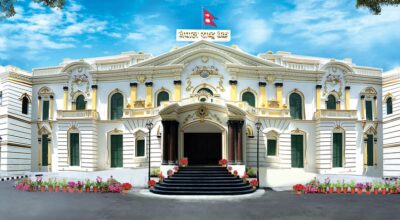



Kathmandu, June 22: Deliberations on the Appropriation Bill, 2082 related to different ministries will continue in the meeting of the House of Representatives today. The meeting is being held at 11:00 am at the Federal Parliament Building, New Baneshwar.
According to the agenda shared by the Federal Parliament Secretariat, MPs will discuss new financial year appropriation of the Ministry of Youth and Sports, Women, Children and Senior Citizens, Finance, Urban Development, and the Office of the Prime Minister and Council of Ministers, the Secretariat of the National Planning Commission, the Office of the President and the Office of the Vice President.
Similarly, proposals for expenditure cuts in the budget set aside for the ministries proposed by some lawmakers will be presented for a vote.
Speaker Devraj Ghimire is also scheduled to announce the change in the names of members of some parliamentary committees under the House of Representatives.
—
Heavy rainfall likely in Koshi, Bagmati, Gandaki and Lumbini
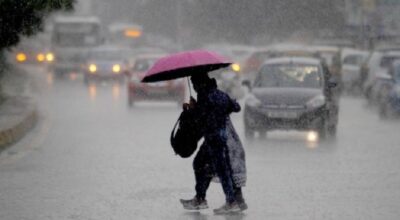
Kathmanud, June 22: The weather today will be partly to generally cloudy across the country. There is a possibility of light to moderate rain with thunder and lightning at many places in the hilly regions of the country including Bagmati, Gandaki and Lumbini Provinces.
According to the Weather Forecasting Division, there is also a possibility of heavy rain at one or two places in the hilly regions of Koshi, Bagmati, Gandaki and Lumbini Provinces. There is a possibility of light rain and snowfall at a few places in the high-hilly and mountainous regions of the country.
Later tonight, the weather will continue to remain partly to generally cloudy across the country. There is a possibility of light to moderate rain with thunder and lightning at many places in Koshi, Madhesh, Bagmati, Gandaki and Lumbini Provinces and at some places in the rest of the country.
There is a possibility of heavy to very heavy rainfall at a few places in Koshi, Madhesh and Bagmati Provinces and heavy rainfall at one or two places in Gandaki, Lumbini and Sudurpaschim Provinces. Light to moderate rainfall and snowfall is likely at a few places in the high-hilly and mountainous regions of the country.
—
Prem wins Gandaki Loktara title
Gandaki, June 22: Prem BK of Baglung has won the title of First Gandaki Loktara, a folk singing competition organized by the National Folk and Dohori Song Foundation Nepal Gandaki Province Committee.
He became the First Gandaki Loktara by defeating 17 competitors in the final held in Pokhara on Saturday. Along with the title, Prem received a cash prize of Rs 51,111.
Likewise, Shila Gurung of Syangja came second and Bijay Pariyar of Myagdi came third while Dilip Manandhar won the consolation prize.
The title for best voice was awarded to Pawan Singh Pariyar of Gorkha. Organized with the aim of identifying talent and preserving folk music the competition was attended by 18 contestants selected through district-level auditions.
Auditions were held in nine districts of Gandaki Province, excluding Mustang and Manang. Singers Durga Rayamajhi and Purushottam Neupane were in the jury.
—
Raghu Aditya comes out with ‘Shakahar: Tarkadhar’, a book claimed to be milestone in animal rights sector
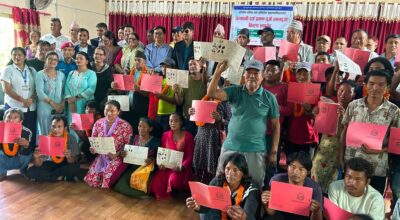
Kathmandu, June 22: Saturday was a very special day for Sumitra Shrestha, 70, of Imadol, Lalitpur. Unlike her usual Saturdays, she found herself in a college hall, part of a large audience gathered to witness the launch of a book entitled Shakahar: Tarkadhar ( Justifications for Vegetarianism/ Veganism) by Raghu Aditya, an animal rights activist.
Seated slightly behind the main gathering, Sumitra watched from her chair as her son, Raghu, took the stage. He spoke passionately about his experiences writing the book pouring in the challenges he faced, the support he received, and his motivation for turning to the written word. Raghu shared how he decided to respond to the questions and criticisms he often encountered while living as a complete vegetarian (vegan), using the book as a platform to express his thoughts and convictions.
In the book, the author has made a sincere effort to address the criticisms and questions often directed at those who follow a vegetarian or vegan lifestyle. The common questions include: How do you meet your body’s protein requirements as a vegetarian or vegan? Aren’t animals meant for human consumption? Aren’t you becoming too radical? Are you trying to encroach on our religion?
According to Prakash Ajaat, a noted journalist who facilitated the book launch event, the writer presents strong, fact-based arguments supported by research to counter such challenges.
With no designated chief guest or formal hierarchy, five women: Pramada Shah, Manju Shree Sthapit, Dr Ayasha Upreti, Eva Dangol and Shova Bhujel jointly launched the book.
As the author explained, the book is divided into five chapters in which he candidly shares his personal experiences as well as research-based arguments. He spoke about how, since the age of around eight, when he chose to refrain from consuming meat, he has frequently faced these recurring questions from relatives and friends.
“I often found myself feeling uneasy when I didn’t have proper answers to them,” he said. “I believe this might be a familiar experience for many other vegetarians and vegans.”
Now a vegan, he went on to explain, “This book is my response to the recurring questions and criticisms directed at vegetarians and vegans. As I believe, it also serves as an advocacy for animal rights and a stand against animal cruelty.”
He expressed his deep gratitude to his sister, Mona Shrestha Aditya, for her unwavering support in making the moment possible.
Commenting on the book, Shah described the book ‘a piece meeting international standards’, praising its compelling arguments grounded in ethics, justice, and the fundamental rights of animals.
Chairperson of Nepal Vegetarian Association (NVA), Krishna Gurung, environment activist Shail Shrestha, representatives from academia, media, and animal rights activists, along with Kalyan Silwal, Uttam Pudasaini and Sthapit applauded the book for being a powerful one in countering accusations and criticisms against vegetarians and vegans with research-based arguments.
The NVA Chairperson announced that the association would officially endorse the book, referring to it as “a guiding resource in the field of animal rights.”
The speakers were univocal of the book’s potentiality to prove a milestone in the relevant field.
Following the launching ceremony, Sumitra shared with the RSS that her heart is filled with pride at the moment. The mother heart wishes for her son to further fly high with the message of love, compassion, non-violence and justice for all including animals.
His father professor Anand Aditya said,” If Raghu had hypothetically owed ancestral debt, he has been liberated from it with the publication of the book,” highlighting the significance of the work for family legacy and the relevant field.
The 252-page book with pictorial presentations and references is priced at Rs. 650.
—
35 Nepali nationals held hostage in India rescued
Kathmandu, June 22: Thirty-five youths from various districts of Nepal and held captive under the lure of jobs have been rescued from Kashipur, Uttarakhand, India.
The Nepali Embassy in New Delhi has stated that they were rescued as per the directives of the Ministry of Foreign Affairs after receiving information that they were held captive, beaten and tortured and extorted money under various pretexts. The embassy rescued them Thursday with the help of Uttarakhand Police and a community-based organization called KIN India.
The Uttarakhand Police has arrested some people related to the incident and is conducting further investigation, the Embassy has stated while search and rescue of more Nepali youths held captive in other places in Uttarakhand is ongoing.
The rescued ones will be sent to Nepal after completing the due legal process.
—
‘Pesticide-free’ vegetable collection center in Paanchkhal
Kavrepalanchok, June 22: An agricultural produce collection and market center has been established in Paanchkhal Municipality to collect pesticide-free vegetables.
The center has been established to collect vegetables produced using only organic pesticides instead of chemical pesticides. An organization called Lovegreen Nepal and Paanchkhal Municipality have forged a partnership for the same with an investment of Rs. 2.5 million and Rs. 900,000 respectively.
Paanchkhal Mayor Mahesh Kharel said the center has been brought into operation to collect vegetables produced using Integrated Pest Management (IPM) technology. We have set a target to supply agricultural produce collected at the center to the capital Kathmandu after sorting, packaging and branding them.
The center was jointly inaugurated by Mayor Kharel, Head of the Japan International Cooperation Agency (JICA) in Nepal, Matsuzaki Mizuki and Lovegreen Nepal President Amira Dali on Saturday.
The municipality is currently promoting organic farming under the campaign to create ‘Pesticide-Free Panchkhal’. The campaign has been supported since the past four years by the Environment-Friendly Integrated Sustainable Agriculture Development Project jointly run by the Municipal Office and Lovegreen Nepal.
—
Kaligandaki Corridor remains blocked for traffic
Gulmi, June 22: The Kaligandaki Corridor road in Gulmi, which was blocked due to landslides since last Friday, is yet to open for vehicular traffic.
The road remained completely blocked for three days due to a dry landslide on the Harmichaur-Arbeni road in Gargare under Kaligandaki Rural Municipality-1 on Friday afternoon.
Although three dozers are standby in the landslide-hit area to resume the road regular landslide is causing problems, said Kaligandaki Rural Municipality Chair Bed Bahadur Thapa.
The closure of the major road in the area for a long time has caused problems for the citizens, said Thapa.
—
NRB study points out economic challenges in Madhesh
Kathmandu, June 22: Nepal Rastra Bank (NRB) has identified several economic challenges facing Madhesh Province and also proposed reforms aimed at addressing these issues.
Unveiling a study report focused on the region, the central bank emphasized the need to formalize economic activities in Madhesh and enhance revenue collection mechanisms.
One of the key findings of the report highlighted that Province citizens along the Nepal-India border are compelled to cross into India to access healthcare services due to the lack of quality health facilities locally. This situation has significantly increased the demand for Indian currency in the province, presenting a notable economic challenge.
Other critical issues identified include the need to improve government and community-run schools, prioritize vocational and technical education, and strengthen rural health centers by providing adequate resources.
The report further recommended developing cities like Janakpur and Birgunj into educational hubs, with a strong focus on improving the quality of education. Additionally, it has stressed need of effective waste management and maintaining clean streets to enhance the overall appeal of the province as a beautiful and pleasant region.
Agriculture-related concerns were also highlighted. Due to limited market access, many farmers are forced to rely on intermediaries to sell their produce. The report stressed the urgent need to connect farmers directly to fair agricultural markets and ensure they receive just prices for their products.
Similarly, a study by the central bank has shown that it is necessary to enhance fish production capacity in areas such as Janakpur and Parwanipur, which are known for fish farming.
It is essential to modernize and commercialize the traditional subsistence agriculture, provide easy access to fertilizers to make the agricultural sector competitive, ensure fair pricing and management of produced crops, as well as manage the market to attract youth to agricultural activities.
As the trend of skilled human resources from the province migrating abroad has increased, creating an environment for employment by arranging for technicians, health workers, teachers, and IT experts for the operation of the service sector also appears to be challenging, the NRB report stated.
It is essential to invest the remittances received from youths working in foreign employment into the productive sector in coordination with the local authorities.
The central bank has emphasized the need to enhance economic activities by properly conserving and promoting geographical and religious heritages, biological diversity, and developing areas such as Janaki Temple, Parsa Wildlife Reserve, the nearby Koshi Tappu Wildlife Reserve, the Sindhuli War Museum, and Bharat Tal (Lake).
The study concludes that it is challenging to complete nationally significant projects such as the Postal Highway, the Kathmandu–Nijgadh Fast-track, the President Chure Terai Madhes Conservation Programme, and Nijgadh International Airport which have been started in the Madhes Province within the determined cost and schedule while maintaining coordination among various stakeholders and sectors.
The study has shown that it is essential to enhance financial literacy in the region, increase financial access for marginalized groups, and encourage the formalization of economic activities to expand the revenue base.
—
Discussion begins in lower house on appropriation headings of different ministries
Kathmandu, June 22: The meeting of the House of Representatives (HoR) has started today amid the opposition Rastriya Swatantra Party (RSP)’s protests and Rastriya Prajatantra Party (RPP)’s boycott.
According to today’s agenda of the House of Representatives, discussions will be held on various headings including the President’s Office, and various ministries under the Appropriation Bill, 2082 BS.
As soon as today’s meeting started, MPs from the opposition party RSP and RPP stood up from their seats and protested.
Speaker Devraj Ghimire urged all to create a conducive environment for regular meetings and to pass the bill in order to approve the budget for the upcoming fiscal year. However, the protesting MPs did not heed the Speaker’s request.
In the meeting, RSP’s Ashim Shah stated that they would continue their protest until an impartial investigation into the ‘visit visa’ scandal is conducted immediately. He complained that this demand has not been heard by the government so far despite the protest continuing for a month. Dhawal Shumsher Rana from RPP demanded a fair investigation into the Tinkune incident.
Speaker Ghimire announced that the meeting would continue with its the regular agenda while RSP MPs continued to shout slogans and surround the speaker’s podium.
The ruling parties’ MPs have also requested the Speaker to create an environment for the meeting, urging the MPs of protesting parties not to obstruct regular house business.
Today’s meeting is scheduled to discuss the budgets for the Ministry of Youth and Sports, the Ministry of Women, Children, and Senior Citizens, the Ministry of Finance, the Ministry of Urban Development, the Office of the Prime Minister and Council of Ministers, the Secretariat of the National Planning Commission, the Office of the President, and the Office of the Vice President.
—
Members of HoR thematic committees reshuffled
Kathmandu, June 22: Lawmakers of the thematic committees of the House of Representatives (HoR), the lower house of the Federal Parliament, have been reshuffled.
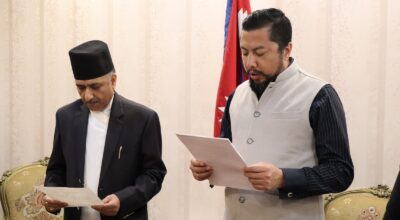
In today’s meeting of the House of Representatives, Speaker Devraj Ghimire has made changes to the names of members in the thematic committees in accordance with the HoR rules.
MP Shyam Kumar Ghimire has been placed in the Education, Health and Information Technology Committee from the Public Accounts Committee, Chandra Chaudhary in the Public Accounts Committee from the Agriculture Cooperatives and Natural Resources Committee, and Shanti BK in the Agriculture Cooperatives and Natural Resources Committee from the Women and Social Affairs Committee.
During the meeting, Speaker Ghimire informed the House regarding the contents of the letter received from the Office of the Prime Minister and Council of Ministers.
—
Speaker rules to remove lawmaker Singh’s statement from parliament archives
Kathmandu, June 22: Speaker Devraj Ghimire has instructed for the withdrawal of a statement made by lawmaker Amaresh Kumar Singh during today’s session of the House of Representatives.
While participating in deliberations on the Appropriation Bill for the fiscal year 2025/26, Singh controversially proposed that all districts except five be “leased to other countries,” alleging that only five districts were being prioritized in the upcoming budget.
Chief Whip of the CPN (UML), Mahesh Bartaula, objected to the remark, citing Rules 20, 21, and 23 of the House of Representatives Regulations (2079 BS). He asserted that Singh’s statement was against the national interest.
Earlier during Singh’s address, the Speaker had repeatedly directed him to use appropriate parliamentary language while presenting his views.
—
ACC Men’s U16 East Zone Cup Cricket: Nepal trounces Singapore
Kathmandu, June 22: Nepal has made a good start in the ACC Men’s U16 East Zone Cricket Tournament by defeating Singapore.
In the match held at the UKM Oval Cricket Ground in Malaysia today, Nepal secured a six-wicket victory over Singapore.
Nepal, chasing a target of 139 runs for victory, completed it in 33.3 overs with the loss of four wickets. Opener Prasiddha Jaisi contributed the highest 55 runs. He scored 55 runs off 97 balls with the help of five fours. Rounak Shrivastav made 40 runs.
For Singapore, Akash Teza took three wickets while Yuvan Pandey claimed one wicket. Prior to this, Singapore chose to bat first after winning the toss and scored a total of 138 runs, losing all wickets in 36.1 overs.
Captain Riyan Nayak contributed the highest 53 runs for Singapore. Opener Ahaan Vudhanvam scored 38 runs while fellow opener Roshan Arun added 11 runs.
For Nepal, captain Bipin Sharma took four wickets while Sachin Bhatt claimed three wickets. Similarly, Shubham Khanal and Abhay Yadav took one wicket each.
With this win, Nepal has collected two points. Now Nepal will play its second match against Japan on June 24.
Ten teams are competing in the tournament held according to the Asian Cricket Council (ACC) annual schedule. Nepal is in Group ‘A’ of the competition. Singapore, Indonesia, Bhutan, and Japan are in Nepal’s group. Similarly, Group ‘B’ includes the host Malaysia along with Hong Kong, Maldives, Thailand and Myanmar.
—
Government achieves external loan, less than 50 percent of target
Kathmandu, June 22: The federal government has received Rs 99.20 billion in external loans in foreign assistance during the first 11 months of current fiscal year which is less than half of its target of Rs 217 billion.
According to a report published by the Public Debt Management Office, the foreign loans received as of mid-June amount to just 45.72 percent of the target. In contrast, internal debt mobilization is on track to meet its goal, with 95.45 percent (around Rs 315 billion) of Rs 330 billion target already achieved.
Most of the foreign loans have been categorized under capital expenditure, serving as a source for funding development projects. However, the slowdown in development activities has hindered the inflow of these external loans, said Gopi Krishna Koirala, Chief of the Public Debt Management Office.
He added that donor agencies largely provide financial assistance to Nepal in the form of project-based loans rather than direct budgetary support. As a result, the delayed or poor implementation of projects significantly impacts the receipt of funds. Overall, weak development expenditure has led to a decline in external loan inflows.
According to the Office of the Auditor General, as of Saturday evening, the annual capital expenditure has only reached about 42 percent of its target.
Total government debt stands at Rs 2,654 billion
Meanwhile, the Public Debt Management Office stated that the total debt that the government has yet to repay is Rs 2, 654 billion. At the beginning of the current fiscal year, the total public debt was Rs 2434.9 billion, and by the end of last May, an additional Rs 220.58 billion of government debt was added.
As of the end of last May, the total public debt is 43.47 percent of the country’s total gross domestic product. Furthermore, the share of foreign debt in the remaining debt that the government has to repay is 52.0 percent, while the share of domestic debt is 47.94 percent.
According to the data as of mid-June the internal debt is Rs 1272.53 billion and the external debt is Rs 1382.12 billion. The government had set a target to mobilize Rs. 5.47 billion in public debt for the current fiscal year. As of the end of last mid-June, Rs 414 billion has been collected in debt.
As of June 14, the total public debt is 43.47 percent of the country’s total gross domestic product. Similarly, so far the government has yet to receive a total loan of 52 per cent in foreign debt, while the share of domestic debt stands at 47.94 per cent.
The government had set a target to mobilize public debt of 547 billion through active means.
As of mid-June, the government has raised a loan of 14.19 billion. The total public debt collection as a percentage of the annual target is 75.72 percent. For the payment of the principal and interest on government debt, Rs 329.6 billion has been spent in the last 11 months, it is stated.
—
HoR meeting: Lawmakers see need of changing electoral system
Kathmandu, June 22: Lawmakers have emphasized the need to change the electoral system and adopt a new form.
During today’s session of the House of Representatives (HoR), while sharing views on the various headings of the Appropriation Bill, 2025/26 currently under discussion, MP Mahendra Shahi stated that discussions have been held regarding issues such as governance problems and distortions arising from the electoral system, indicating that it needs to be changed.
He also mentioned that there should be no impression that the Finance Minister’s job is merely to distribute the accumulated revenue without focusing on how to achieve annual capital growth.
Member of Parliament Prakash Jwala said that the Ministry of Urban Development has become a facade for middlemen’s profits. He believes that allocating a budget of Rs 570 million under the name of Ganeshman Singh is an attempt to insult. Jwala also mentioned that a budget of Rs 7 million has been given under the name of Pushpalal, asserting that such allocations misuse taxpayer money.
He noted that although a structure was created for organizing a national sports competition in Karnali Province, it has not been able to take place. Jwala emphasized that development projects cannot progress without creating technology-friendly laws.
MPs Ranju Kumari Jha and Abdul Khan emphasized that the Vice President should be given the responsibility of the Chair of the National Assembly, the number of advisors to be appointed in various bodies should be reduced, and young people should be connected to entrepreneurship through youth policies.
They noted that companies like Pathao, Indrive, and Yang-go have provided employment to the youth, and this needs to be legally regulated, and a Youth Development Construction Army should be formed.
—
HoR continues deliberations on Appropriation Bill-2082 BS
Kathmandu, June 22: The House of Representatives (HoR) today continued deliberations on various headings of the Appropriation Bill for the fiscal year 2082 BS.
During the discussions, legislators stressed the need to make the budget more civic-oriented and development-friendly. Several members also proposed reductions in budget allocations to the Office of the President, the Prime Minister’s Office, various ministries, and commissions, arguing that the distribution of funds was imbalanced.
Hitaraj Pandey, Chief Whip of the CPN (UML), called for a greater allocation of funds to the Ministry of Women, Children, and Senior Citizens. He criticized the government for ‘overlooking’ the significance of the ministry in the current budget. Pandey also used the platform to demand the immediate formation of a committee to investigate the visit visa scam, adding that the budget had also neglected the sports sector.
Ganga Karki, also from the CPN (UML), urged the government to reduce unnecessary expenditures and focus more on boosting production. He noted that economic reforms, agricultural promotion, and the development of sports and tourism sectors had received inadequate attention.
Chitra Bahadur KC of Rastriya Janamorcha stressed the importance of the State being informed about the condition of the youth. “The State should be aware of their current status, what they are learning, and how their education is progressing,” he said.
Similarly, Lekhnath Dahal called for citizen participation in the formulation of development plans.
Prabhu Shah questioned the absence of the Prime Minister during deliberations on the budget for the Office of the Prime Minister and Council of Ministers. He argued that fragmented development efforts would not align with the broader urban development goals. Shah also highlighted the low representation of women in the government.
Amanlal Modi criticized the budget allocation as being disproportionately distributed across districts. He also accused the Ministry of Urban Development of neglecting the recurring problem of inundation in Biratnagar, Morang.
—
HoR meeting: Discussions ongoing on the budgetary allocations of various ministries
Kathmandu, June 22: Discussions are ongoing on various headings of different ministries as well as of the President’s Office, the Vice President’s Office, and constitutional commissions under the Appropriation Bill of 2025/26 in today’s meeting of the House of Representatives.
In the meeting, the lawmakers have expressed their views on the budget for and against on a party basis, as well as shared their opinions on current issues.
Nepali Congress leader and former minister Arjun Narsingh KC said that the budget is not balanced. He accused that the budget has been distributed unequally by allocating more to the districts of ministers and top leaders.
He commented that it is regrettable to select projects against a ceiling of 30 million, saying that plans have been scattered contrary to the principles of the budget and that fragmented projects have been included.
KC demanded to address the growing dissatisfaction among the people regarding good governance.
CPN (UML) Surya Bahadur Thapa said that the identification of deposit of 112 billion cubic metres of methane gas in the Jaljale area of Dailekh district in Karnali province and its storage for meeting Nepal’s consumption over the next 50 years is a matter of happiness for the entire country.
He added that the recent report on identification in Dailekh of the huge methane gas reserves has raised hope and confidence among the people that it will contribute towards boosting the country’s economy.
Commenting on the budgetary allocations, he complained that the budget was not balanced and the suggestions of the representatives were not included.
Budget is realistic and implementable: Former Finance Minister Karki
Nepali Congress leader and former Finance Minister Gyanendra Bahadur Karki has said that the budget presented by the government is realistic and implementable.
He drew the attention of the Finance Minister towards effective implementation of the ‘realistic’ budget.
Leader Karki commented that even though the political system of the country has changed repeatedly, there has been no change in the living condition of the people. He highlighted the need for commitment from all political parties for long-term thinking and planning in development and construction sector.
“For the development of the country, there needs to be political stability, policy stability, leadership willpower, and long-term thinking in development planning along with party representation and proper management of state resources,” he emphasized.
Former Finance Minister Karki emphasized the need to promote and harness around 80 percent of private sector investment, stating that investments in sectors such as energy, agriculture, and tourism should be secured.
Tara Lama Tamang from the Communist Party of Nepal (UML) mentioned that the budget has provided guidelines for the nation.
“It seems the budget has progressed according to the budget target; there are many areas to hope for,” he said and urged the Finance Minister to focus on completing the programmes proposed in the budget.
The HoR is continuing discussions on the appropriation headings under the Ministry of Youth and Sports, the Ministry of Women, Children and Senior Citizens, the Ministry of Finance, the Ministry of Urban Development, the Office of the Prime Minister and Council of Ministers, the Secretariat of the National Planning Commission, the Office of the President, and the Office of the Vice President under the Appropriation Bill, 2025.
—
Rapti Academy of Health Sciences to construct 400-bed hospital
Kathmandu, June 22: The sixth meeting of the Rapti Academy of Health Sciences has approved a budget of Rs 2.74 billion for the upcoming fiscal year.
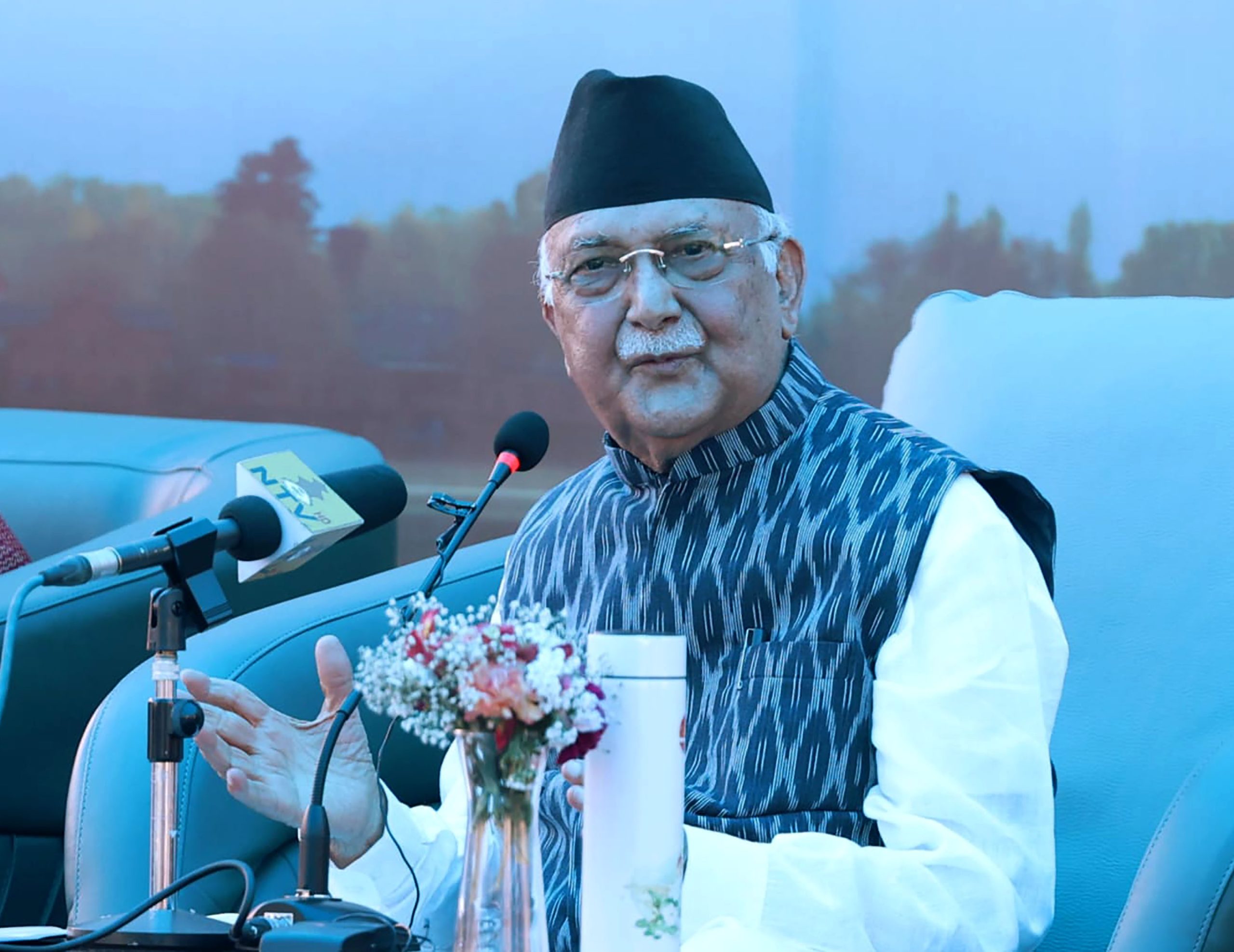
The meeting held today at the Prime Minister’s residence in Baluwatar and chaired by Prime Minister and Chancellor KP Sharma Oli, has approved policies, plans, budget, and programmes for the construction of a 400-bed hospital as well as for the educational, research, and management related works.
The meeting has decided to amend some provisions of the ‘Regulations on the Terms and Conditions of Service for Teachers and Staff, 2078 BS’ of the institution, as well as to change the institution’s logo.
Addressing the meeting, Prime Minister Oli stated that since Nepal is the place of health science, the institution should be equipped with infrastructure and human resources to provide quality education and services.
He emphasized that expert doctors and health workers should be involved in spreading public awareness about health through mass communication and social networks, while adopting the government’s vision of a healthy Nepal.
At the meeting attended by the Pro-chancellor of the Institute and Minister of Health and Population Pradip Paudel, the Vice-Chancellor Dr. BikashLamichhane informed that the implementation of the master plan for the construction of a 400-bed teaching hospital has started as approved by the fifth Senate.
Meanwhile, the second meeting of the High-level Governance Reform Commission scheduled for today has been postponed due to special reasons.
—
Owl protected zone declared in two community forests of Syangja
Gandaki, June 22: The Rolbaraha and Simriklek community forests based in Rangbhang Bhainsegaunda of Putalibazar Municipality-2, Syangja, have been declared protected zones for owls, with a ban on the use of catapult.
The initiative aims to conserve owls and other wildlife, according to conservationist Bal Kumar Gurung. He added that seven species of owls have been recorded in the area. Additionally, 113 old trees found within the forest are now under protection.
Renowned conservationist and Director of Friends of Nature, Raju Acharya, has already announced to contribute the 50,000 Euro prize money he received from the Whitley Award that was granted for owl conservation efforts toward bird conservation projects proposed by the Gandaki Province government.
As part of the government’s 10-year Owl Conservation Plan, the funds will be used to control slingshot use, conserve old-growth trees, install artificial nests, and prevent poaching of these predatory birds.
Gurung, who is also the chairman of the Bhaisegaunda Community Homestay, emphasized the ecological and tourism significance of this forest, which lies roughly at the midpoint of the 72-kilometer Millennium Trek route connecting Dulegaunda in Tanahun to Rambachha in Syangja.
Due to the delay in Nepal signing the agreement, it was reported that many security guards and other domestic workers who went to the Gulf countries have been deprived of minimum wages and have had to suffer from numerous hardships and troubles.
The organization, which has been raising issues related to youth concerns and domestic workers, has consulted and sought opinions from members of the Industry, Commerce, and Labour and Consumer Committee under the House of Representatives, as well as labour experts from the Bagmati Province.
Although Nepal is a party to the said agreement, due to the lack of laws enacted regarding this matter and the non-approval of the convention, domestic workers, or workers in the informal sector, have been deprived of the minimum services and facilities they should be entitled to.
Committee member Kantika Sejuwal expressed the opinion that even though there are three tiers of government in the country, there is no effective mechanism to address the rights of domestic workers and to maintain statistics.
On that occasion, representatives of domestic workers and active organizations in the trade union sector stated that if the agreement is signed, women workers as domestic workers will have the opportunity to confidently use Nepal’s airports instead of hiding.
They suggested that workers going for such foreign employment should be provided with knowledge about subject-specific skills, language, the culture of the place, the use of the latest technologies, and information about the laws.
MP Sapana Rajbhandari and Sita Mijar expressed the opinion that it is necessary to put pressure on the government to hold family reunification for domestic workers and to create a people-friendly law for making the government accountable.
Previously, Bijaya Rai Shrestha, a representative of the Migrant Women Workers Group (MWWG), stated that due to the lack of approval for the convention, workers in informal sectors both abroad and in the country have been deprived of the minimum wages set by the government.
The chairman of the organizing body Yuwalaya, Dharmaraj Rimala, emphasized the need for a unified effort to ratify the agreement.
—