


Kathmandu, June 14: The Public Service Commission (PSC) has been selecting competent human resources required for public service in Nepal. Qualification, impartiality, and competition are the key prerequisites for recruitment into government service, and the PSC is responsible for conducting examinations and recommending suitable candidates.
The PSC is therefore regarded as a foundational pillar of good governance, inclusion, and a professional civil service.
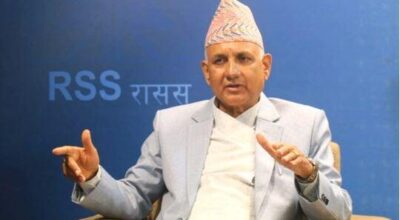
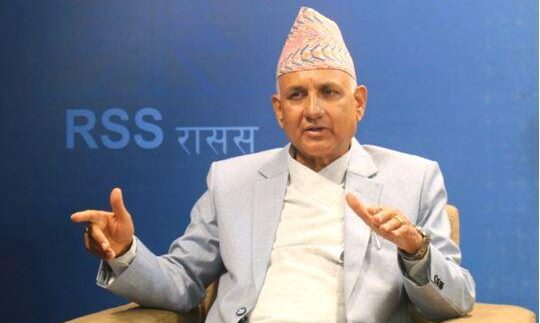
The constitutional body is set to celebrate its 76th anniversary on June 15 (Asar 1). On this occasion, PSC Chair Madhav Prasad Regmi shared the commission’s experiences and achievements, highlighting its transparent, credible, and modern approaches to making Nepal’s public administration more effective.
The following is based on an interview Chair Regmi gave to RSS correspondent Bhishma Raj Ojha.
The constitutions promulgated in Nepal over the years have consistently incorporated provisions for the PSC. It was established on Asar 1, 2008 BS, under the Interim Constitution of 2007 BS. The PSC was entrusted with the responsibility of recruiting civil servants required for state administration.
The current Constitution has expanded the PSC’s mandate. In addition to conducting examinations and publishing results, it now provides consultation services for filling vacancies in 74 organized institutions, including four security agencies. The commission has provided consultation on the regulations of 108 organized institutions and currently has representatives serving in 107 institutions.
Following the adoption of the federal system, Provincial Public Service Commissions have been established to fill vacancies in provincial and local governments. Together, the PSC’s central office and its subordinate offices operate through 14 offices across the country.
Complaints regarding shortages of employees at sub-national governments may have arisen because the provincial commissions are still in their initial phase and because demand for personnel has not been adequately forwarded. To address these challenges, provincial and local governments should submit recruitment demands transparently and in accordance with approved quotas.
Currently, there are around 150,000 civil servants across the three tiers of government. Earlier reports had estimated the need for approximately 32,000 positions at the federal level, 22,000 at the provincial level, and 45,000 at the local level.
Regular recruitment at the provincial level may also have slowed because many institutions continue to rely on contract-based, temporary, and daily wage employees.
The PSC has made significant strides in modernizing its examination system through online application services, eliminating the need for applicants to stand in long queues. The implementation of the PSC Recruitment Management System has further streamlined processes and enhanced convenience.
However, Regmi cautioned that state institutions should not rush into full digital transformation without adequate preparation, as insufficient readiness could pose risks.
More than 26,000 employees have been recruited through the inclusive cluster. Similarly, an additional 11,000 candidates have entered public service through open competition under various inclusion categories. These measures ensure representation of the country’s diverse ethnic groups, classes, regions, and geographical areas.
According to Regmi, inclusive representation now accounts for nearly two-thirds of the civil service. Although the Constitution envisioned a review of the inclusion policy after 10 years, no such revision has yet taken place.
The number of applicants for public service positions continues to grow each year, prompting the PSC to pursue further reforms in its recruitment process. However, applying the same standards to candidates at different levels has created challenges in maintaining consistency in evaluation.
Last year, around 90,000 candidates applied for the pre-qualification test for fourth-level positions. Of them, approximately 60,000 appeared for the examination, while 20,000 passed.
PSC examinations are conducted at various locations through its 14 offices nationwide. The commission is also considering introducing preliminary examinations for the positions of Kharidar and Nayab Subba, similar to those already conducted for officer-level posts.
PSC a Model of Competence, Impartiality, and Fairness
Regmi described the PSC as a model institution of competence, impartiality, and fairness. Reform, he said, is a continuous process within the commission. Curricula are regularly updated to ensure the examination system remains relevant and timely.
To encourage professional excellence, candidates are being motivated to compete in service groups aligned with their areas of expertise.
The PSC also conducts examinations using the Assessment Centre Methodology. However, Regmi noted that examinations assess only about 10 percent of an individual’s overall capabilities, a concept often referred to as the “iceberg model.” While recruitment decisions are based on internationally recognized testing methods and studies, the complete personality and potential of a candidate cannot be fully measured through examinations alone.
He further noted that irregularities among civil servants can be influenced by factors such as personal background, organizational culture, and individual perspectives. Therefore, moral education within families and society is essential to discourage unethical behavior in public service.
The PSC strictly follows its annual examination calendar. However, if government institutions fail to submit vacancy details on time, the commission cannot initiate recruitment processes. Once requests are received, the PSC proceeds with recruitment. Nevertheless, the process may be delayed during crises, elections, or public health emergencies such as pandemics.
Regmi encouraged young people to pursue careers in public service and demonstrate their competence, describing it as one of the best career paths and a valuable opportunity to serve the nation. At the same time, he advised aspirants not to spend years pursuing PSC examinations without success, noting that many other career opportunities are also available.