


Morang, June 30: The number of Indian devotees visiting major religious destinations in Koshi Province continues to grow, driven by the open Nepal–India border, strong religious and cultural ties, and the province’s close proximity to several Indian states. Every year, thousands of pilgrims from Bihar, West Bengal, Sikkim, Jharkhand, Assam, Uttar Pradesh, and other neighbouring states travel to the province’s sacred sites.
Despite the increasing influx of visitors, Nepal still lacks an official and integrated system to record the number of Indian pilgrims or the purpose of their visits. Most visitor figures are based on estimates provided by temple management committees, local governments, and tourism stakeholders.
According to tourism entrepreneur Bhavis Kumar Shrestha, the number of Indian visitors has increased steadily in recent years.
“Whether they come for healthcare, religious purposes, culture, nature or sports, the number of Indian tourists continues to rise because of the open border. Although the number of high-value tourists remains limited, overall arrivals are increasing every year,” Shrestha said.
Major Religious Destinations
Pathibhara Devi Temple in Taplejung remains the leading religious tourism destination in Koshi Province. According to the Pathibhara Area Development Committee, the temple receives between 200,000 and 250,000 visitors annually, with Indian devotees making up the largest share of foreign visitors. Pilgrims from West Bengal, Sikkim, Bihar, and Assam arrive in particularly large numbers during Navratri, Dashain, and the New Year.
Another major pilgrimage site is Halesi Mahadev in Khotang, which attracts an estimated 200,000 to 300,000 visitors each year. Devotees from Bihar, Jharkhand, Uttar Pradesh, and West Bengal visit the shrine in large numbers during Maha Shivaratri, Ram Navami, and the holy month of Shravan. However, authorities do not maintain separate records of visitors by nationality.
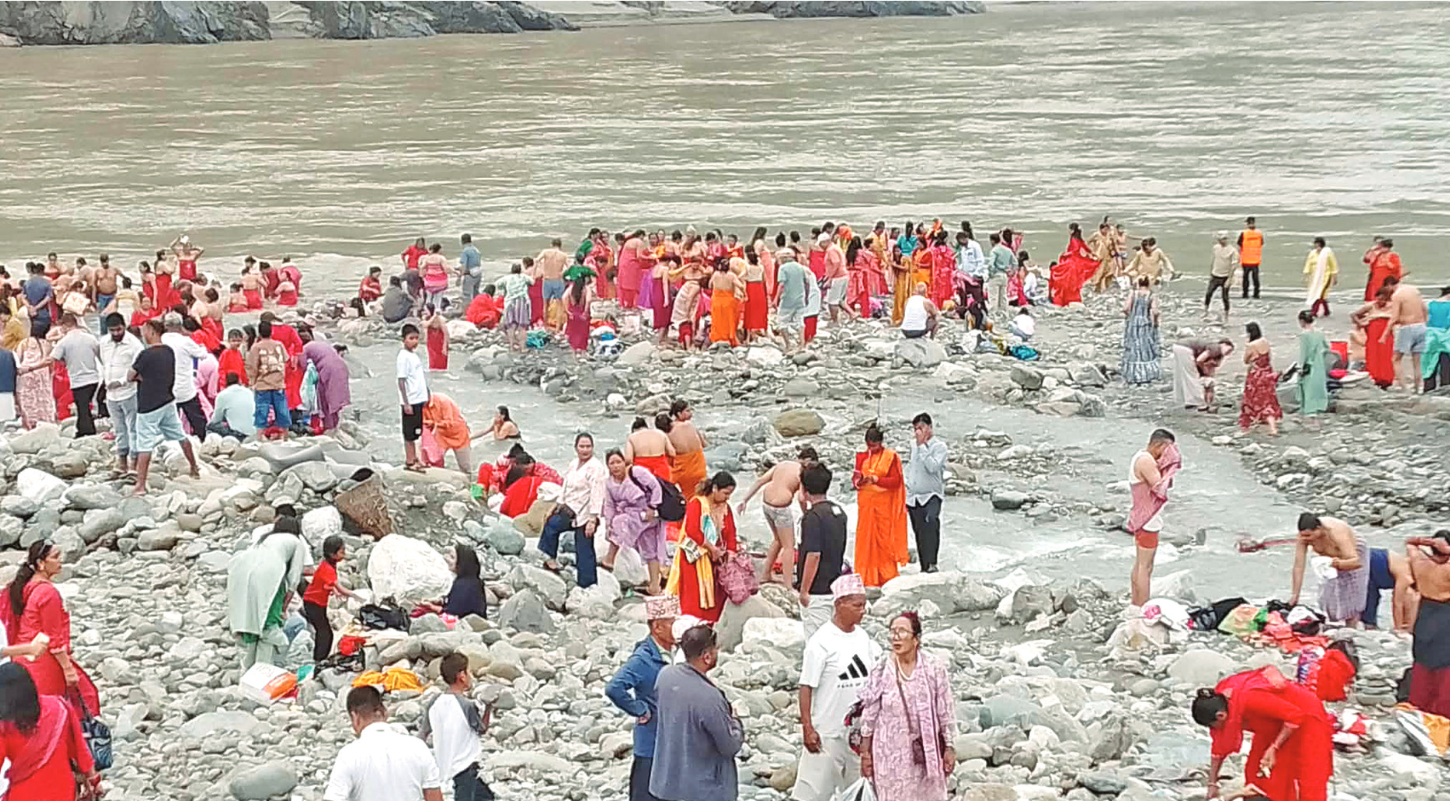
Barahakshetra Dham in Sunsari is also one of Nepal’s most important religious centres. Thousands of pilgrims from both Nepal and India visit the site during Makar Sankranti, Kokah Snan, Haribodhini Ekadashi, and other major festivals. According to Barahakshetra Development Committee Chairman Avijal Bista, more than 500,000 devotees visited the shrine during April, May, and June this year for the Purushottam Snan, including a significant number of Indian pilgrims. In a normal year, annual visitor numbers are estimated at around half a million.
Sansari Maisthan, located in Rangeli, Morang, has also become an increasingly popular destination for Indian devotees. Thousands travel from Kishanganj, Araria, Purnia, Katihar, Darjeeling, and Siliguri during Ram Navami, Navratri, and other religious fairs. The Koshi Provincial Government has invested in improving infrastructure around the temple, while the nearby Maibeni Fair continues to attract large numbers of domestic and Indian visitors.
Despite the growing popularity of these religious sites, none has a comprehensive system for accurately recording visitor numbers.
Infrastructure Still Needs Improvement
Tourism entrepreneurs say that although religious tourism from India is increasing, infrastructure has not kept pace with the growing demand.
Bhavis Kumar Shrestha said improvements are needed in road connectivity to major pilgrimage sites such as Pathibhara, Halesi, and Barahakshetra. He also highlighted the need for better parking facilities, public toilets, rest areas, tourist information centres, and quality accommodation.
Hotel entrepreneur Rajan Shrestha of Biratnagar believes that accommodation facilities—including hotels, lodges, and homestays—are generally adequate across the region. However, he stressed that accessibility remains the biggest challenge.
“Many tourists visit these religious sites, but reaching them is still difficult. The road to Halesi is challenging, Barahakshetra also has access issues, and visiting Pathibhara requires a long journey followed by a steep walk. If accessibility improves, many more Indian pilgrims could be attracted,” he said.
Shrestha also noted that encouraging visitors to stay longer remains another major challenge.
“Most pilgrims arrive in the morning and return the same day, while others stay only one night. The private sector has invested in hotels and travel agencies to encourage longer visits, but more tourism activities and attractions need to be developed,” he added.
Lack of Reliable Visitor Data
Tourism stakeholders identify the absence of reliable visitor statistics as one of the biggest obstacles to developing religious tourism in the province.
Because of the open border, there is no integrated system to record Indian visitors entering Nepal on foot, by motorcycle, or in private vehicles. This makes tourism planning, infrastructure development, and targeted promotion more difficult.
“We know many vehicles cross the border every day, but we do not have accurate information about how many tourists visit or why they come. Establishing tourism information centres at major border crossings would help generate reliable data and provide a stronger foundation for tourism planning,” Shrestha said.
Tourism entrepreneur Punya Bhattarai also called for stronger promotional campaigns targeting Indian pilgrims, adding that the provincial government requires greater legal and policy support to promote tourism directly in the Indian market.
The Koshi Provincial Government is preparing to celebrate the upcoming fiscal year as ‘Koshi Visit Year.’ According to Minister for Tourism, Forest and Environment Bhim Parajuli, several promotional programmes targeting Indian tourists are being planned.
However, Bhavis Kumar Shrestha believes that reliable visitor data, improved accessibility, better infrastructure, and effective promotion are all essential if Koshi Province is to transform the growing popularity of religious tourism into long-term economic opportunities.
At present, visitor numbers for major religious destinations, including Pathibhara, Halesi Mahadev, Barahakshetra Dham, Sansari Maisthan, and the Maibeni Fair, remain based largely on estimates by management committees, local governments, and tourism stakeholders, as no official national database exists. #nepal #religion