


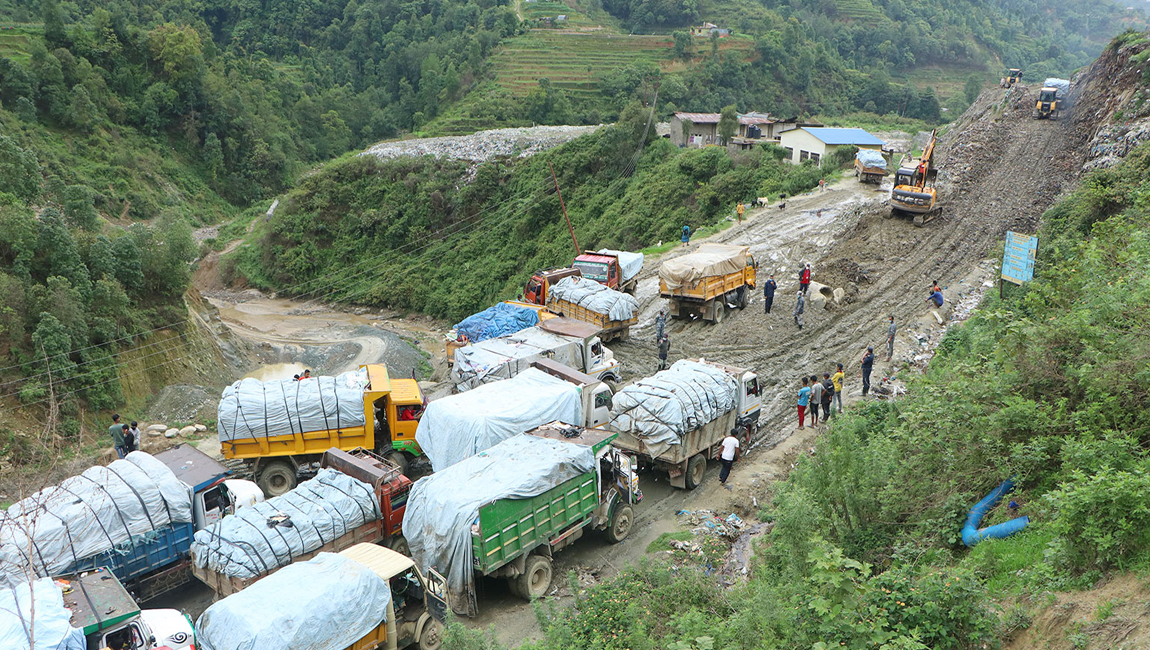
Kathmandu, May 3: People generally prefer to stay away from waste. Urban residents feel distressed even when waste collection services are slightly delayed. However, the situation is very different at the Bancharedanda landfill site, where the garbage of Kathmandu Valley is disposed of.
Around 200 people living near Bancharedanda—some local residents and others migrants—depend on garbage trucks for their livelihood. Every day, waste-loaded tippers arrive between 10 am and 2 pm, and these individuals begin sorting through the garbage to meet their survival needs.
Many of them run pig farms; they collect food waste to feed their pigs, while recyclable materials are sold for income. Through this “dirty” work, they can earn up to Rs. 2,500 per day. Most of the waste workers belong to the Janajati (Tamang) community from Rasuwa and Kavre, who have migrated there for this purpose.
The Constitution of Nepal guarantees every citizen the right to live in a clean and healthy environment, which seems ironic in the context of Bancharedanda. The situation raises serious concerns about public health, environmental safety, and the government’s responsibility to uphold constitutional provisions. It is even more troubling that residents of Nuwakot and Dhading are suffering due to the waste generated in Kathmandu Valley.
Ram Kumar Ghimire, an employee of the Kathmandu Metropolitan City at the Bancharedanda landfill site, said authorities once attempted to restrict people from entering the landfill. However, they were forced to allow access after protests, as the workers had no alternative means of livelihood. A more alarming issue is that many waste collectors bring their children with them. Ghimire explained, “We try to restrict children from entering the site, but since it is an open area, they find alternative ways to get in.”
During a recent field visit, many workers were seen collecting waste without masks or gloves. The entire area is engulfed in a strong stench, raising serious questions about what drives people to work daily in such hazardous conditions.
Keshav Ghale, a resident who migrated from Rasuwa, said that he and his family rely on garbage collection along with pig farming. He added that they would leave this risky occupation if the government provided alternative employment opportunities.
Health experts have repeatedly warned about the severe consequences of such exposure. Sher Bahadur Pun, an infectious disease specialist, stated that people working in these conditions face risks of allergies, coughs, sneezing, diarrhea, and typhoid in the short term, and potentially heart, liver, kidney, and even cancer-related diseases in the long term. He described the state’s negligence toward such conditions as a failure of governance.
The Sisdol Health Post, established by the Kathmandu Metropolitan City for landfill site residents, reports a steady flow of patients with similar health issues. Raj Kumar Neupane, the health post head, said that around 20 patients visit daily for general treatment. Many suffer from allergies, cuts, gastric issues, coughs, and sneezing, while others report back pain due to the physical strain of waste collection.
According to Neupane, patients with serious illnesses often go directly to hospitals in Kathmandu, so local records remain incomplete. However, at least 10 deaths from cancer were reported in the village last year. Residents complain that the health post lacks even basic medicines. Neupane acknowledged that they have been unable to provide sufficient supplies, such as wound care materials, due to a lack of budget allocation from the Kathmandu Metropolitan City.
Although the support provided is insufficient, it is currently being delivered solely by the Kathmandu Metropolitan City, despite the landfill serving all 18 local governments of Kathmandu Valley. At present, the city supports 56 teachers, health services, compensation programs, and infrastructure development in the area.
Social Stigma and Isolation
Despite working as garbage collectors, some local residents own tippers, while others earn income by renting out their houses. Even with these limited opportunities, dissatisfaction remains high due to the presence of the landfill site.
Beyond the pressing health and environmental concerns, residents of Bancharedanda also face deep social stigma and isolation. Many young people struggle to find marriage partners, as outsiders are reluctant to associate with a place widely perceived as polluted and foul-smelling.
Badri Bahadur Ojha, a local resident, shared a personal example. His son-in-law, who lives in Dhapasi, Kathmandu, refuses to visit Bancharedanda, citing the unbearable stench. As a result, Ojha’s daughter and grandchildren visit him occasionally—without the son-in-law—highlighting the social distance created by the landfill.
Government Efforts and Challenges
Compared to the Sisdol landfill site, Bancharedanda is relatively better managed and located farther from dense settlements. However, it still functions largely as an open dumping site, with no effective waste segregation at the source. Local residents continue to enter the site daily in search of livelihood, further increasing health and environmental risks.
The Kathmandu Metropolitan City (KMC) has proposed establishing a modern waste transfer center within its jurisdiction to promote segregation, reuse, and recycling. However, according to Sarita Rai, head of KMC’s Environment Division, progress has been slow due to difficulties in land acquisition and limited authority at the local government level to introduce advanced technologies.
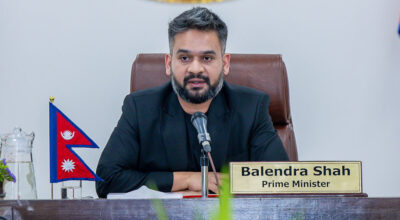
Rai expressed cautious optimism, noting that the project aligns with the vision previously promoted by Prime Minister Balendra Shah during his tenure as mayor of KMC. She added that earlier efforts stalled because local communities refused to allocate land for the project.
Under KMC’s plan, an advanced transfer center would process up to 80 percent of waste for reuse and recycling. However, achieving this goal depends heavily on support from the federal government.
Mahesh Bahadur Singh, Senior Divisional Engineer at the Ministry of Urban Development, stated that a new Waste Management Act is currently being prepared for Cabinet approval. The proposed legislation emphasizes waste segregation at the source, development of transfer stations, improved transportation systems, and adoption of modern waste management technologies. Singh expressed confidence that once approved, the law could provide a long-term solution to the country’s waste management challenges. #Nepal #waste