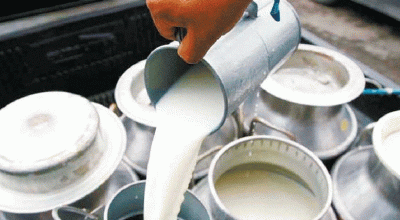



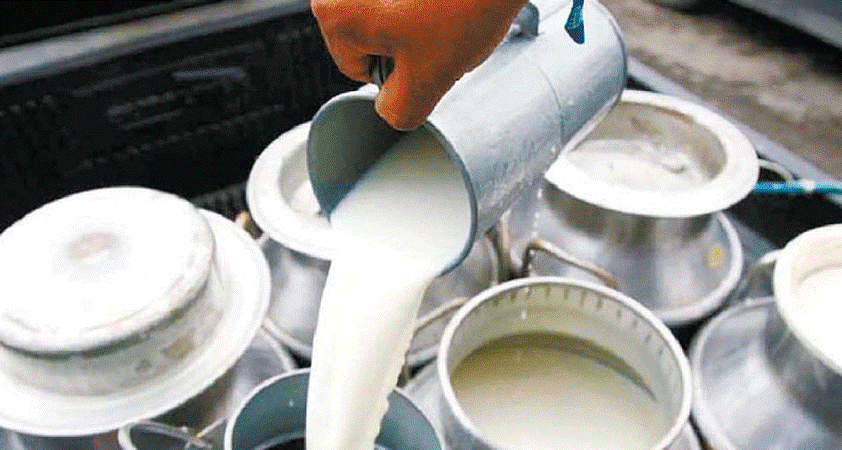
Hetauda, June 27: Farmers in Manahari Rural Municipality, located in western Makawanpur, earned Rs. 289.7 million from milk sales during the first eleven months of the fiscal year 2025/26. Between July 2025 and May 2026, farmers sold a total of 4,044,496 litres of milk, reflecting significant growth in the local dairy sector.
The increase in milk production is largely attributed to the rural municipality’s decision to guarantee timely payments to dairy farmers. Previously, farmers sold their milk through the District Milk Producers’ Cooperative Association, Makawanpur. However, frequent delays in payments created financial difficulties for farmers. To address this issue, the municipality signed an agreement with Hetauda Dairy Industries Pvt. Ltd. in October 2025 to purchase milk and ensure regular payments.
Milk collection increased steadily throughout the year, rising from 342,606 litres in July 2025 to 456,689 litres in May 2026. Milk is collected through six dairy cooperatives operating across all nine wards of the municipality, with more than 1,400 dairy farmers participating in the programme.
The municipality also introduced a production-based subsidy of Rs. 3 per litre, distributing Rs. 9.5 million in subsidies during the current fiscal year. In addition, farmers benefit from a livestock insurance programme, under which the federal government covers 80% of the insurance premium, while farmers contribute the remaining 20%.
According to Rural Municipality Chairperson Ranjan Kalakheti, the assurance of timely payments has strengthened farmers’ confidence, resulting in increased milk production and greater investment in livestock farming. Animal Development Officer Pradeep Bartaula also expressed optimism that milk production will continue to grow in the coming year due to the combined effects of guaranteed payments, production subsidies, and livestock insurance.
Overall, the Manahari Rural Municipality’s approach demonstrates how reliable payment systems, financial incentives, and risk-reduction programmes can encourage dairy production, improve farmers’ livelihoods, and support sustainable agricultural development. #nepal