



Kathmandu, Nov 6: A money laundering case worth Rs. 3.5 billion has been filed against 16 individuals, including Jivan Chalaune and Chinese nationals, in connection with the 60-kilogram gold smuggling case from the Tribhuvan International Airport (TIA).
The Department of Money Laundering Investigation alleged that the accused attempted to legalise assets acquired illegally through gold smuggling. The Office of the District Public Prosecutor, Kathmandu, registered the case at the Kathmandu District Court on Monday.
The charge sheet reveals that the gold smuggling was not merely a local import-export crime, but a sophisticated, internationally connected criminal network employing modern technology, posing a direct threat to country’s economy. The gold smuggling network operated from Hong Kong, passing through Nepal and extending into India. Its operations were highly organised and multilayered.
Initially, under a scheme involving Chinese nationals, companies such as ‘Ready Trade Pvt. Ltd.’ were established in the names of Nepali citizens like Dilip Bhujel.
Gold was concealed within imported goods such as motorbike’s brake pads and savers, cleared through customs at Tribhuvan International Airport. Individuals such as Harkaraj Rai handled customs and transportation logistics. Once in Kathmandu, the gold was melted and recast into various forms for sale using ‘gold melting machines’ stored in secret warehouses in Tokha and Lazimpat of Kathmandu.
The criminal network completely bypassed the banking channels, claimed the Nepal Police Cetral Investigation Bureau (CIB).
The charge sheet states that payments from gold sales were routed through digital currencies (USDT), Chinese payment systems (AliPay, WeChat Pay), and informal hundi networks. To maintain secrecy, photographs of Nepali and Indian currency notes were used as ‘codes’ or ‘tokens’ via WeChat, facilitating cash transactions on this basis, a sophisticated method unveiled by the investigation.
Within this network, Chinese nationals Yao Pucheng (Alex) managed finances, while Li Wen Sung (Ali) and Li Nengkai (Roger) oversaw the melting and distribution of gold.
The fugitive accused Jivan Chalaune is depicted as the principal architect of money laundering, allegedly laundering assets worth Rs. 2.07 billion alone.
Illicit earnings from the smuggled gold were channelled into company investments, real estate, and other ventures to appear legitimate. Chalaune reportedly established ‘Musta Group Pvt. Ltd.’, injecting Rs. 150 million as paid-up capital to legitimise his earnings. He also purchased 32 plots of land across Kathmandu, Jhapa, Rautahat, and Kavre district, registering them under the names of associates such as Jagat Bahadur Dhami, while positioning himself as the ‘beneficial owner’. WhatsApp conversations between Chalaune and co-accused Dawa Tshering regarding gold trading have been submitted as evidence.
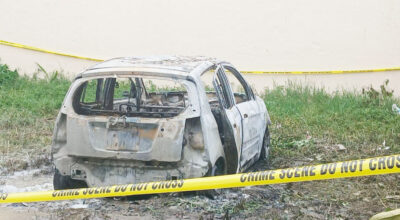
This money laundering case continues from the notorious 60 kg gold smuggling incident. On July 18, 2023, the Revenue Investigation Department had seized 60.716kg of gold hidden in brake pads at Tribhuvan International Airport.
Subsequent investigations were undertaken by the Central Investigation Bureau (CIB) of the Nepal Police, which concluded that the group had previously smuggled 302 kg of gold, said SSP Shrestha.
Chalaune, identified as the main accused, remains at large. Interpol had issued a ‘Diffusion Notice’ at the request of Nepal Police.
For the investigation, the government had formed a high-level inquiry commission chaired by former Justice Dilliraj Acharya.
Following the commission’s recommendations, disciplinary action was taken against several senior police officials, including the then head of the CIB. Former House Speaker and Maoist Centre Vice-chair Krishna Bahadur Mahara was also taken into custody for investigation.
The charge sheet seeks ten-year imprisonment, double the fine of the proceeds, and confiscation of all assets acquired from the crime for the defendants. #money #laundering #nepal