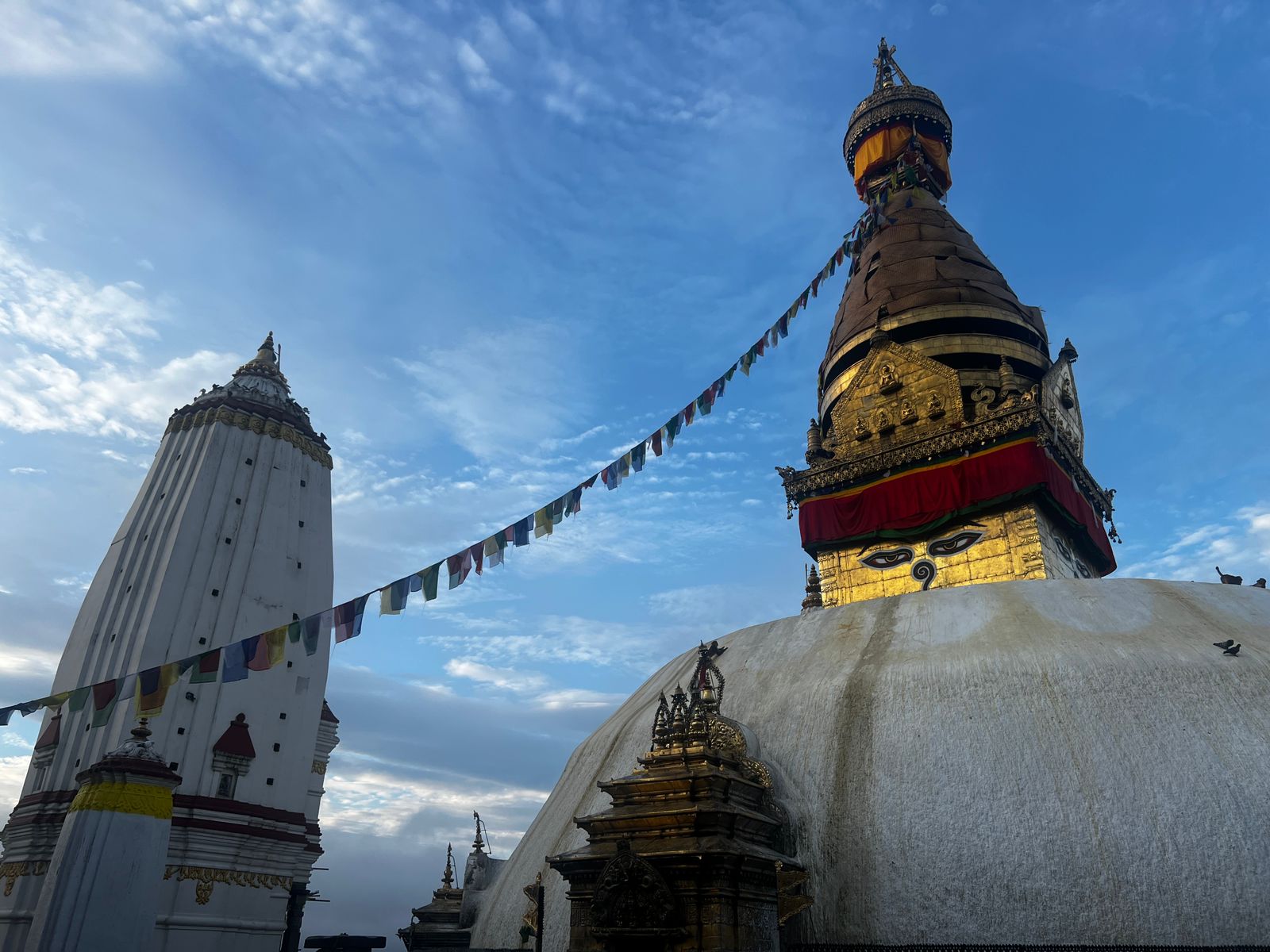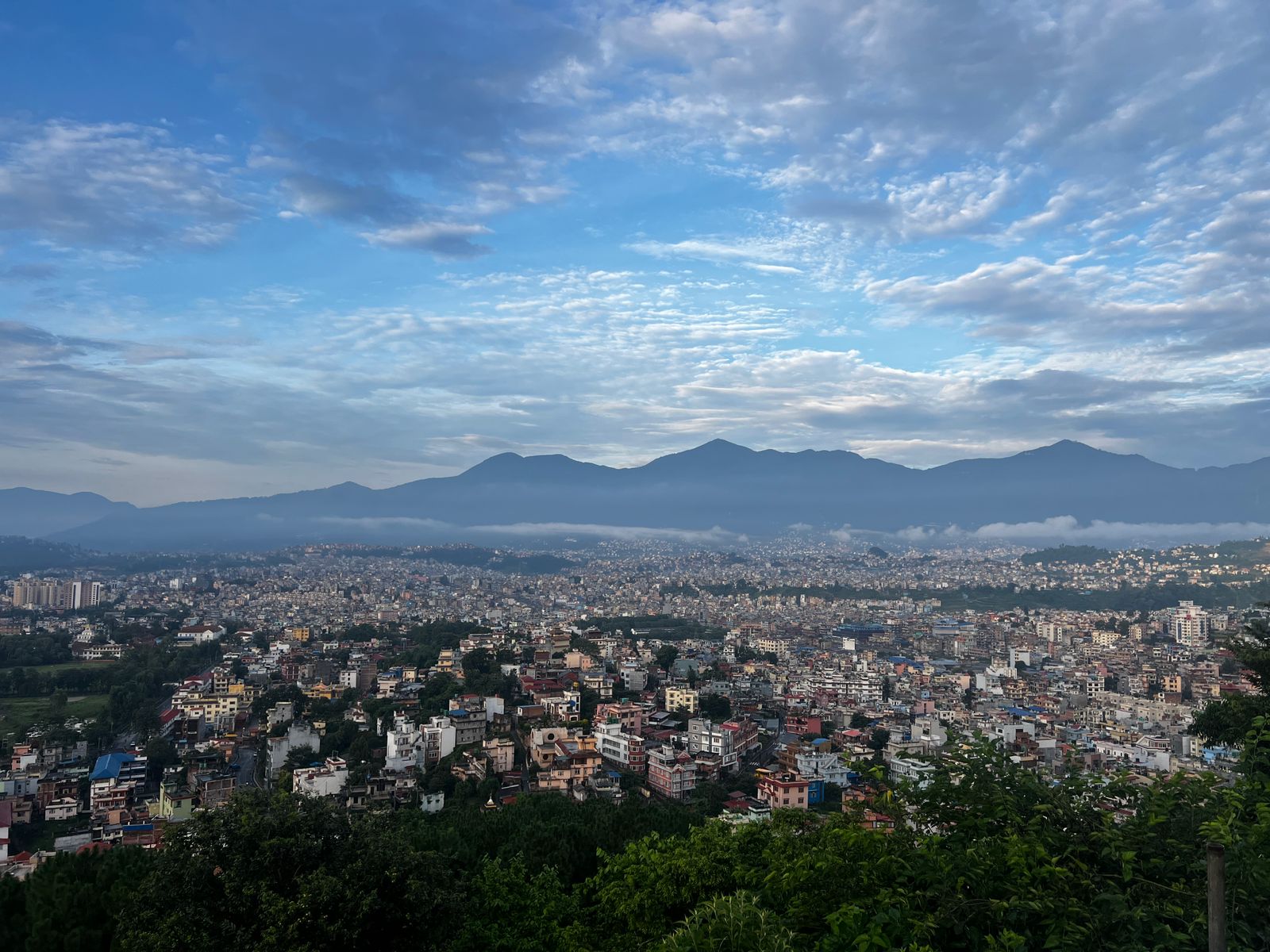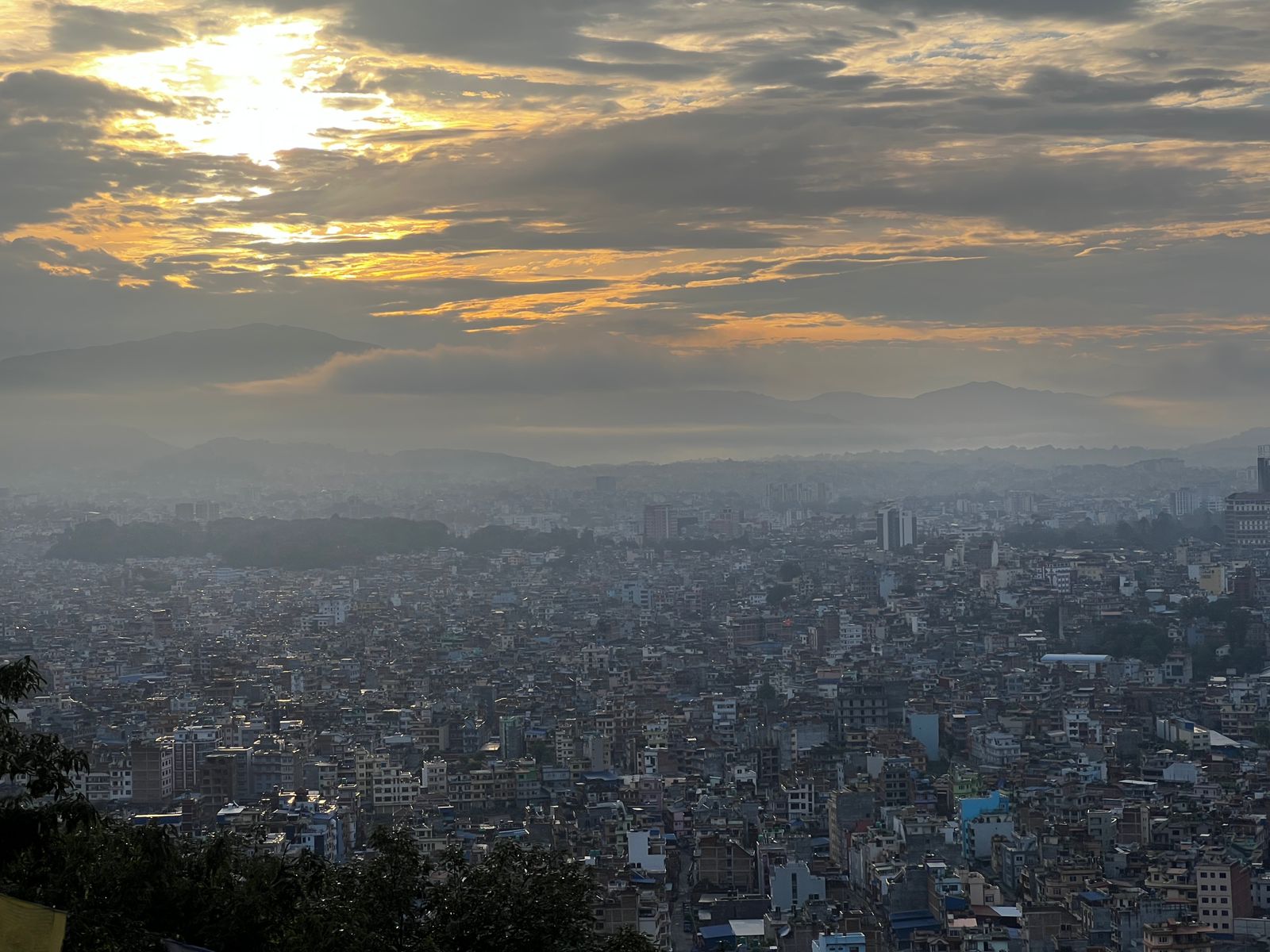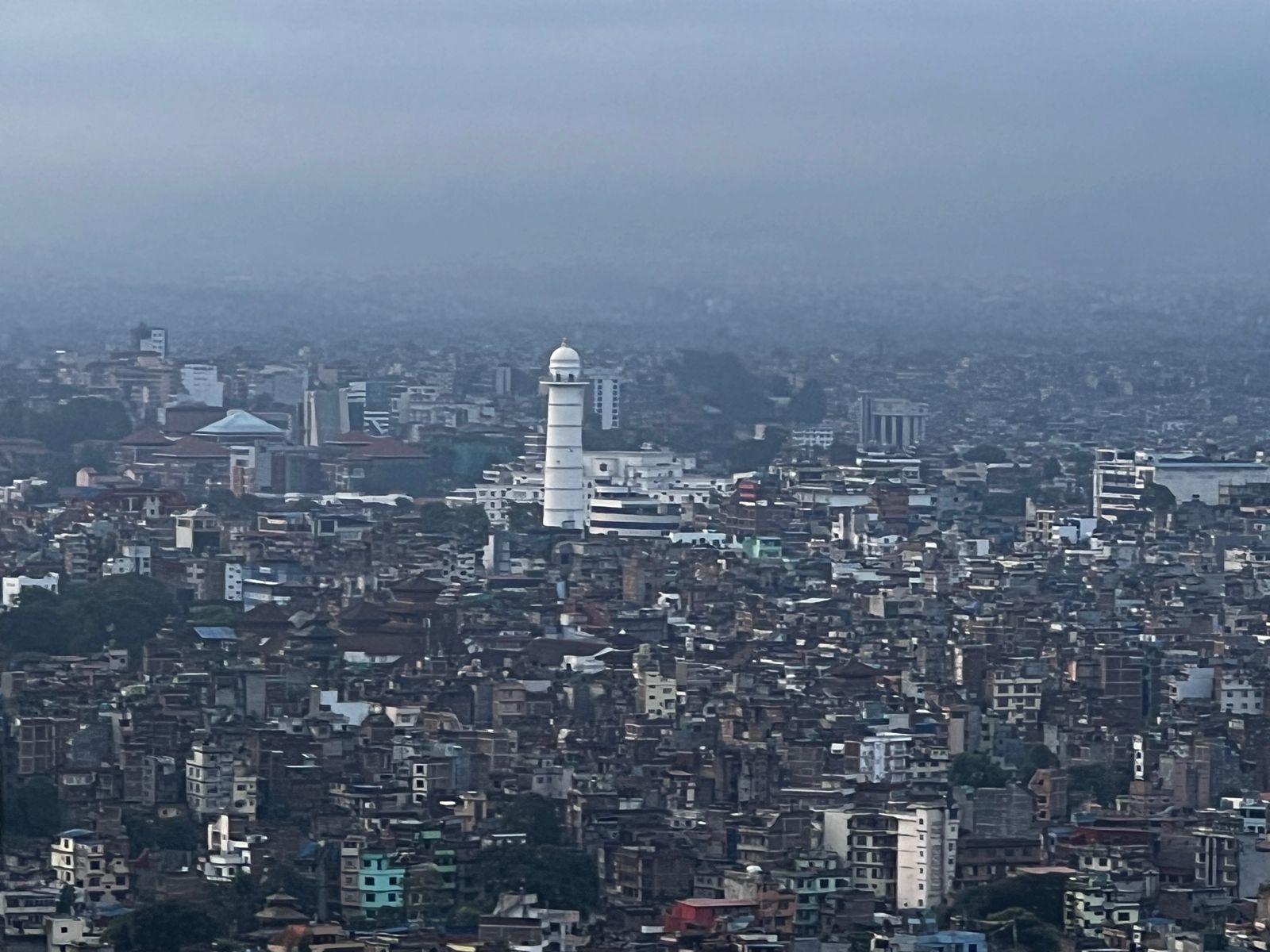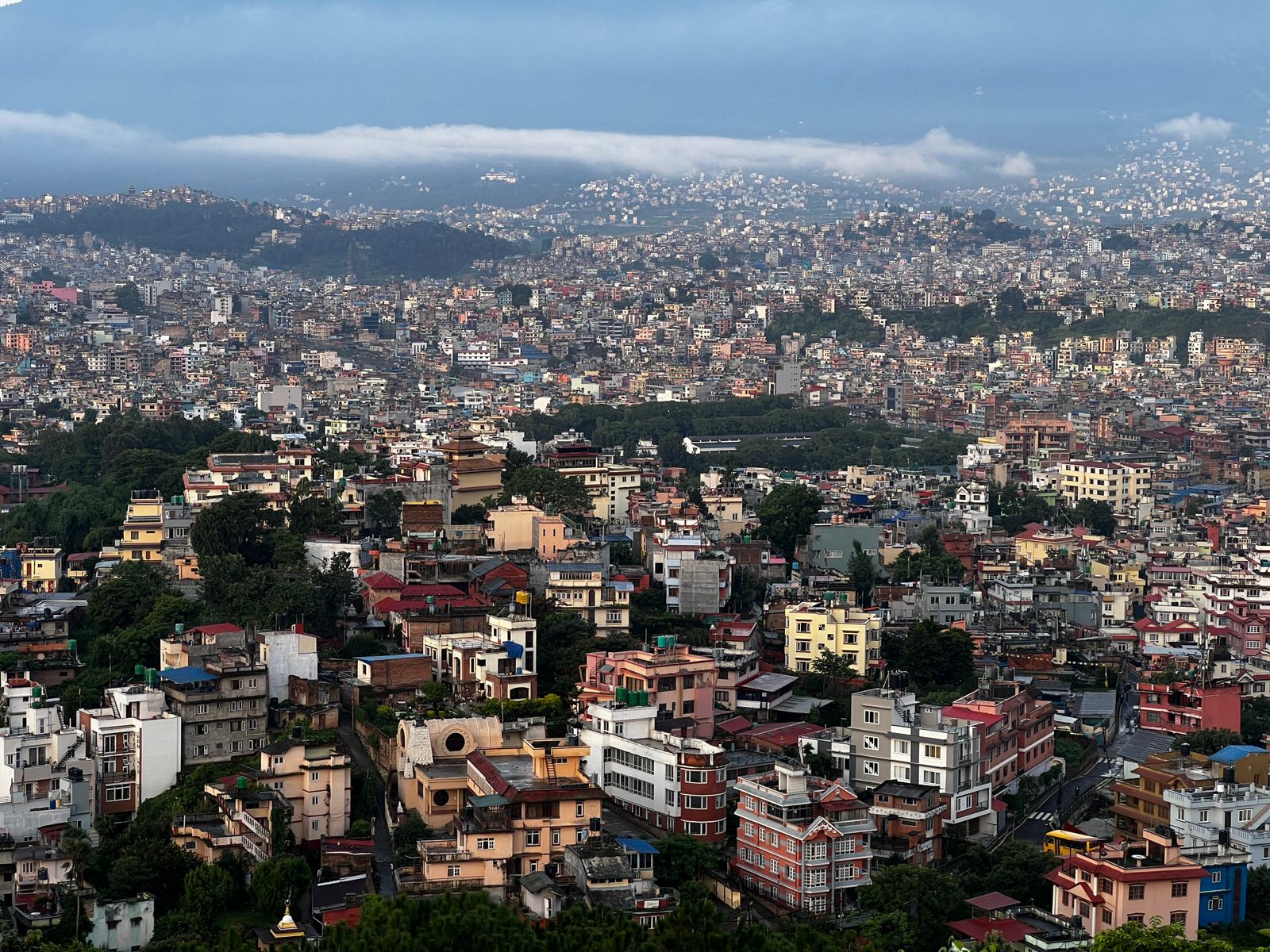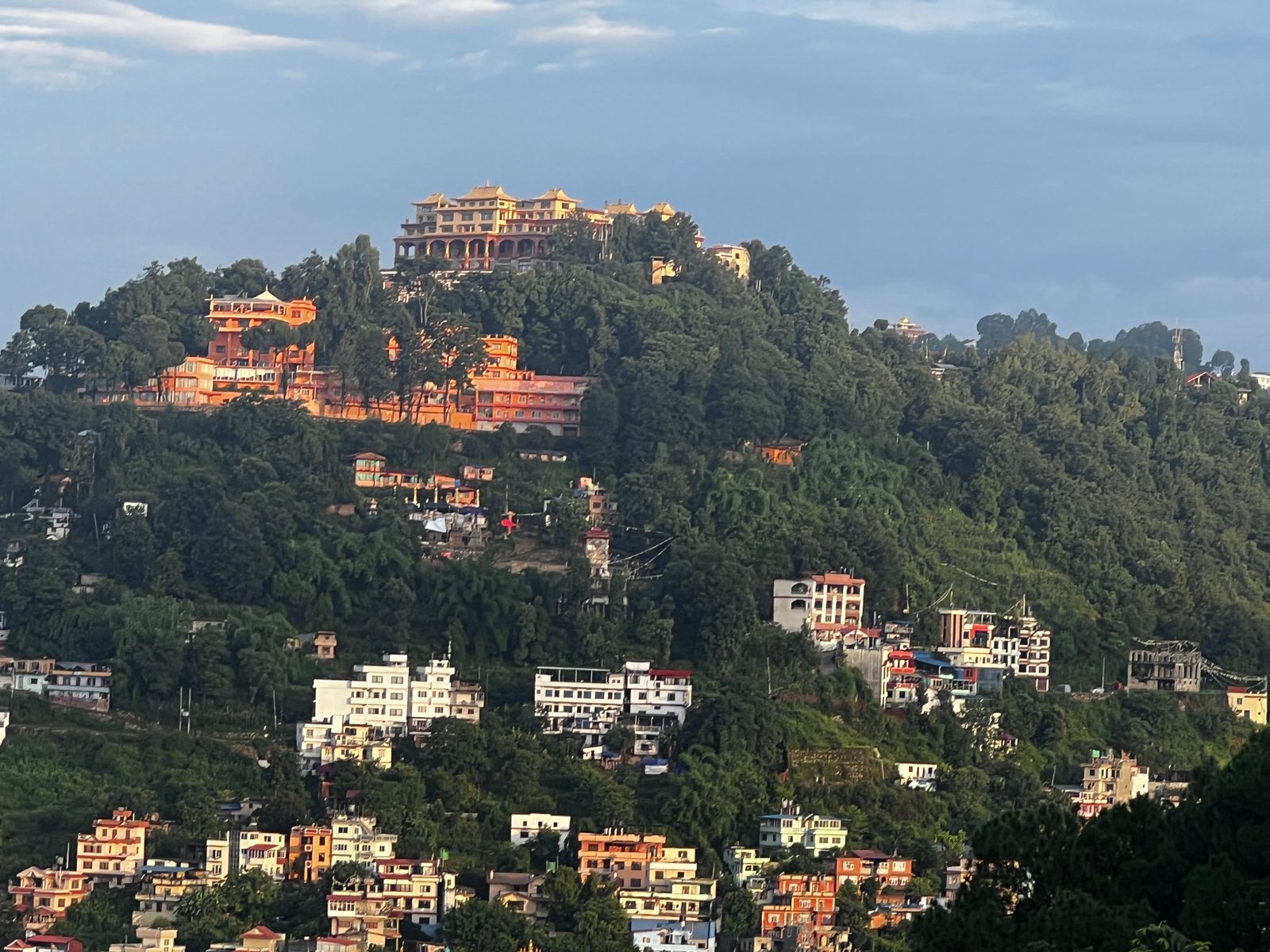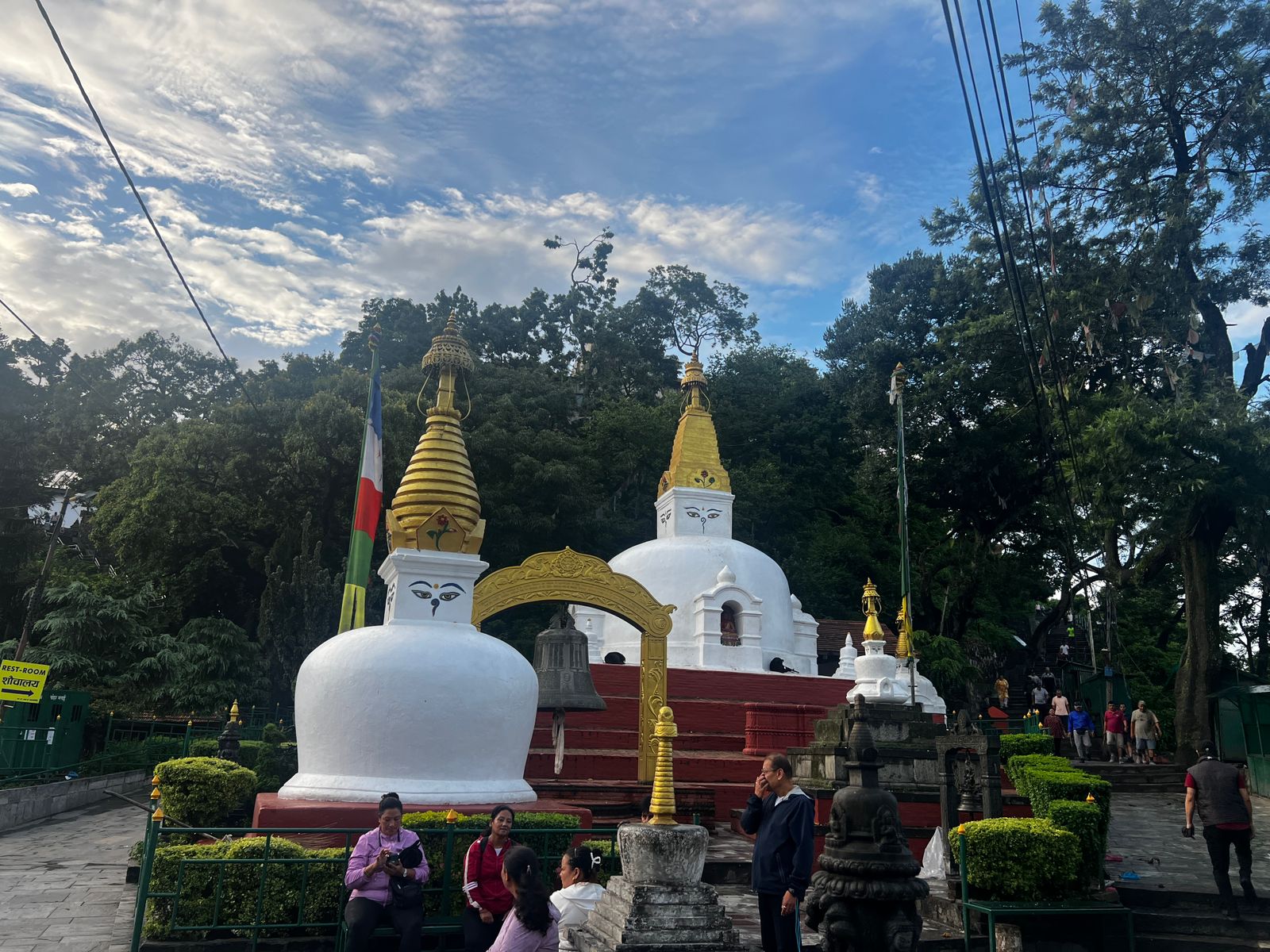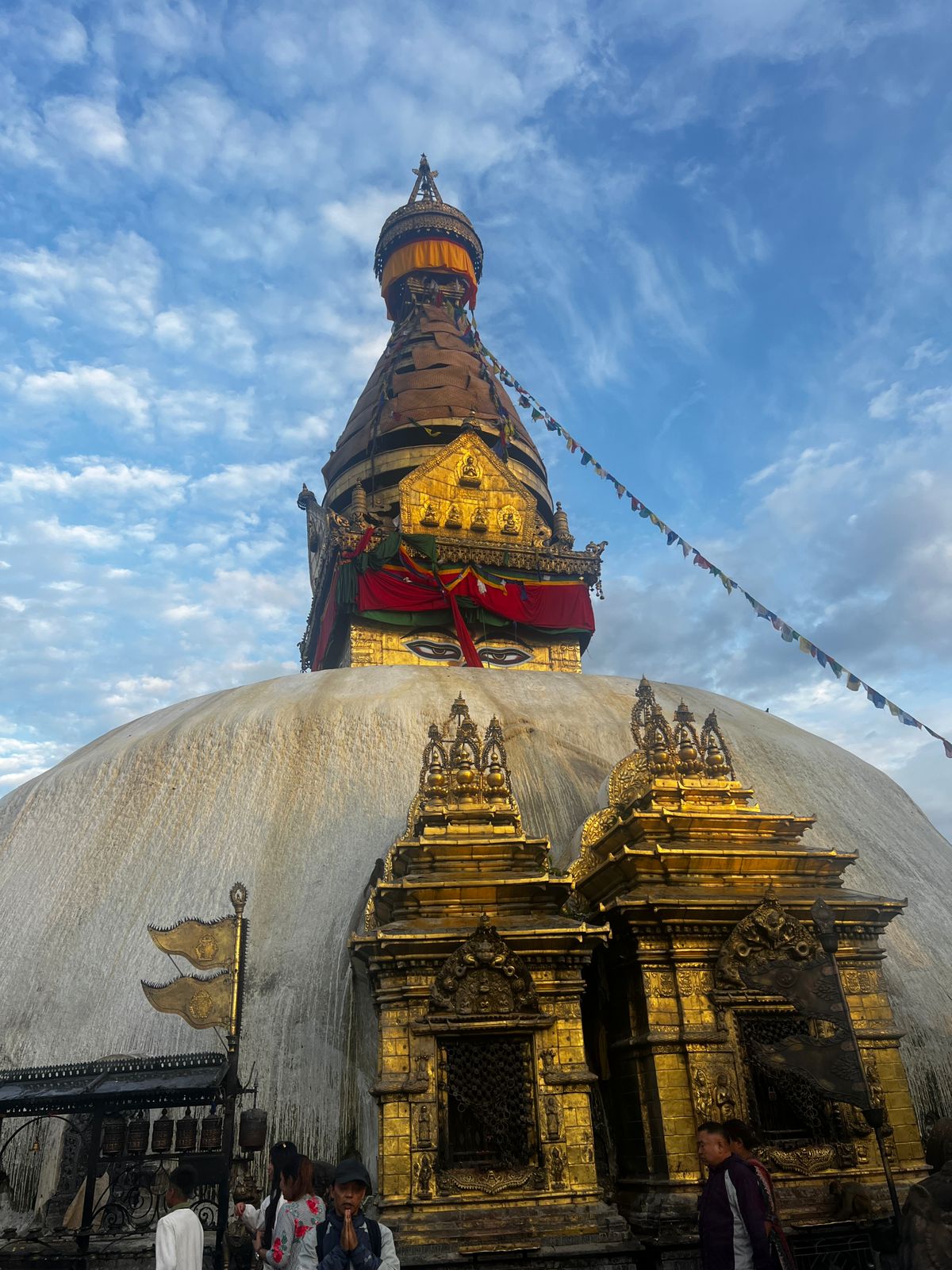



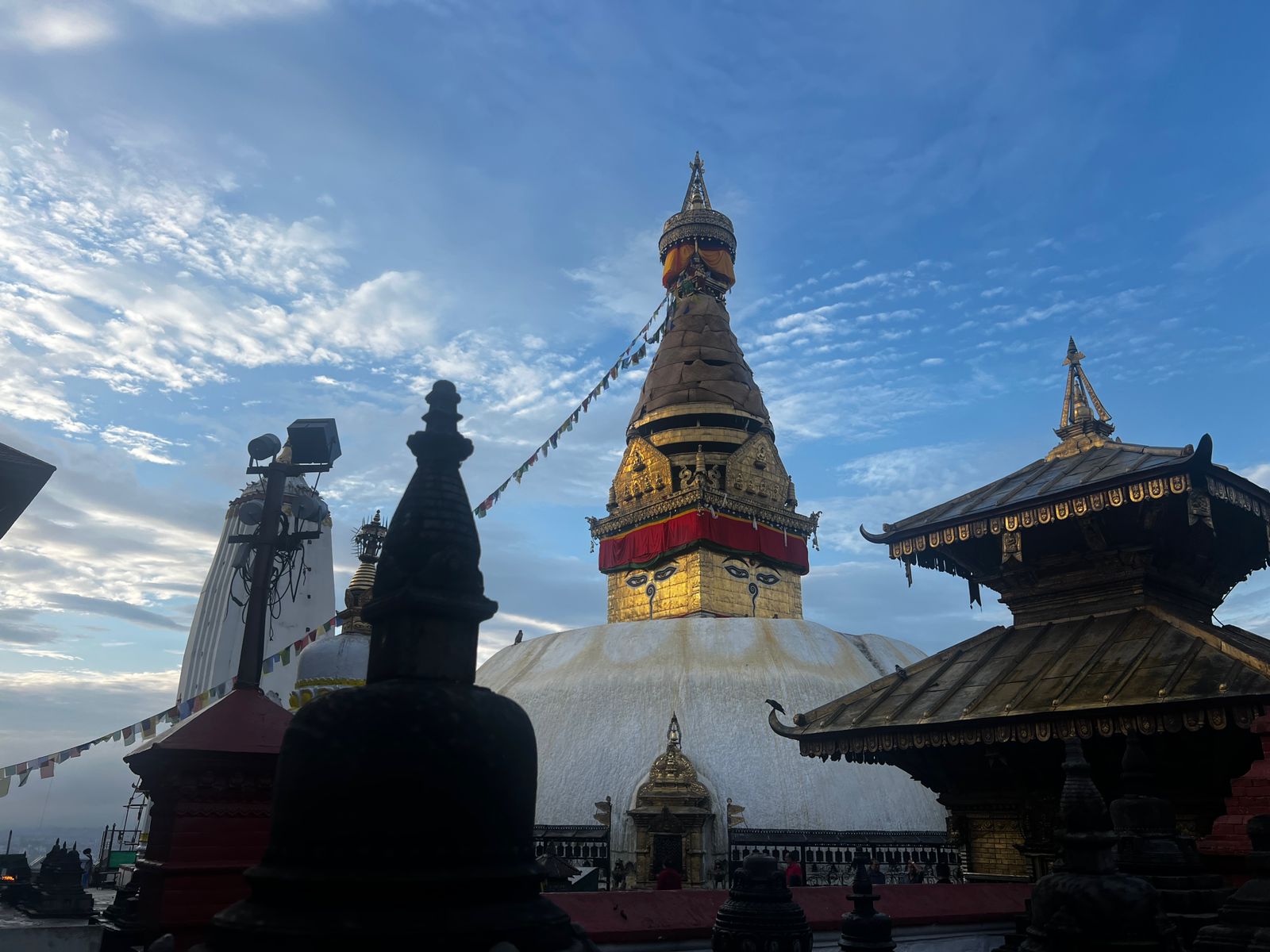
Kathmandu, July 14: As the monsoon nears its end in Asar (mid-July), most parts of the Kathmandu valley remain mostly blanketed in clouds. Even the eastern region of Kathmandu is covered by dense cloud layers. However, the western area, home to the UNESCO World Heritage Site of Swayambhu, opened up this morning.
From Swayambhunath, the beauty of Kathmandu appears even more vivid and clear. With the sky clear since early morning, the environment in Kathmandu has become exceptionally scenic — the fog has lifted, and the view is stunning.
Swayambhu, a symbol of religious, cultural, and historical significance in the Kathmandu Valley is not only a center of faith for Buddhists but also attracts devotees from all religions. It’s a spiritual and tourist hub.
Photo: Sushil Aryal
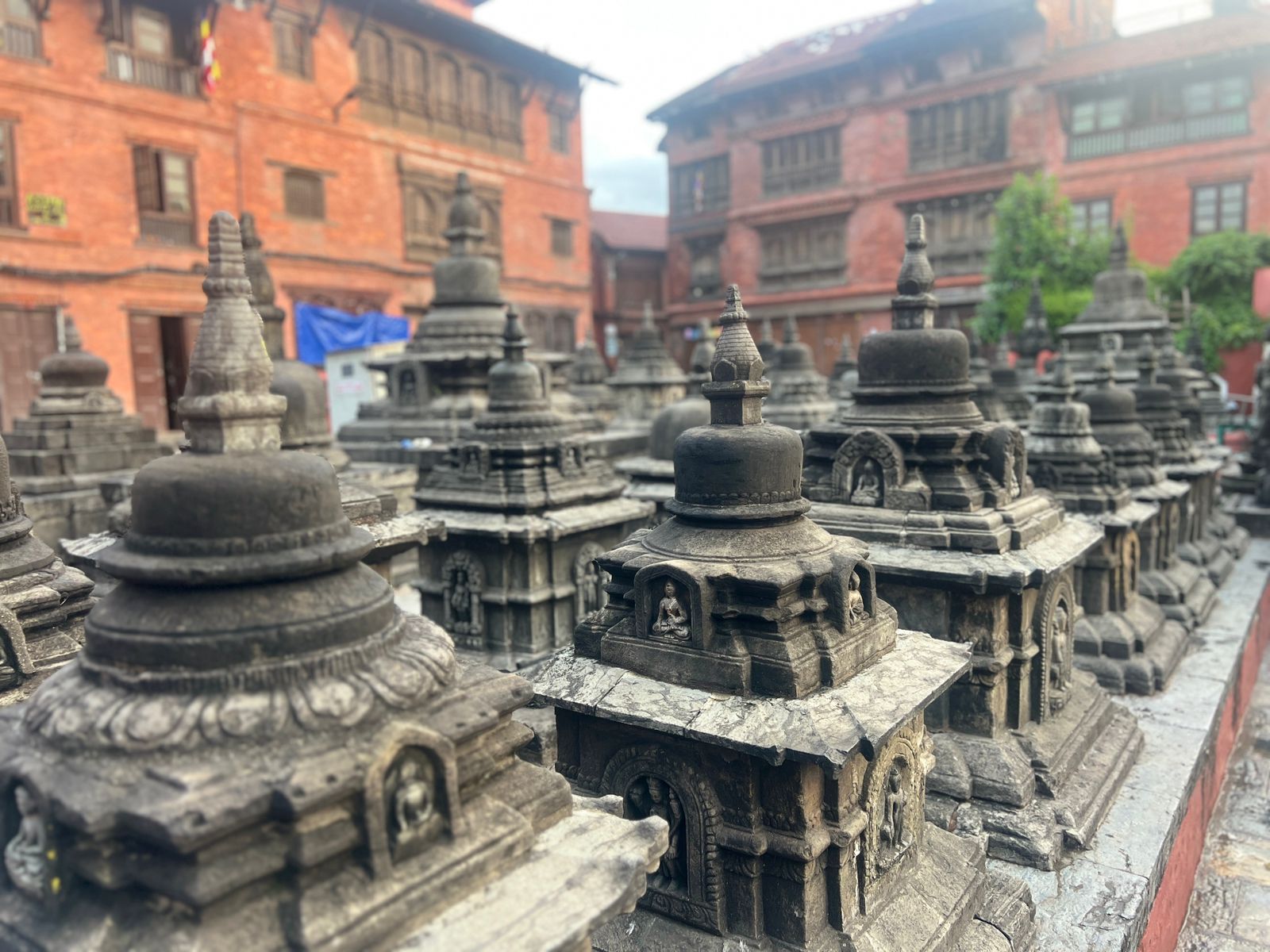
For both domestic and international tourists, a trip to Kathmandu feels incomplete without visiting Swayambhu.
The Swayambhunath Stupa is also referred to as the “Mahachaitya.” According to spiritual books, during a time when the Kathmandu Valley was a large lake, the Bipashwi Buddha visited Swoyambhu area. He is said to have circumambulated the surrounding hills three times and meditated atop Nagarjun hill. On the full moon day of Baisakh (April/May), he turned a lotus seed southward, recited a mantra, and planted it in the lake — an act deeply rooted in the mythology of the valley’s origin. #nepal #swayambhu