



Kathmandu, May 20: The number of Nepali migrant workers travelling to Gulf Cooperation Council (GCC) countries fell sharply in recent months as the ongoing West Asia crisis continues to affect labour markets and migration flows.
According to a report published Tuesday by International Labour Organization, migrant worker outflows from Nepal to GCC countries dropped by 45 percent during February–March 2026 compared to the same period last year.
The decline widened further to 47 percent during March–April this year.
The report, titled Employment and Social Trends May 2026 Update: Growing Labour Market Risks of the Middle East Crisis, stated that the escalating conflict in West Asia has disrupted jobs, working conditions, transport routes, tourism, supply chains, and migration systems across several regions.
Following the outbreak of conflict involving Israel, the United States and Iran earlier this year, security conditions in West Asia have significantly deteriorated, affecting businesses and workers throughout the region.
The report warned that the crisis is likely to have serious economic consequences for labour-sending countries such as Nepal, particularly through disruptions in foreign employment and remittance inflows.
According to the ILO, around 40 percent of employment in the Arab region is concentrated in high-risk sectors such as construction, manufacturing, transport, trade, and hospitality, where migrant workers are expected to bear the greatest impact.
The organisation projected that total working hours in the region could decline by 1.3 percent under a rapid de-escalation scenario, 3.7 percent under a prolonged crisis, and up to 10.2 percent in the event of severe escalation — a decline larger than that experienced during the COVID-19 pandemic.
The report also cited concerns that nearly 80,000 Nepali workers in Saudi Arabia could face job risks following the suspension of the ambitious “Future City” project.
The ILO warned that prolonged disruptions in labour migration and remittance flows could negatively affect consumption, employment, and poverty levels in labour-sending countries.
Government, NRNA Call for Rapid Response Mechanism
Meanwhile, a tripartite meeting involving the government, Nepali diplomatic missions abroad, and the Non-Resident Nepali Association stressed the need to establish an effective rapid response mechanism for the rescue and repatriation of Nepalis in conflict-affected countries.
The meeting discussed the safety and management of Nepali migrant workers in West Asia and recommended making digital assistance systems more accessible and effective.
Participants also called for immediate implementation of emergency rescue plans and safe transfer systems for Nepalis living in high-risk regions.
The meeting further recommended strengthening coordination among the NRNA, Nepali embassies, and the government, while making crisis management and risk awareness mandatory components of pre-departure orientation training for migrant workers.
Other recommendations included improving data systems for migrant workers, expanding access to psychological counselling, increasing awareness against foreign employment fraud, and strengthening labour-related bilateral agreements.
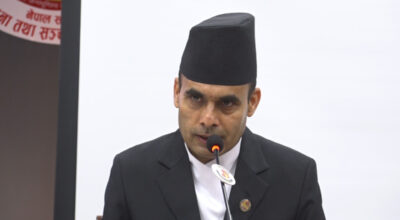
Speaking at the meeting, Ramkaji Khadka said Nepali diplomatic missions in GCC countries remain alert and are maintaining regular communication with the Ministry of Foreign Affairs Nepal regarding the evolving situation. #Nepal