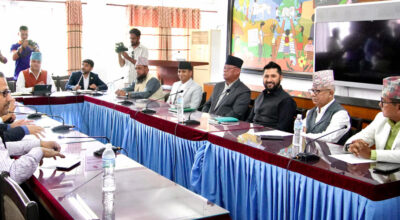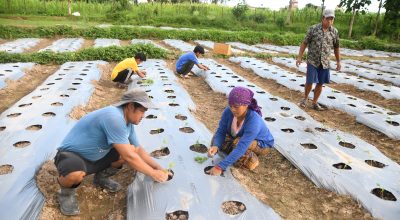



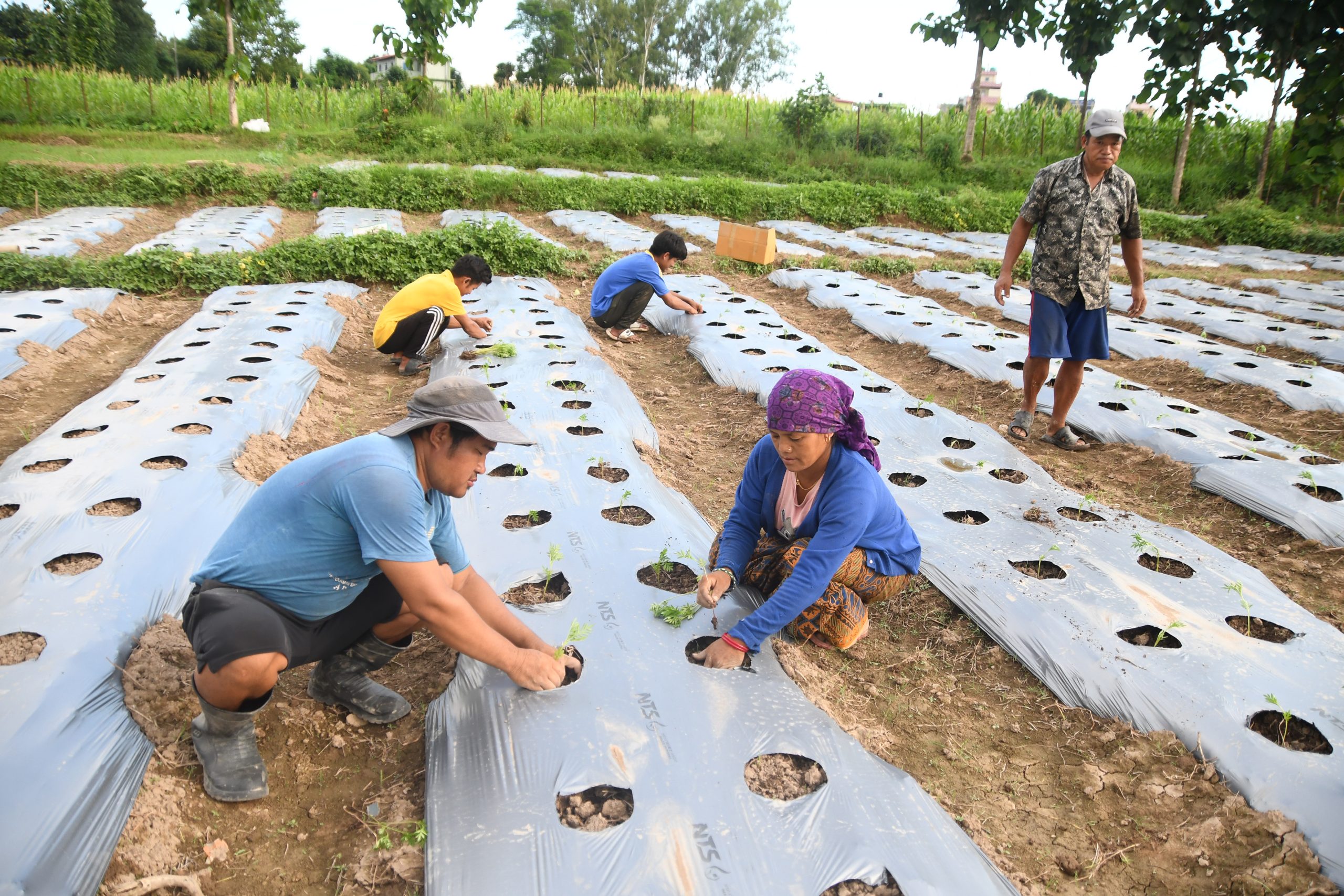
Surkhet, June 8: Following its formation, the first Cabinet meeting of the Karnali Province government decided to develop it into an ‘organic province.’
The government planned to discourage the use of pesticides in agricultural products produced within the province and adopted a policy to discourage the import of pesticide-treated vegetables and fruits from outside the province.
But the provincial government’s first decision has yet to be effectively implemented. The plan to transform Karnali into an organic province has so far failed to achieve meaningful progress. Nevertheless, the initiative has continued to be included in the annual policies, programmes and budgets of successive governments.
Under this initiative, since the fiscal year 2017-18 nearly Rs. 2 billion in combined provincial and federal funding has been allocated annually. The programme, which has also been included in the current fiscal year, has secured a place in the budget for the upcoming fiscal year.
The provincial government has introduced programmes in the budget for the fiscal year 2026/27 to provide subsidies to farmers willing to utilise barren land, adopt technology-based farming and establish organic fertiliser production facilities. So far, the provincial government has formulated five laws to lay the foundation for an organic province.
These include legislation, regulations and policies aimed at institutionalising organic farming, such as the Organic Agriculture Act, standards for processing organic products, participatory quality assurance guidelines, internal control system guidelines and an organic agriculture plan. Although policy formulation has been prioritised as the first step towards establishing an organic province, little progress has been seen in implementation. Due to the lack of technologies and equipment such as pesticide testing laboratories, the government remains unaware of whether agricultural products grown within the province are genuinely organic.
A Cabinet meeting held on May 27, 2026 approved the Karnali Province Pesticide Management Regulations, 2027. According to the Ministry of Land Management, Agriculture and Cooperatives, implementation plans have now begun following the approval of the regulation.
Tilak Pandey, chief of the ministry’s Planning Division, said that implementation of the plan is moving forward based on the newly approved regulation. The provincial government is preparing to launch pesticide residue testing services at two locations from the upcoming fiscal year.
The Karnali Province government plans to operate pesticide residue testing services in Harre of Surkhet and Kapurkot of Salyan.
Presenting the policy and programme on last Wednesday, Chief Minister Yamlal Kandel said the service would be introduced to ensure the quality of agricultural products and provide consumers with safe food items.
Although the service was expected to begin during the current fiscal year, implementation had been delayed due to a lack of manpower and equipment.
Chief Minister Kandel also announced that, in coordination with local governments, the province would implement an “One Local Level, One Agriculture School” programme to raise awareness about environment-friendly and organic farming. #nepal