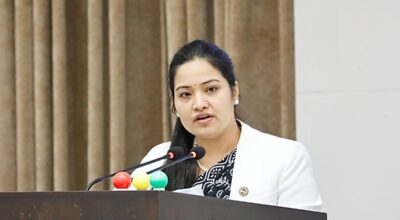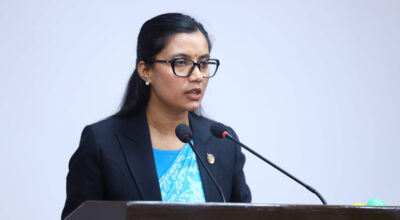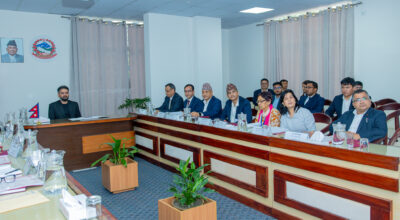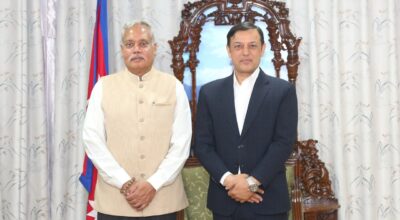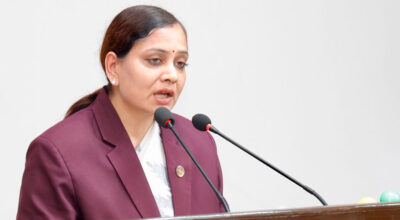



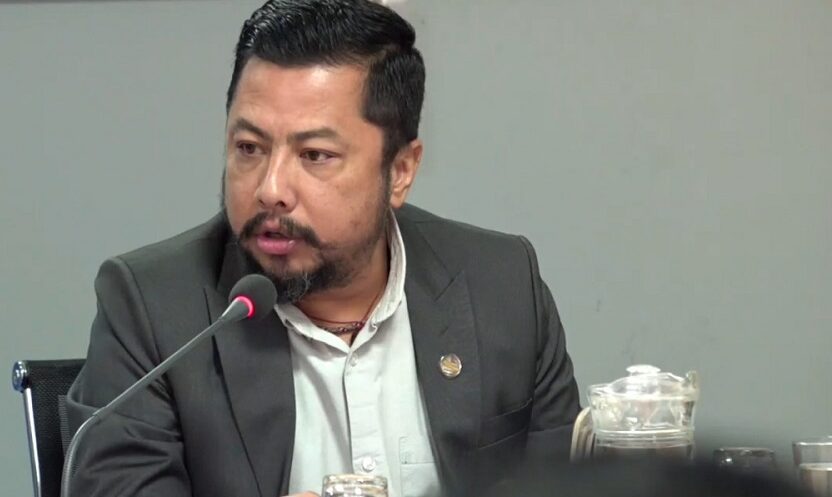
Kathmandu, July 9: Minister for Energy, Water Resources and Irrigation Biraj Bhakta Shrestha said Nepal’s commitment to sustainable energy development is absolute, and our progress speaks for itself, adding that Nepal has successfully extended its national grid to ensure electricity access to 98 per cent of the total population. “We are firmly dedicated to achieving universal access.
We are actively diversifying our energy mix by promoting other renewable sources like solar, wind and bioenergy, targeting a 15 per cent share for these renewables by 2030,” the minister mentioned.
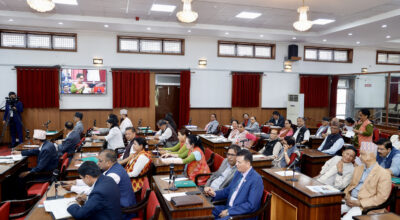
During the launch of the Energy Connectivity in South Asia event in Kathmandu today, Minister Shrestha said that power system connectivity and renewable energy resources align with our shared sustainable future.
He said our pursuit goes far beyond mere economic gains. “This project is fundamentally about accelerating the green energy transition, fighting the impacts of climate change, enhancing electricity access and generating employment opportunities, all while preserving our environment and addressing vital social and biodiversity challenges,” according to Minister Shrestha.
He said the government has formulated the Energy Development Roadmap and Action Plan, which said, was prepared by recognizing the escalating domestic and regional power demand.
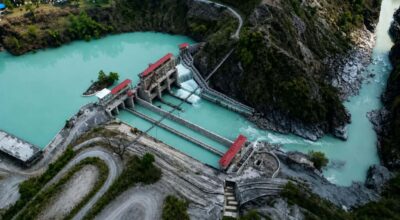
“This roadmap aims to generate approximately 28,500 MW of power by 2035, with a heavy focus on hydropower and clean sources. We are expanding our grid infrastructure to cover over 17,000 circuit kilometers and boosting substation capacity to 40,000 MVA,” Minister Shrestha shared.
Likewise, he stated that Nepal is well positioned to serve as a reliable supplier of clean electricity and an important contributor to regional energy security, while supporting global efforts to reduce greenhouse gas emissions.
Saying that true energy security and grid flexibility cannot happen in isolation, Minister Shrestha mentioned that it requires transmission infrastructure to move clean power across borders. “They require robust cross-border transmission infrastructure capable of facilitating reliable and efficient electricity trade. Nepal is proactively building these physical links with our neighbors through both bilateral and multilateral initiatives.”
Minister shared that Nepal’s grid is already linked to the Indian grid with an import-export capacity of around 1,500 MW and Nepal has achieved a historic milestone by operationalizing a tripartite power trade agreement to trade 40 MW of electricity to Bangladesh through India’s power grid, marking the very first tripartite power trade agreement in South Asia.
He stated that as part of our long-term vision for regional energy connectivity with China, Nepal and China signed cooperation agreements for the Rasuwagadi-Kerung 400 kV transmission line project, alongside initiatives for the Chilime Hub-Jilong 220 kV and Hitar-Kimathanka-Chau 400 kV lines, which are expected to facilitate future cross-border electricity exchange.
Likewise, Minister Shrestha mentioned that Nepal is continuously working to strengthen regional cooperation, promote regulatory harmonization and foster a seamless environment for cross-border energy exchange by actively engaging in regional frameworks like SAARC, BIMSTEC and the BBIN initiative.
Nepal stands fully ready to collaborate with neighboring countries, international partners, and the private sector to harness our immense renewable potential, he announced.#nepal #rss