


Kathmandu, Oct 8: Public procurement is the lawful process through which governments acquire goods, services, and construction works. It ensures that resources collected through taxes and revenues are used responsibly, transparently, and effectively. A strong procurement system guided by principles of transparency, accountability, fair competition, value for money, and sustainability builds public trust and enhances governance.
Procurement as a strategic function of governance
Public procurement has evolved beyond a technical process into a strategic instrument of governance. It influences how national budgets are transformed into public services, infrastructure, and development outcomes. By aligning procurement with sustainability goals, governments can support domestic industries, supply chains, and environmentally responsible practices.
Weak procurement management, on the other hand, results in low capital expenditure, project delays, and poor service delivery, undermining both development and public confidence.
Nepal’s legal and institutional framework
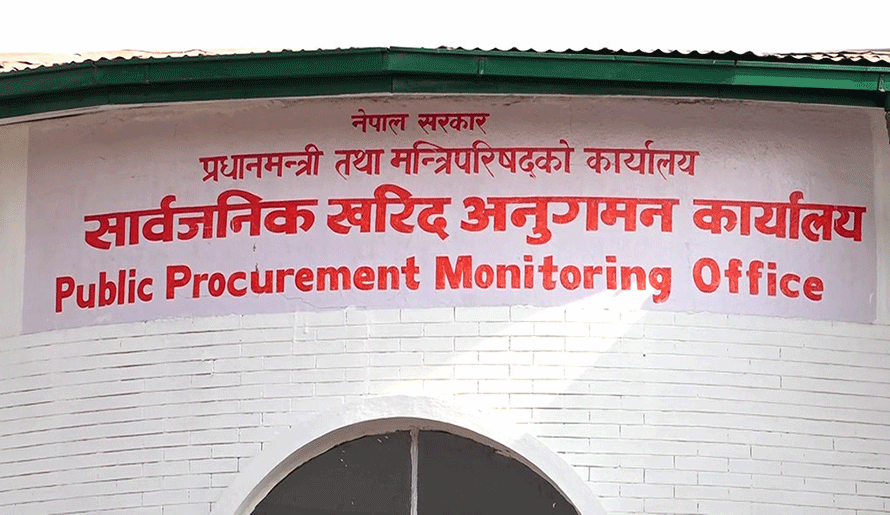
Nepal’s procurement system operates under the Public Procurement Act (2006) and the Public Procurement Regulations (2007), with oversight from the Public Procurement Monitoring Office (PPMO). Despite significant progress, persistent challenges such as slow tendering, poor contract management, and political interference continue to hinder timely project completion.
Sustainable and smart procurement
Sustainable public procurement (SPP) integrates economic, social, and environmental considerations into the purchasing process. According to the UN Marrakech Task Force, SPP ensures that goods and services deliver value for money throughout their life cycle—while also generating positive social and environmental outcomes.
Also known as “smart procurement,” this modern approach emphasizes long-term impact over short-term cost savings, encouraging governments to adopt eco-friendly materials, fair labor practices, and local industry empowerment.
Three pillars of sustainability
- Economic: Prioritizes cost efficiency, durability, and value creation.
- Social: Ensures labor rights, fair working conditions, inclusivity, and skill enhancement.
- Environmental: Focuses on energy efficiency, waste reduction, biodiversity protection, and green technology.
Stages of the procurement process
1. Needs Identification: Define goods, services, or works aligned with priorities and budgets.
2. Preparation: Develop technical specifications, BoQ, and cost estimates.
3. Bidding & Evaluation: Conduct transparent and fair supplier selection.
4. Contract Management: Ensure compliance, quality assurance, and timely delivery.
5. Administration: Monitor progress, resolve issues, and ensure accountability.
Building capacity for better governance
Procurement officials must have multidisciplinary expertise—technical, legal, financial, and managerial. They should understand supplier capabilities, international standards, and market dynamics to make informed and fair decisions.
Promoting green procurement, local production, and social justice further aligns the procurement process with Nepal’s sustainable development agenda.
Conclusion
Public procurement is not just a bureaucratic procedure—it is a strategic tool for good governance, transparency, and sustainable national development. In Nepal, strengthening institutional capacity, ensuring political commitment, and mainstreaming sustainability into procurement processes will be vital to achieving inclusive growth, efficient public spending, and resilient infrastructure. #PublicProcurement #Nepal #GoodGovernance #Sustainability #GreenDevelopment #PublicSpending #ProcurementReform